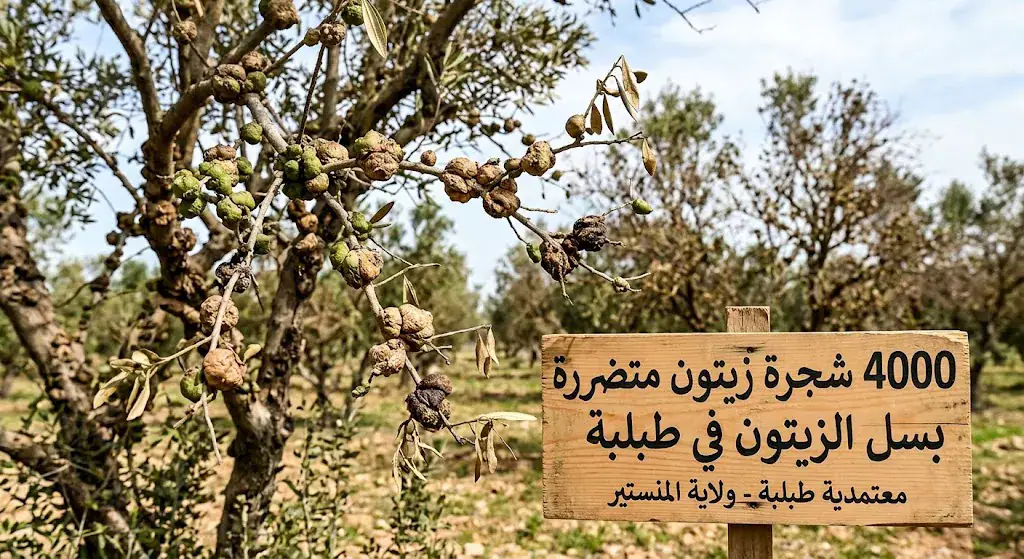
A recent survey in the delegation of Teboulba, Mahdia governorate, has revealed that approximately 4,000 olive trees have been affected by olive blight. The disease has had a minimal impact on other delegations within the governorate. According to Abdelillah Sahraoui, head of the Tunisian Olive Growers Association for the two coastlines, this disease poses a significant risk if it spreads to urban areas or if pruning is carried out by unqualified individuals, which could facilitate the transmission of the infection.
The olive blight disease can have severe consequences on olive tree production and has sparked concerns among local authorities and farmers. The disease can lead to significant economic losses for farmers and impact the overall production of olives in the region. Local authorities are urging farmers to take necessary precautions to prevent the spread of the disease.
In response to the outbreak, a plan has been put in place to limit the spread of olive blight in urban areas and protect the region's major olive-producing forests. The plan aims to contain the disease and prevent further damage to olive trees. Local authorities are working closely with farmers and experts to implement measures to control the spread of the disease.
Abdelillah Sahraoui emphasized that the situation requires careful monitoring and swift action to prevent the disease from spreading. He stressed the importance of collaboration between farmers, local authorities, and experts to combat the disease. Sahraoui also highlighted the need for proper pruning techniques and the use of qualified personnel to minimize the risk of transmission.
The Mahdia governorate is known for its significant olive production, and the outbreak of olive blight has raised concerns about the potential impact on the local economy. The governorate's olive sector is a vital source of income for many farmers, and the disease could have far-reaching consequences for the region.
Local authorities are working to raise awareness among farmers and the general public about the risks associated with olive blight and the importance of taking preventive measures. The authorities are also providing support and guidance to farmers affected by the disease.
The situation is being closely monitored, and further measures will be taken to prevent the spread of the disease and mitigate its impact on olive production in the region. The local community is urged to remain vigilant and take necessary precautions to prevent the spread of olive blight.
Key points
- Around 4,000 olive trees have been damaged by olive blight in Teboulba, Mahdia governorate.
- The disease poses a significant risk if it spreads to urban areas or if pruning is carried out by unqualified individuals.
- A plan has been put in place to limit the spread of olive blight in urban areas and protect the region's major olive-producing forests.