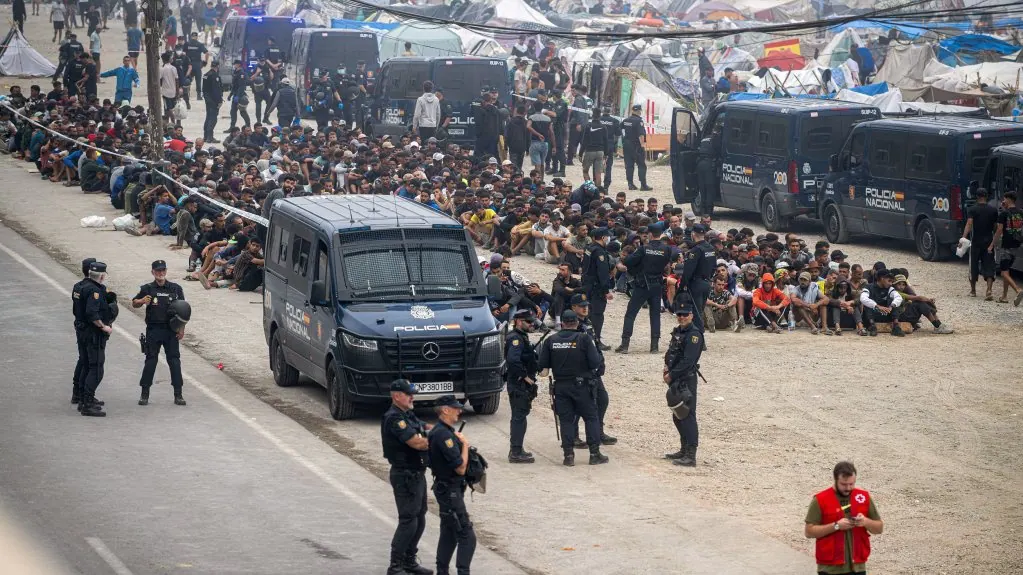
A large number of migrants have chosen to return to Morocco voluntarily after authorities evacuated the Trampolín Beach camp in Sebta. The evacuation, which took place over the past two days, aimed to conduct identity checks near the border. According to reports, the operation was carried out to ensure the migrants' safety and facilitate their identification. The migrants had been staying on the beach, and their decision to return to Morocco is seen as a significant development in the region's ongoing migration crisis.
The evacuation and subsequent return of migrants to Morocco come amid heightened tensions between Spain and Morocco over migration. In recent weeks, there have been several incidents involving migrants attempting to cross the border into Spain. The Spanish government has been working to strengthen its border controls, and the Moroccan authorities have been cooperating to manage the flow of migrants. The situation remains complex, with many migrants still attempting to make the perilous journey across the Mediterranean.
The Moroccan government has been working closely with Spanish authorities to address the migration crisis. In September, Moroccan Foreign Minister Nasser Bourita met with his Spanish counterpart, José Manuel Albares, in New York to discuss the issue. The two ministers emphasized the need for cooperation and coordination to tackle the root causes of migration. The meeting highlighted the complexities of the issue and the need for a comprehensive approach to address the challenges faced by both countries.
The migration crisis has been a major concern for both Morocco and Spain in recent years. In September, Spanish Prime Minister Pedro Sánchez praised Morocco's efforts to control the border and prevent irregular migration. Sánchez emphasized the importance of cooperation between the two countries to address the issue. Morocco has been working to strengthen its border controls and provide support to migrants who are returning to the country voluntarily.
The situation in Sebta and Melilla, two Spanish enclaves in Morocco, remains volatile. The enclaves have been a major point of entry for migrants attempting to reach Europe. In recent weeks, there have been reports of migrants attempting to storm the border fences, leading to concerns about safety and security. The Spanish government has deployed additional troops to the region to reinforce its border controls and prevent further incidents.
The King and Queen of Spain are scheduled to visit Sebta and Melilla on October 13. The visit is seen as an opportunity for the Spanish monarchs to assess the situation on the ground and discuss the migration crisis with local authorities. The visit may also provide a chance for the Spanish government to reiterate its commitment to cooperation with Morocco on migration and other issues.
The migration crisis is a complex and multifaceted issue that requires a comprehensive approach. The voluntary return of migrants to Morocco is seen as a positive development, but much work remains to be done to address the root causes of migration. The Spanish and Moroccan governments will likely continue to work together to manage the flow of migrants and provide support to those who are returning to Morocco voluntarily.
Key points
- The evacuation and return of migrants to Morocco aim to conduct identity checks and ensure safety.
- The situation in Sebta and Melilla remains volatile, with concerns about safety and security.
- The King and Queen of Spain will visit Sebta and Melilla on October 13 to assess the situation.