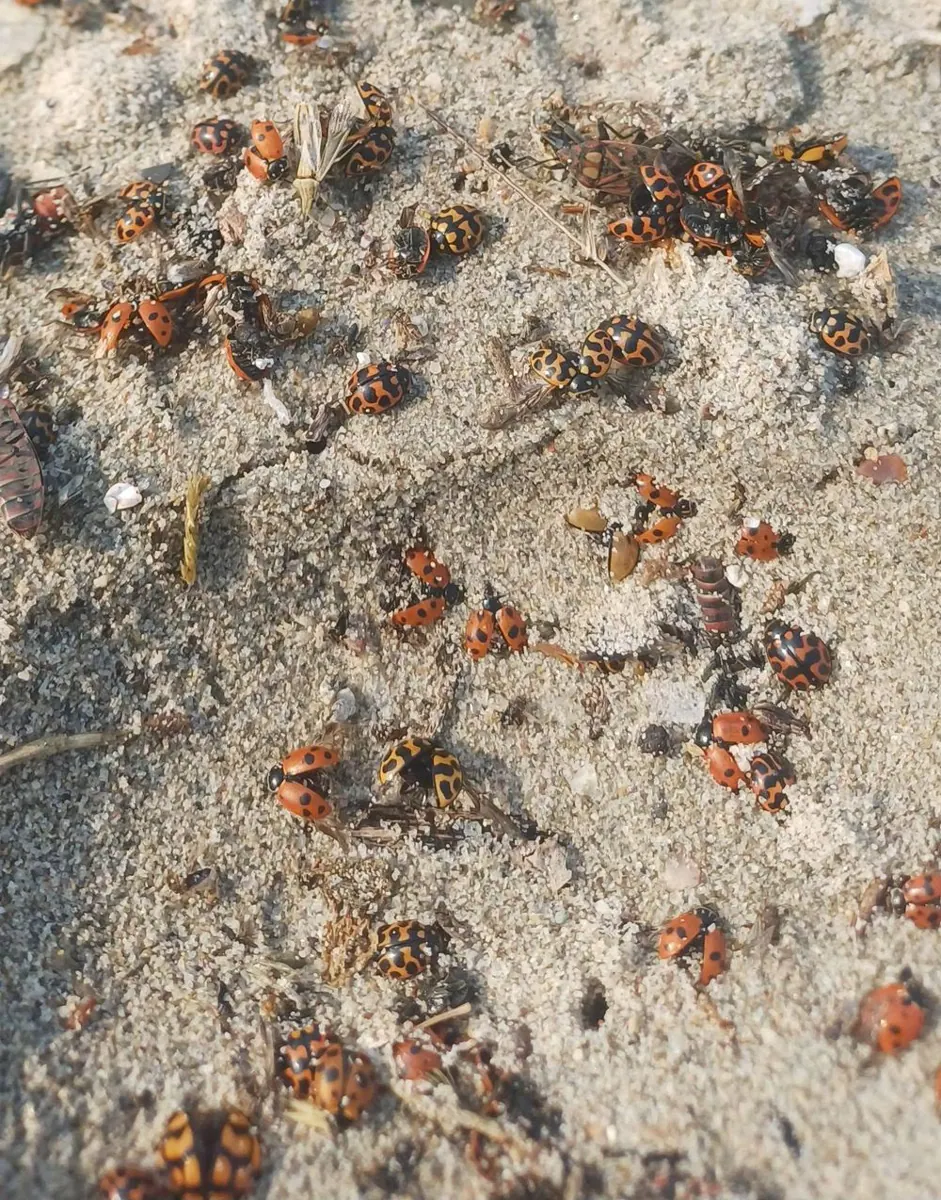
A large number of ladybirds have been found dead and alive along the high-tide mark at beaches across the Western Cape. The mass wash-up was first seen at Strand over the weekend, with similar sightings reported in Gordon's Bay and Lamberts Bay on the West Coast in recent days. The sudden appearance of the ladybirds has stunned beachgoers and raised questions about the cause of the phenomenon.
According to beetle experts, three species of ladybirds were identified among those found in Strand, including two indigenous species and one exotic species that has been present in South Africa for decades. The species identified were Lioadalia flavomaculata, the indigenous Lunate Lady Beetle (Cheilomenes lunata), and the Variegated Lady Beetle (Hippodamia variegata). The latter is believed to have arrived in South Africa from Europe around 1967.
The exact cause of the ladybird wash-up is not always clear, but experts believe that the insects undertake large migratory flights when searching for new feeding grounds or escaping colder conditions. During these migrations, they can travel at heights of between 150 and 500 meters, using warm air currents and winds to cover long distances. One explanation for the coastal wash-ups is that migrating ladybirds are caught by changes in wind or thermal currents and pushed out over the sea.
The ladybirds can remain afloat for several days, meaning some can still be alive by the time currents carry them back to shore. The sightings at three Western Cape locations within days of each other have raised questions about whether the wash-ups are linked to the same weather or wind conditions. Experts are working to determine the cause of the phenomenon.
Mass ladybird wash-ups have been recorded elsewhere in the world, including one of the largest recorded incidents in Egypt in 1939, when an estimated 4.5 billion beetles were recorded along about 21km of coastline. The incident in Egypt highlights the scale of the phenomenon that can occur.
Despite concerns about the ladybird wash-up, experts have found no sign of the harmful alien invasive Harlequin Ladybird, which originates from Asia. The Harlequin Ladybird is known to be a significant threat to local ecosystems, and its absence has been noted in the current incident.
The incident has raised awareness about the importance of conservation and biodiversity in the Western Cape. The Western Cape is known for its unique and diverse ecosystems, and incidents like the ladybird wash-up highlight the need for continued monitoring and research into the region's natural phenomena.
Key points
- The ladybird wash-up is not an isolated incident, with similar events recorded elsewhere in the world.
- Three species of ladybirds were identified among those found in Strand.
- The cause of the ladybird wash-up is not yet clear, but experts believe it may be linked to changes in wind or thermal currents.