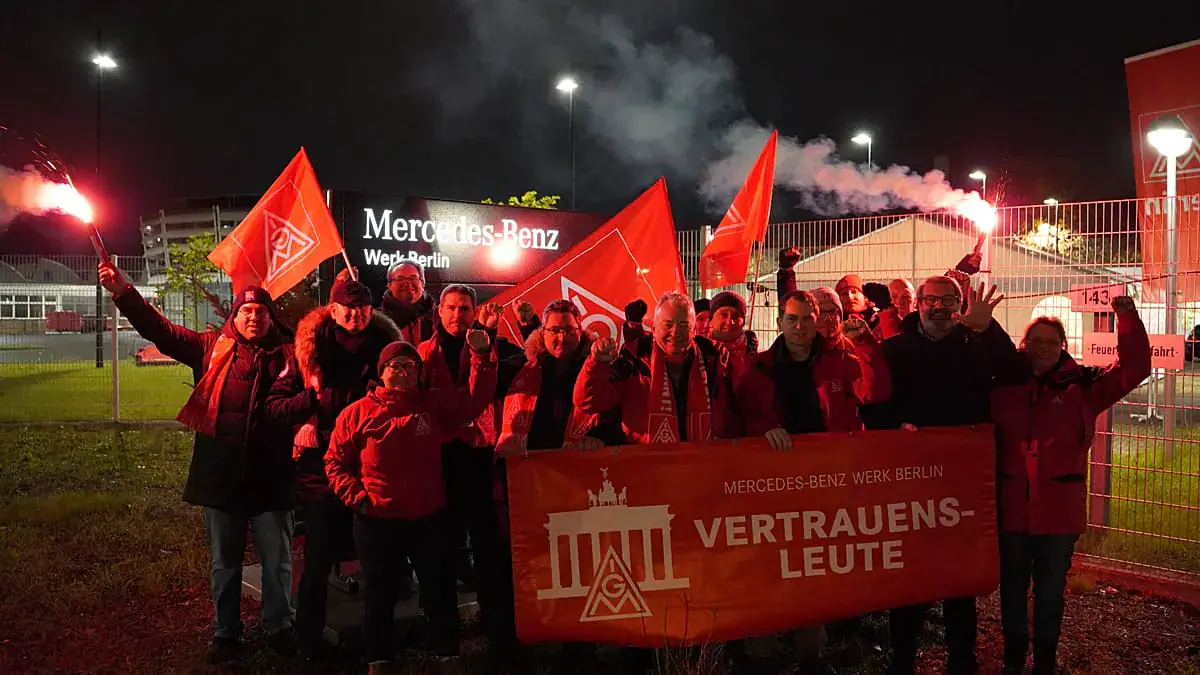
Thousands of workers in Germany's metal and electrical sectors have gone on strike after failing to reach an agreement in three rounds of pay negotiations. The strikes, called by IG Metall, involve 23,000 workers at 19 sites in northern Germany and may be followed by further action in Berlin and other regions. The union is demanding a 5% pay rise over one year for 3.7 million workers, including those in the automotive industry.
The latest strikes follow nationwide action on Friday that involved 151,000 workers, impacting major facilities like Audi's plant in Ingolstadt and three BMW factories in Bavaria. Employers have countered with a one-off payment in July 2027 equivalent to 1% of gross annual pay and a 1.3% pay rise from July 2028. However, the union argues this offer would leave workers financially worse off due to inflation.
Strikes commenced at several factories on Sunday evening, notably at Mercedes-Benz plants in Bremen and Hamburg. Production lines at the Hamburg plant have been inactive since 10pm on Sunday, with only security personnel on site, according to IG Metall representatives. Other affected companies include Siemens Gamesa in Cuxhaven.
Workers at the Meyer Werft shipyard in Papenburg were also called to strike on Monday, reported NDR. Separately, Volkswagen is engaged in negotiations with IG Metall covering about 120,000 employees and is seeking a two-year pay freeze along with flexible working hours.
The pay dispute is part of a larger trend of labor unrest in Germany's automotive industry. BMW previously aimed to cut nearly 8,000 jobs through voluntary severance, while Mercedes-Benz is pursuing €800 million in annual savings in Germany, considering longer working hours without extra pay and cuts to benefits.
The strikes are a significant development in the German economy, which has been impacted by inflation and global economic trends. IG Metall's demands are aimed at protecting the purchasing power of workers in the metal and electrical sectors. The union has called for a 5% pay rise to reflect the current economic reality.
Euronews has reached out for comments from BMW, Mercedes-Benz, and Volkswagen. The outcome of the negotiations and the impact of the strikes on the German economy remain to be seen. The situation is being closely watched by industry observers and policymakers.
Key points
- IG Metall is demanding a 5% pay rise over one year for 3.7 million workers in Germany's metal and electrical sectors.
- The strikes involve 23,000 workers at 19 sites in northern Germany and may be followed by further action in Berlin and other regions.
- Employers have countered with a one-off payment and a 1.3% pay rise, but the union argues this offer would leave workers financially worse off due to inflation.
Reporting sources
- Mercedes and BMW Face 24-Hour Strikes as German Wage Dispute Escalates · sierraleonetoday.co.com