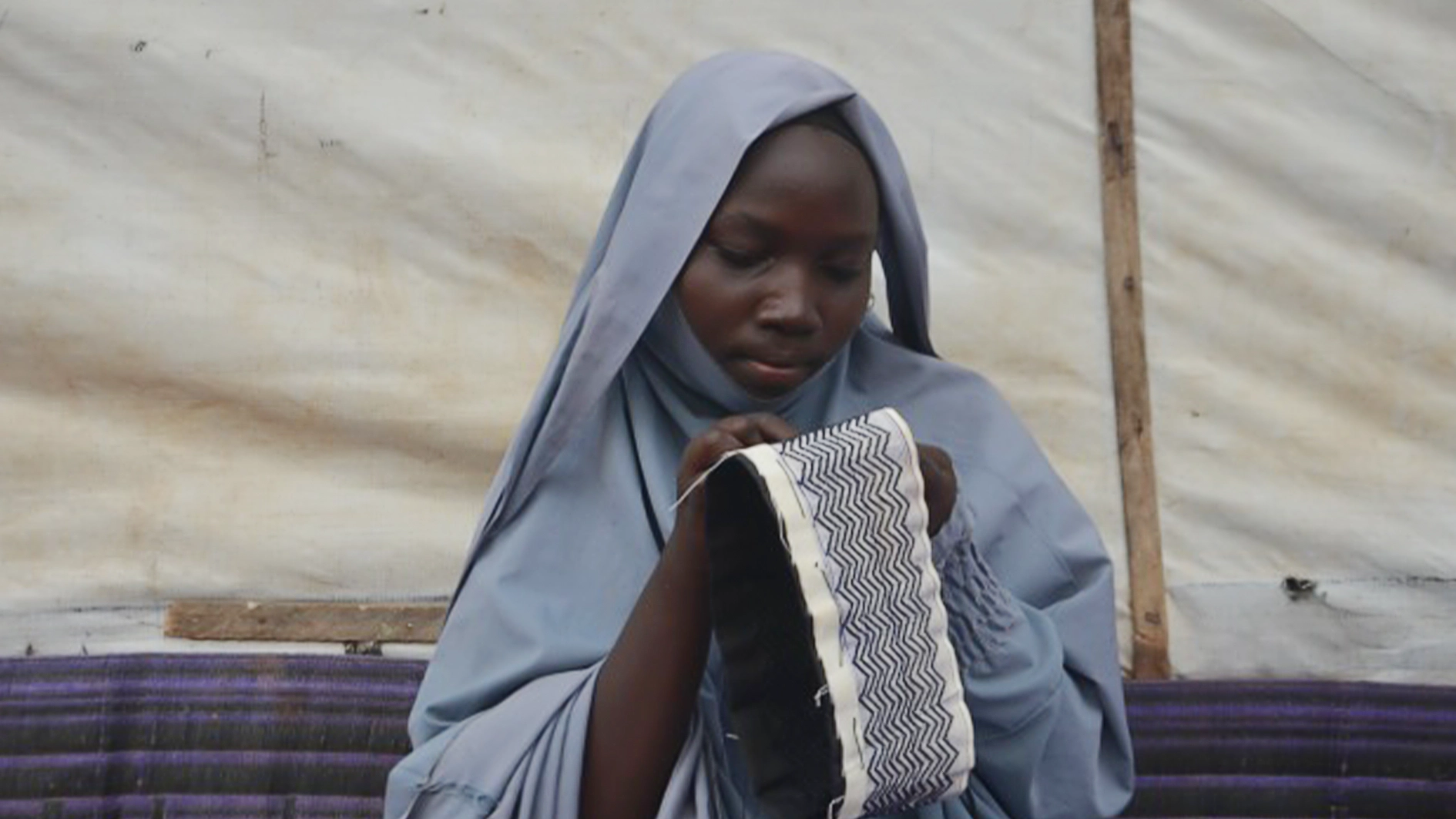
In the Damare displacement camp in Adamawa State, Nigeria, 15-year-old Aishat Umaru is struggling to come to terms with her limited educational opportunities. Despite her ambitions to become a governor, Aishat has never finished a single grade of school, having stopped attending classes in Primary 2 due to financial constraints. Her story is not unique, as thousands of displaced children in Adamawa State face similar challenges in accessing education.
According to the United Nations Children's Fund, approximately 69 percent of school-age children living in displacement camps across Borno, Adamawa, and Yobe states have no access to any form of schooling. A separate assessment revealed that nearly two million children across the same three states are out of school, with 56 percent of displaced children not attending school at all. These statistics highlight the severity of the crisis, which has been exacerbated by the Boko Haram insurgency.
The Nigerian government has implemented various initiatives aimed at addressing the issue of out-of-school children. In January, the Adamawa State Commissioner for Education and Human Capital Development, Dr. Umar Garba Pella, emphasized the importance of free and compulsory education for all children in the state. The Adamawa State Universal Basic Education Board (ADSUBEB) has also launched programmes to support out-of-school children, including a Global Partnership for Education-funded initiative that pulled over 12,000 children into non-formal learning centres.
Despite these efforts, the reality on the ground remains stark. In the Damare displacement camp, families like Aishat's have been living in limbo for over a decade, with limited access to education or economic opportunities. Aishat's mother, Rukayat Umaru, described the day her family fled Gwoza, where they were attacked by Boko Haram fighters. The family's experiences highlight the complexities of the crisis and the need for sustained support.
The crisis has significant long-term implications for the development of Adamawa State and Nigeria as a whole. With millions of children out of school, the country's future workforce is at risk of being severely impacted. Furthermore, the social and economic consequences of this crisis will be felt for generations to come. It is essential that the government and international organizations prioritize education and provide support to displaced families.
Aishat's story serves as a poignant reminder of the human cost of the crisis. Despite her talents and ambitions, Aishat is struggling to access education and build a better future for herself. Her experiences are a testament to the resilience of displaced families, who continue to face significant challenges in their quest for education and economic stability.
To address the crisis, it is essential that the government and international organizations adopt a comprehensive approach that prioritizes education and provides support to displaced families. This includes investing in programmes that provide access to education, vocational training, and economic opportunities. By working together, it is possible to mitigate the effects of the crisis and provide a brighter future for displaced children like Aishat.
Key points
- The Boko Haram insurgency has resulted in thousands of children being displaced and unable to access education in Adamawa State, Nigeria.
- Despite government initiatives, the reality on the ground remains stark, with many families struggling to access education or economic opportunities.
- The crisis has significant long-term implications for the development of Adamawa State and Nigeria, emphasizing the need for sustained support and investment in education.