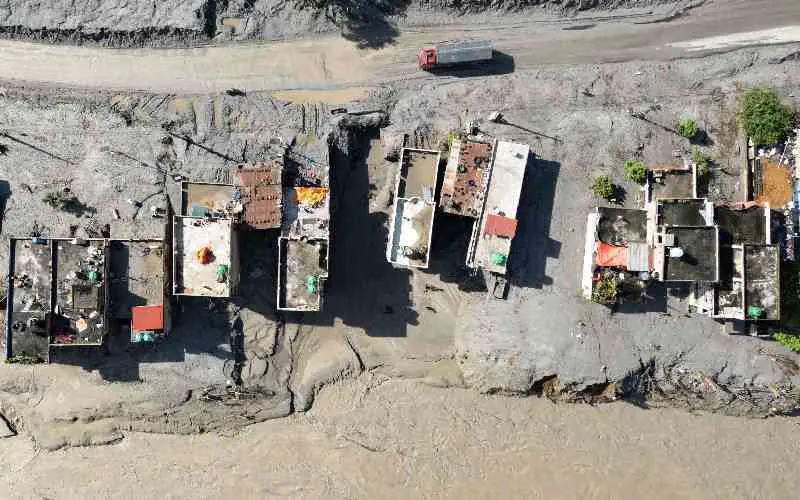
A tsunami-like flood that cut a swathe of destruction through Nepal on August 26 has left the Himalayan nation grappling with heavy losses and mounting reconstruction needs. The disaster was triggered by a high-altitude glacial mountain collapse on the China-Nepal border, which scientists have linked to climate change. The flood has affected more than 80,000 people, with thousands living in emergency shelters.
The collapse began at an altitude of about 5,200 metres on the north face of Nepal's Langtang Lirung mountain, sending a huge mass of debris racing down the valley. The debris travelled about 20 kilometres, dropping 1,700 metres at Rasuwagadhi in only seven minutes. Sudan Bikash Maharjan, a geologist with the Kathmandu-based International Centre for Integrated Mountain Development, described the debris' movement as like a "bullet train" due to the high elevation difference over a short length.
Nepal's disaster authority reports that 1,451 bodies have been recovered, while more than 5,700 people are missing. Among the missing are hundreds of workers from hydropower projects swept away by the disaster, along with hundreds more foreigners including tourists and pilgrims caught in the floodwaters. Identifying victims through DNA has proved a major challenge for Nepali authorities, with only about 100 bodies identified so far.
Rescue operations have been ongoing, with hundreds of rescuers deployed by helicopter digging through mud and debris in search of survivors. There have been rare breakthroughs, including the rescue of three workers - two Nepalis and a Chinese man - who were trapped in tunnels under construction. One of them, 30-year-old Sanjay Sah, survived 10 days in darkness by drinking muddy water and praying.
The United Nations has launched an urgent appeal for nearly $50 million in emergency aid. Many communities near the epicentre remain cut off, with the UN and the Nepali government delivering supplies by helicopter and cargo drone. Several countries have pledged financial support for Nepal, amounting to a few million dollars - far below the scale of the disaster.
Nepal estimates the reconstruction bill will amount to $4.78 billion, with $57 million needed for short-term reconstruction and recovery over the next six months. The floods have cut Nepal's electricity generation capacity - mainly hydropower - by 10 percent, with the energy sector accounting for half of the total infrastructure damage from the disaster.
Climate change has been cited as a contributing factor to the disaster, with scientists from the World Weather Attribution group saying the disaster was not caused by a single extreme weather event, but a "compound crisis" shaped by long-term warming, glacier retreat, permafrost thaw and geological instability. Nepal's leaders are urging the world to recognise the dangers of climate change and act quickly.
Key points
- The flood disaster in Nepal has resulted in 1,451 confirmed deaths and over 5,700 people missing.
- The estimated reconstruction bill for Nepal is $4.78 billion.
- Climate change has been identified as a contributing factor to the disaster.