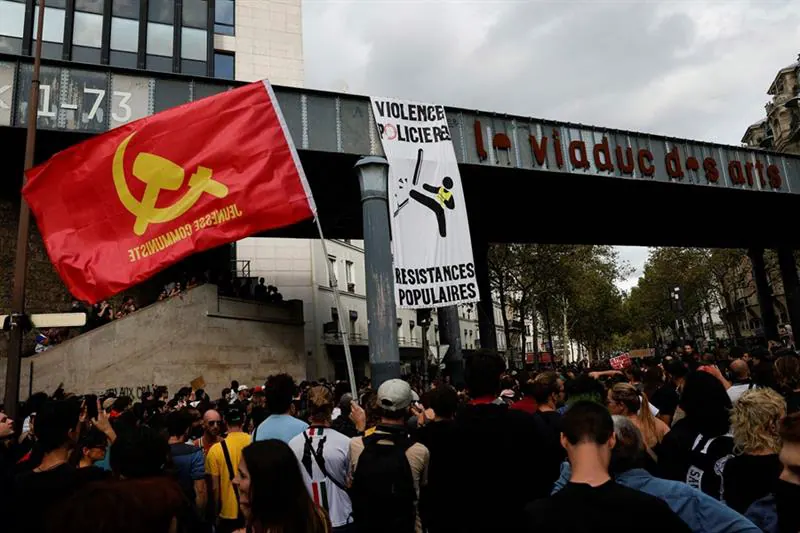
On Sunday, 20 September 2026, thousands of people took to the streets of Paris to protest a proposed law that critics say would give police and gendarmes a "licence to kill". The law, which was approved by deputies in the National Assembly in July, grants law-enforcement officials a presumption of legitimate self-defence when using firearms. The protest was organised by a coalition including Amnesty International France, the Ligue des droits de l'Homme (Human Rights League), and the SAVE collective.
The proposed law has sparked widespread criticism from politicians, rights groups, and activists, who argue that it would lead to police impunity and undermine accountability. Mathilde Panot, a member of the hard-left France Unbowed (LFI) party, addressed the crowd at the protest, saying that the police already kill and that there can be no organised police impunity in a republic. Panot called for the bill to be voted down in the Senate, where it now faces a vote.
Amal Bentousi, the sister of Amine, a robber who was shot in the back by police in 2012, was among the marchers. She described the proposed law as a "licence to execute" that would reverse the burden of proof in incidents of police violence. Amnesty International, France's magistrate's union, and the country's League of Human Rights also took part in the protest, highlighting the concerns of many about the potential impact of the law on human rights.
The protest in Paris was part of a wider movement against the law, with scores of other marches organised in cities around France over the weekend. A petition against the bill on the National Assembly website gathered 730,000 signatures, but the parliament's law committee dismissed it in July. The law has sparked a national debate about police violence and accountability in France.
Critics of the law argue that it would undermine the principles of accountability and transparency in policing. They point out that the law would grant police and gendarmes a presumption of legitimate self-defence, even in cases where the use of force may not be justified. This, they argue, would lead to a lack of accountability and potentially deadly consequences.
The French government has defended the law, arguing that it is necessary to protect law-enforcement officials from violence and intimidation. However, critics say that the law would do little to address the root causes of police violence and would instead perpetuate a culture of impunity. The debate over the law is set to continue as it faces a vote in the Senate.
The outcome of the vote is uncertain, but one thing is clear: the proposed law has sparked a national conversation about police accountability and human rights in France. As the country grapples with the complexities of policing and public safety, the fate of the law will be closely watched by human rights groups and citizens alike.
Key points
- The proposed law grants police and gendarmes a presumption of legitimate self-defence when using firearms.
- Critics argue that the law would lead to police impunity and undermine accountability.
- The law has sparked widespread criticism and protests across France.