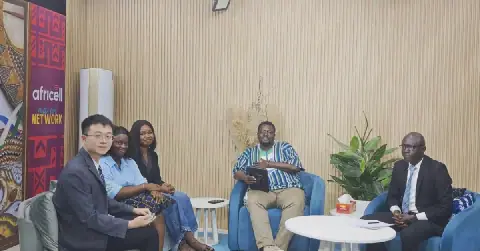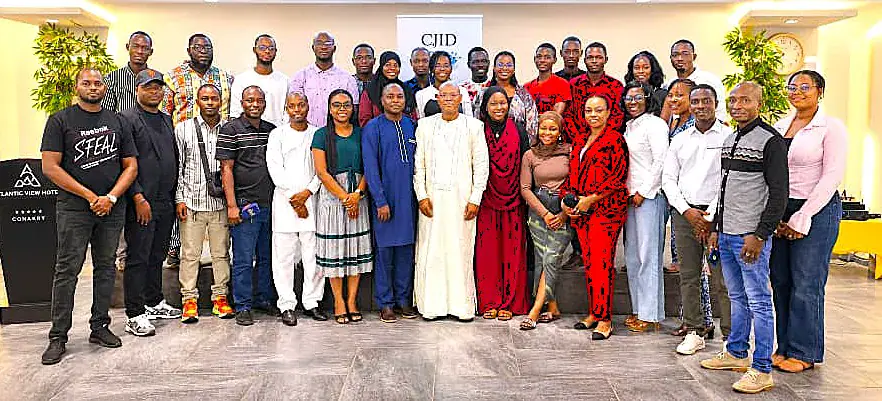
A three-day training program on conflict-sensitive journalism, fact-checking, and disinformation was conducted for thirty journalists from public and private media in Guinea. The training, which took place from November 3 to 5, was organized by the Centre for Journalism, Innovation and Development (CJID) in collaboration with the Guinean section of the West African Network for Peacebuilding (WANEP) and funded by the European Union. The participants, who came from Conakry and the hinterland, were equipped with practical tools and skills to identify, verify, contextualize, and treat information that may influence public debate.
The training program covered various topics, including journalism and electoral processes, conflict-sensitive journalism, fact-checking, open-source intelligence, and the fight against disinformation and foreign interference. Alpha Amadou Diari Diallo, project and research officer at CJID-Guinea, emphasized that these themes are crucial for journalists to master in order to help populations confronted with disinformation and hate speech on social media. He noted that a well-trained journalist is an impactful journalist who can be an ambassador.
The training program began with a session on journalism and electoral processes, aiming to equip participants with the skills to cover political and electoral issues with rigor, responsibility, and impartiality. The program also focused on conflict-sensitive journalism, which is essential in countries where elections often take place in tense contexts. Amadou Diallo, a former BBC journalist, explained that journalists must be aware of their role and responsibility in covering conflicts and elections, and that their words and images can either exacerbate or calm tensions.
The participants were also trained on fact-checking and open-source intelligence, which are critical skills in combating disinformation and foreign interference. Paulo Barroso, the European Union representative, stated that the training is a concrete contribution to strengthening media professionalism and that journalists must combine ethics and rigor in treating information, especially in times of crisis. He emphasized the importance of resisting the pressure of instantaneity and being discerning in the face of manipulation and rumors.
The CJID is committed to supporting media and promoting press freedom, climate change, AI, health, and agriculture. Maxine Danso, the responsible for international expansions at CJID, invited the participants to maintain the links created and to seize the training opportunities offered by CJID. She noted that the CJID's mission is to support media and advance their work in all countries where it is represented, including Nigeria, Liberia, Senegal, RDC, and Cameroon.
The training program included theoretical sessions, practical exercises, and case studies. The participants were encouraged to share their experiences and to discuss the challenges they face in their work. The program also provided an opportunity for the participants to network and to establish contacts with other journalists and media professionals.
The CJID-Guinea program is part of a larger effort to promote press freedom and media professionalism in West Africa. The program aims to strengthen the capacities of journalists and media organizations to produce high-quality, fact-based information that contributes to informed public debate and promotes peace and social cohesion. The training program is a testament to the CJID's commitment to supporting media and promoting democracy in the region.
Key points
- The training program covered various topics, including conflict-sensitive journalism, fact-checking, and disinformation.
- The program aimed to equip journalists with practical tools and skills to identify, verify, contextualize, and treat information that may influence public debate.
- The CJID is committed to supporting media and promoting press freedom, climate change, AI, health, and agriculture.