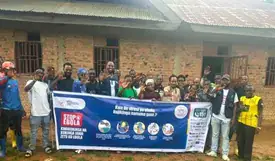
The Congolese press agency reported that thirty community leaders from Dubele, in the health area of Lodjo, Mongbwalu health zone, Ituri province, were mobilized to enhance community participation in Ebola response activities. The initiative aimed to address resistance to response efforts through community dialogue. The meeting brought together participants from various community groups, including young people, pastors, civil society members, and other community leaders.
The dialogue focused on the importance of decontamination and sensitization teams, infection prevention and control measures, and the role of community leaders in accepting health interventions. The discussions aimed to address concerns and identify solutions to persistent resistance within the population. The participants expressed their concerns and proposed ways to reduce resistance to Ebola response efforts.
At the end of the meeting, the community leaders committed to supporting response teams and raising awareness in their respective communities to promote adherence to health measures. This activity was facilitated by the provincial commission for risk communication and community engagement, with technical and financial support from FHI 360, funded by the US Department of State through the EpiC project.
The initiative was undertaken in response to observed resistance to Ebola response activities in the area. The community leaders' engagement is expected to improve acceptance of health interventions and promote community participation in Ebola response efforts. The meeting was a significant step towards addressing the challenges faced by response teams in the region.
The mobilization of community leaders is a critical component of the Ebola response strategy in the DRC. By engaging community leaders and promoting awareness, response teams can build trust and improve the effectiveness of their efforts. The US Department of State's support for the EpiC project has been instrumental in enhancing response efforts in the region.
The DRC has been experiencing Ebola outbreaks in recent years, with the Ituri province being one of the affected areas. The response efforts have been hindered by community resistance, which has made it challenging to contain the outbreak. The mobilization of community leaders is seen as a key strategy to address this challenge and promote community engagement in response efforts.
The success of this initiative will be closely monitored, and its impact on community engagement and Ebola response efforts will be evaluated. The involvement of community leaders in response efforts is expected to improve the overall effectiveness of the response strategy and contribute to the control of the Ebola outbreak in the region.
Key points
- Community leaders in Dubele, Ituri province, DRC, have been mobilized to support Ebola response efforts and promote community engagement.
- The initiative aimed to address resistance to response efforts through community dialogue and awareness-raising activities.
- The mobilization of community leaders is a critical component of the Ebola response strategy in the DRC.
Reporting sources
- Ebola en Ituri : 30 leaders communautaires mobilisés contre les résistances à la riposte · Congolese press agency