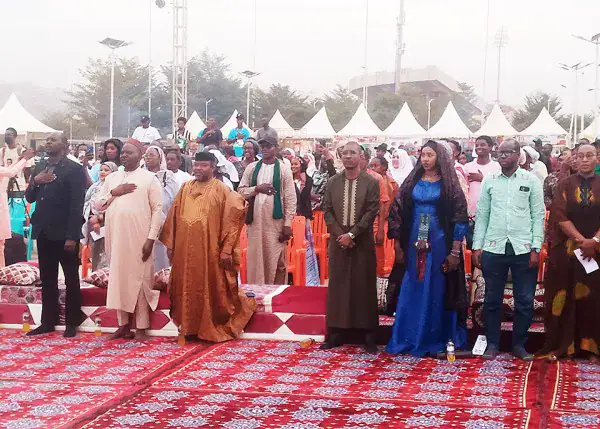
The Festival Nord du Mali recently held its third edition from November 4-8 on the esplanade of the 26 Mars stadium in Bamako. This cultural event brought together artisans, artists, and communities from the North region, highlighting their traditions, gastronomy, and heritage. The festival's theme, "Culture, art, memory, and social cohesion," was emphasized throughout the event.
The festival featured various activities, including concerts of traditional music, exhibitions of local handicrafts, and storytelling sessions. A total of 82 stands were set up, showcasing the work of 22 artists over the five-day event. The festival also provided a platform for intergenerational encounters, promoting cultural exchange and understanding between different communities.
The event was officially opened and closed with ceremonies presided over by Maouloud Ben Katra, a former minister and representative of the North region. Several community representatives were in attendance, including the Peule community, who were invited as guests of honor. Ben Katra expressed his satisfaction with the event's success, praising the organizers and participants for their commitment to promoting cultural heritage.
The festival allowed attendees to experience the culture of the North region firsthand, with many visitors praising the event for its ability to bring people together. Aminata Touré, a festival-goer, noted that the event allowed her to reconnect with her roots and relive fond memories of her hometown. The festival also provided a unique opportunity for people to discover the art, cuisine, and traditions of the North region.
The event was organized with 82 stands and featured a variety of activities, including music performances, handicraft exhibitions, and traditional food. Aboubacar Sacko, the festival's general commissioner, noted that the event had become a major cultural gathering, symbolizing peace and diversity. The festival has now become a significant event in Mali's cultural calendar, promoting unity and cultural exchange between different regions.
The festival's impact extends beyond the event itself, as it provides a platform for promoting cultural heritage and preserving traditional practices. The event also highlights the importance of cultural diversity and the need to preserve Mali's rich cultural heritage. By bringing people together, the festival fosters a sense of community and promotes social cohesion.
The success of the festival demonstrates the importance of cultural events in promoting understanding and unity. The event has become a vital part of Mali's cultural landscape, showcasing the country's rich cultural heritage and promoting cultural exchange between different regions. The festival's organizers and participants are to be commended for their efforts in promoting cultural diversity and preserving traditional practices.
Key points
- The festival promoted cultural exchange and understanding between different communities.
- The event showcased the traditions, cuisine, and heritage of the North region.
- The festival has become a significant cultural event in Mali, promoting unity and cultural diversity.