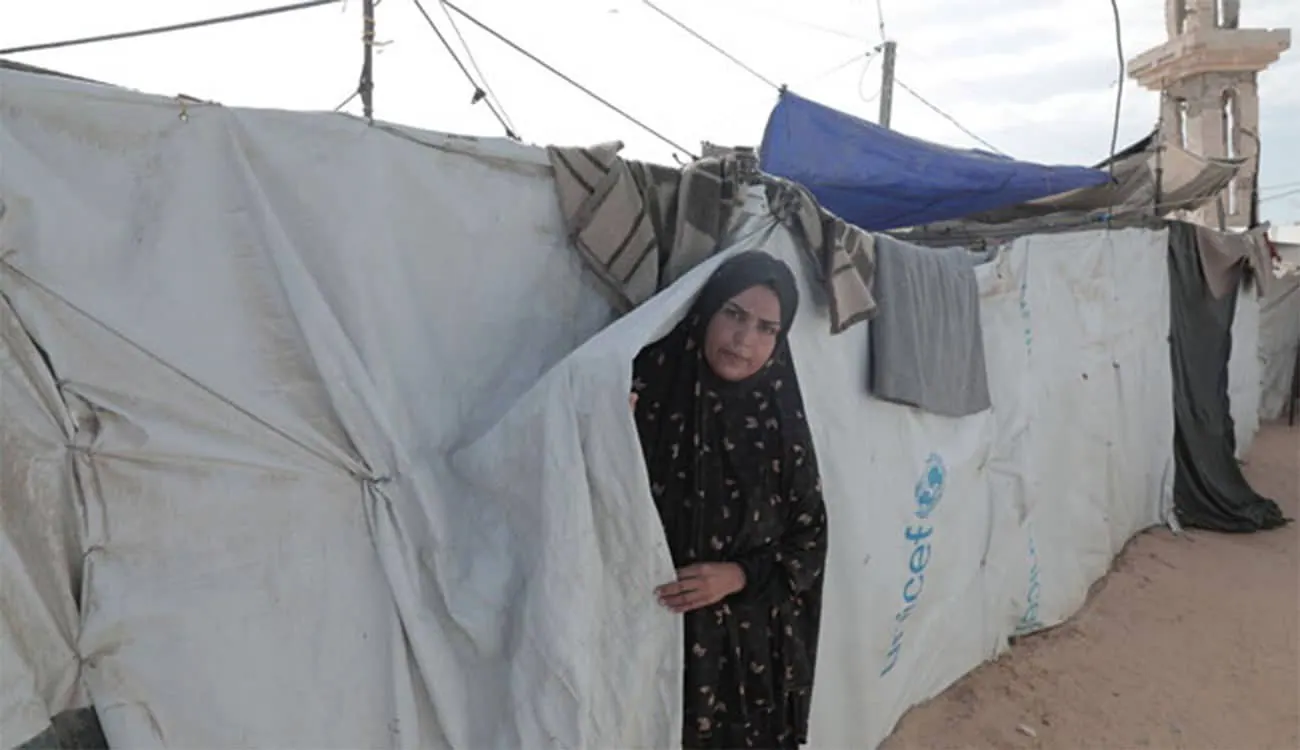
As the third anniversary of the Gaza war approaches, the humanitarian crisis in the Palestinian enclave continues to worsen. The Norwegian Refugee Council (NRC) reports that 1.65 million people are at risk of spending the winter in worn-out tents or damaged buildings due to a lack of access to essential materials for shelter. This situation is exacerbated by Israeli restrictions on humanitarian aid and a shortage of funding.
The NRC estimates that 1.98 million Palestinians, or 94% of Gaza's population, are in need of assistance with shelter and essential goods. The organization highlights that only 15 shipments of "dual-use" materials, which can be used for both civilian and military purposes, are allowed to enter Gaza from Jordan every week. These materials, including tents and tarps, are crucial for daily life and shelter repairs but often face delays or restrictions at the Karm Abou Salem checkpoint.
The Rafah crossing, which connects Gaza to Egypt, remains officially open on the Egyptian side, but restrictions and closures on the Palestinian side, controlled by Israeli forces, hinder the delivery of aid and movement of civilians. The NRC notes that at least 500 trucks carrying shelter materials are waiting or en route to Gaza, but at the current rate, it would take over seven months for them to enter.
The preparation for winter is also complicated by a shortage of heavy machinery and fuel, which slows down efforts to prevent flooding in displacement sites. Approximately 950,000 people live in areas with a medium or high risk of flooding. The NRC emphasizes that Palestinians are confined to about 35% of Gaza's territory, limiting their ability to move to safer areas.
Nesma Al-Sallaq, NRC shelter sector coordinator in Gaza, expressed concern about the upcoming winter, stating that living in a tent is not just a seasonal issue but a nightmare. The situation remains unstable on the ground, despite a ceasefire that took effect on October 11, 2025. According to Palestinian medical sources, the war has resulted in 74,243 martyrs and 175,232 injured since October 7, 2023.
Since the ceasefire, 1,460 Palestinians have been killed and 5,116 injured. Recently, a Palestinian was killed and five others were injured in a strike by Israeli forces in Khan Younes, south of the Gaza Strip. Additionally, five Palestinians, including two children, were injured in shootings and bombings targeting several regions of the Gaza Strip.
The destruction caused by the war is staggering, with approximately 201,290 buildings destroyed between the start of the war and June 16, 2026, accounting for nearly 82% of Gaza's built-up area. The Palestinian Central Bureau of Statistics reports that 134,422 buildings were completely devastated, while around 328,627 homes were damaged. The NRC's data underscores the ongoing crisis, with displaced populations, widespread infrastructure destruction, and humanitarian needs far exceeding available resources.
Key points
- 1.65 million Palestinians in Gaza face a harsh winter in tents or damaged buildings
- Israeli restrictions and funding shortages hinder humanitarian aid efforts
- 201,290 buildings destroyed in Gaza since the start of the war