The Pickard China factory in Antioch, Illinois, has been a mainstay of American fine china production for over a century. However, the company has faced significant challenges in recent years, including a decline in demand for high-end china and escalating manufacturing costs. As a result, Pickard China is now the last remaining fine china manufacturer in the United States. The company's current output is roughly a quarter of what it was at its peak in the 1970s.
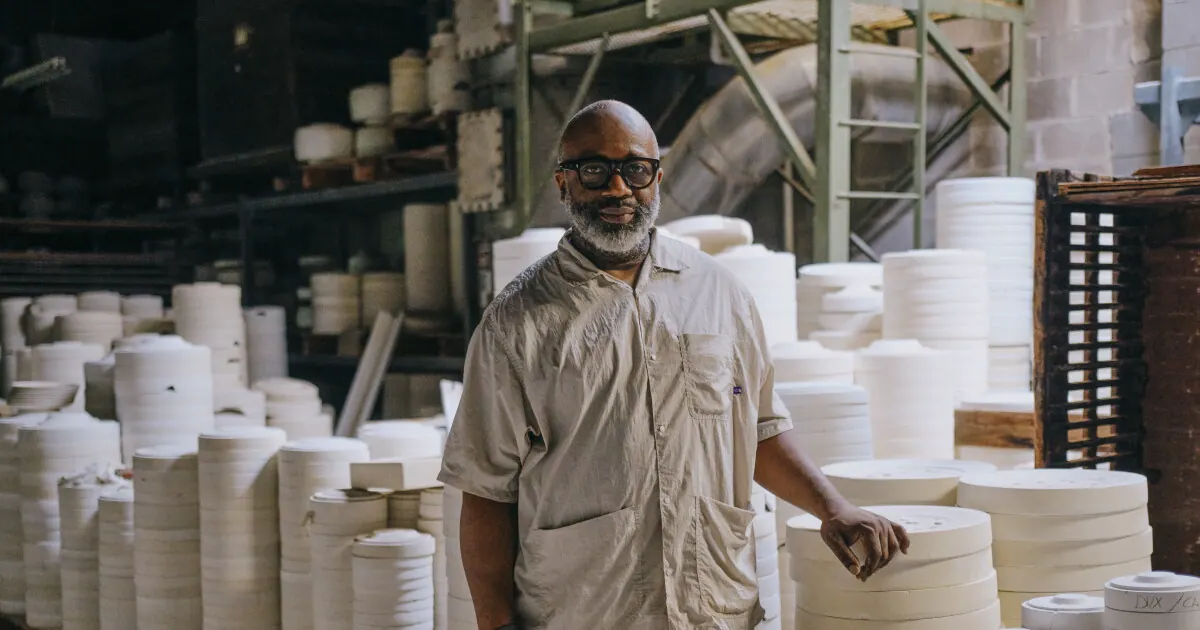
Theaster Gates, a renowned contemporary artist, has acquired Pickard China for an undisclosed sum. Gates, known for his installations made from salvaged materials, has a long-term partnership with Prada and has worked with high-profile clients, including the Obamas. He was introduced to Pickard China by Illinois first lady MK Pritzker, who connected him with Andy Pickard Morgan, the fourth-generation family member in charge of the company.
Gates' vision for Pickard China is to bring artisanal manufacturing back to the fore. He plans to leverage his expertise in ceramics and his experience restoring and repurposing defunct buildings to revitalize the company. Gates has a deep respect for building upon legacy and preserving legacy, which aligns with the values of Pickard China. The company's employees, including Rachael Keeling, a British craftsperson who has worked at Pickard for 25 years, are optimistic about the acquisition.
The acquisition of Pickard China by Gates is seen as an unlikely yet canny match. Gates' expansive vision of what an artist is and does aligns with the company's traditional approach to fine china production. He is a master ceramicist who focuses on Japanese and African-American traditions and has worked to highlight little-known Black potters. Gates recently mounted a show at the prestigious Gagosian Gallery in New York about the 19th century enslaved ceramicist David Drake.
Philip Scranton, an emeritus historian of American industrial development at Rutgers University, attributes Pickard China's survival to "stubbornness and legacy." He notes that the company's decline is part of a larger trend in the fine china industry, which has faced significant challenges since the 1970s. Scranton is skeptical about the possibility of recovering the market for fine china, but Gates' acquisition of Pickard China has raised hopes.
Gates faces a daunting assignment in revitalizing Pickard China. The company's factory is in urgent need of repairs and upgrades, and its workforce requires careful management. However, Gates has a track record of transforming defunct buildings and businesses into thriving cultural centers. He created a cultural center out of the renovated premises of a condemned bank building, which now holds thousands of books relating to Black history and culture.
The acquisition of Pickard China by Gates has been welcomed by the company's employees and industry experts. Linda Johnson Rice, chairman and CEO of Johnson Publishing, notes that Gates' respect for legacy and his ability to breathe new creative life into dormant commercial assets make him a suitable owner for Pickard China. However, she also cautions that running an existing company is a different challenge from restoring and repurposing static assets.
Key points
- Theaster Gates acquires Pickard China factory in Illinois to revive American artisanal manufacturing.
- Pickard China is the last remaining fine china manufacturer in the United States.
- Gates aims to leverage his expertise in ceramics and his experience restoring and repurposing defunct buildings to revitalize Pickard China.