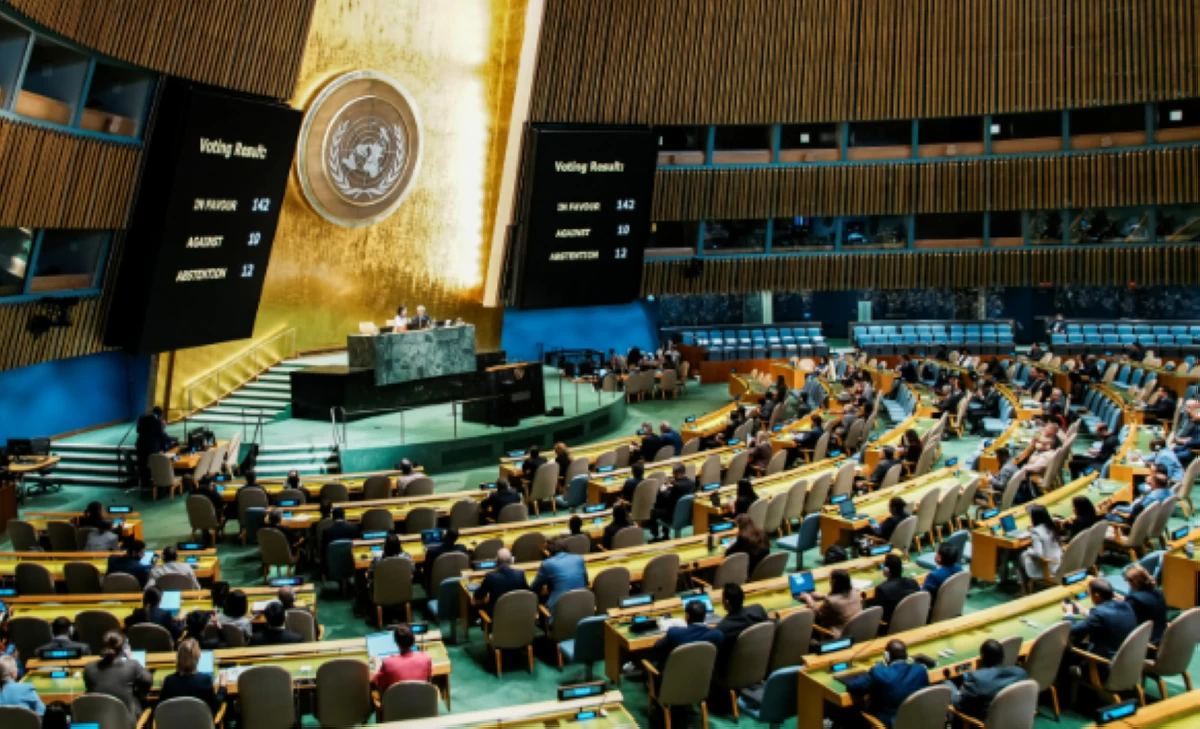
The 81st session of the United Nations General Assembly has commenced, bringing to the forefront issues of legitimacy, power dynamics, and the role of the international organization in addressing global challenges. The session has seen contentious developments, including the United States' decision to allow an Iranian delegation to attend while denying Palestinian President Mahmoud Abbas a visa. This move has sparked concerns about the politicization of the UN and the influence of major powers.
The situation highlights the complexities of the relationship between the UN and its member states, particularly the host country, the United States. The 1947 agreement governing the UN's headquarters requires the host country to facilitate access to the organization, but the US has cited security and foreign policy concerns to justify its actions. This has led to a stalemate, with the Palestinian side accusing the US of undermining the two-state solution and the UN's ability to address the Israeli-Palestinian conflict.
The incident is not an isolated case, as the US has been critical of the UN and has sought to reform the organization to better align it with its interests. The US has also been selective in its engagement with the UN, choosing to participate in initiatives that align with its goals while criticizing the organization's shortcomings. This approach has raised questions about the US commitment to multilateralism and the UN's role in promoting global stability.
The challenges facing the UN are not limited to the issue of visas and access. The organization is also grappling with the need for reform, particularly in the Security Council, which has been criticized for its outdated composition and the use of the veto power by its permanent members. The African and Arab states have called for greater representation and an end to the veto power, which they see as a relic of the post-World War II era.
The UN's ability to address global challenges is also being tested by the ongoing conflicts and crises around the world. The organization has been criticized for its inability to prevent or respond effectively to conflicts, particularly in the Middle East and Africa. The UN's peacekeeping operations have also faced challenges, including allegations of misconduct and ineffectiveness.
In response to these challenges, UN Secretary-General António Guterres has called for a renewed commitment to multilateralism and the UN's founding principles. He has also emphasized the need for reform and greater representation in the Security Council. The US, as a key player in the UN, has a critical role to play in shaping the organization's future and addressing its challenges.
The "Peace Council" initiative launched by US President Donald Trump has also raised questions about the future of the UN and its role in promoting peace and stability. The council, which aims to bring together countries to address conflicts and promote peace, has been seen as a potential alternative to the UN. However, its mandate and effectiveness remain unclear, and its relationship with the UN is still to be defined.
Key points
- The UN faces challenges in addressing global conflicts and crises due to the influence of major powers and the need for reform.
- The organization's ability to promote peace and stability is being tested by ongoing conflicts and crises around the world.
- The US plays a critical role in shaping the UN's future and addressing its challenges, but its commitment to multilateralism and the UN's role is being questioned.