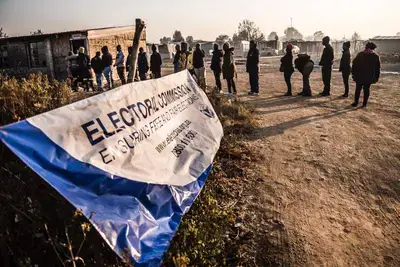
As South Africa's elections approach, much attention is focused on political parties and their candidates. However, behind the scenes, a workforce is responsible for ensuring the process runs smoothly. Election helpers, including queue workers, officials, and observers, play a vital role in managing the flow of people, checking identification documents, and directing voters to the correct stations. Their work is crucial in preventing people from casting more than one ballot and ensuring that voters can exercise their democratic rights with dignity.
The work of election helpers can be challenging, particularly when voters arrive at the wrong station or discover discrepancies in their registration details. In such cases, helpers must explain procedures while keeping queues moving, which requires coordination, attention to detail, and patience. The physical conditions of voting stations also pose a challenge, particularly for people with disabilities and older voters. Steps, unsuitable entrances, and limited space can create difficulties, highlighting the need for accessibility considerations when selecting and preparing venues.
Election observers, such as Junior Dala, who was deployed on behalf of the Ahmed Kathrada Foundation, monitor proceedings and raise concerns about possible irregularities. Unlike political party agents, observers are not there to represent a party or campaign for a candidate. Their role is to observe the process and ensure that it is fair and transparent. Dala's experience as a political party agent had given him a different understanding of election work, and he described observing as a more relaxed role with a focus on monitoring.
According to Dala, accessibility was a concern at the voting station where he was deployed. Several voters with disabilities struggled to enter the venue due to its inaccessibility and stairs. IEC officials had to assist voters waiting in their vehicles, and there were delays and confusion when officials divided queues alphabetically. Some voters became frustrated after being directed to different lines despite arriving earlier. The situation became more complicated when one of the systems used to manage voters failed to capture some details.
The work behind an election is not only about following procedures but also about responding to people. Election helpers, including queue workers and officials, must interact with voters, explain procedures, and assist those who are struggling. Each interaction contributes to the experience voters take away from election day, and each vote counted contributes to the success of the election. For Dala, the significance of voting goes beyond the administration of the process, as it gives people an opportunity to influence decisions that affect their everyday lives.
Dala believes that participation in democracy is crucial, comparing voting to getting into an Uber and telling the driver where you want to go. He hopes to see more young people participating, arguing that voter education should focus not only on political parties but also on the importance of exercising one's democratic rights. He was moved by older people who came to vote despite physical difficulties, and he hopes that their example will inspire others to participate.
The people working behind the scenes cannot determine which party wins or guarantee that elected representatives will deliver on their promises. Their responsibility is to help ensure that voters can participate in a process that is organised, transparent, and accessible. As the elections approach, the focus will shift from the work happening inside voting stations to the impact of the election on the country and its people. Ultimately, the success of the election will depend on the efforts of election helpers and the participation of voters.
Key points
- Election helpers play a crucial role in ensuring a smooth voting process in South Africa.
- Accessibility and voter education are key concerns in the lead-up to the elections.
- The significance of voting goes beyond the administration of the process, as it gives people an opportunity to influence decisions that affect their everyday lives.