The United Nations General Assembly is currently hosting nearly 130 heads of state and government for its High-Level Week, with the General Debate taking place from 22 to 28 September under the theme "Restoring trust, managing transformation: A United Nations that delivers for all." This annual event provides a platform for member states to raise their strategic concerns within the framework of the UN Charter and international law. However, the effectiveness of the UN in converting international debate into timely political outcomes is being questioned.
The UN undeniably provides a global stage where states can publicly present their positions, which is something the international system desperately needs. During High-Level Week, New York becomes a diplomatic hub, attracting governments, media organizations, businesses, civil society groups, and international organizations. The economic activity surrounding such a gathering is substantial. However, criticism arises as to whether the enormous diplomatic machinery produces outcomes proportionate to the expectations attached to it.
Every major power approaches the UN podium with its own political narrative, using the international stage not merely to negotiate but also to build legitimacy before a global audience. Leaders use the platform to frame conflicts according to their national interests. However, the fundamental question remains: what price does a state pay when its concerns are heard but not translated into action? The structural problem lies in the Security Council, which consists of 15 members, including five permanent members with veto power.
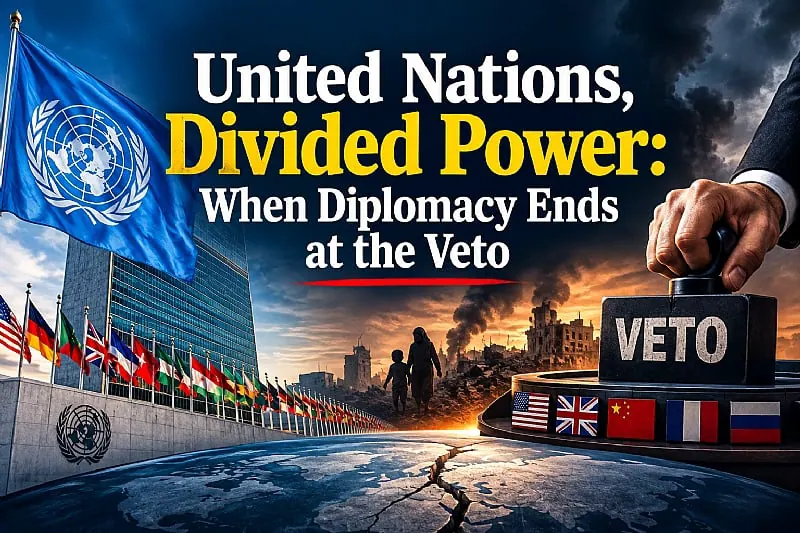
The Security Council's veto power is a significant limitation to the UN's effectiveness. This is where the promise of universal representation collides with unequal institutional power. The UN has recognized part of this problem, and since 2022, General Assembly Resolution 76/262 provides for a formal Assembly debate within 10 working days when a permanent Security Council member uses its veto. However, accountability after a veto is still different from preventing a crisis before it reaches the veto.
To become more than a PR exercise, the UN needs stronger preventive diplomacy, earlier mediation, transparent implementation mechanisms, and greater accountability when Security Council action is blocked. Security Council reform has been under intergovernmental negotiation for years, with issues such as representation, membership categories, regional balance, veto power, and working methods remaining central. The world is larger than five permanent powers, and if the international system expects legitimacy from nearly 200 sovereign states, its most consequential security decisions cannot remain permanently disconnected from the wider membership.
The objective should not be to abolish diplomacy but to make diplomacy consequential. Joint agendas should lead to joint concessions, negotiated settlements should have implementation mechanisms, and international law should not appear stronger against some states and weaker against others. The UN does not need another stage on which the world merely speaks; it needs a mechanism through which the world can act.
Until then, the central contradiction will remain: the United Nations may be united in name, but its ability to deliver unified political action remains constrained by the unequal architecture of global power. The UN's critical moments raise a simple question: could proactive diplomacy have been deployed before conflicts escalated? The answer requires institutional responsibility rather than another annual cycle of speeches.
Key points
- The UN's effectiveness in converting debate into tangible outcomes is being questioned.
- The Security Council's veto power is a significant limitation to the UN's effectiveness.
- The UN needs stronger preventive diplomacy and greater accountability to become more than a PR exercise.