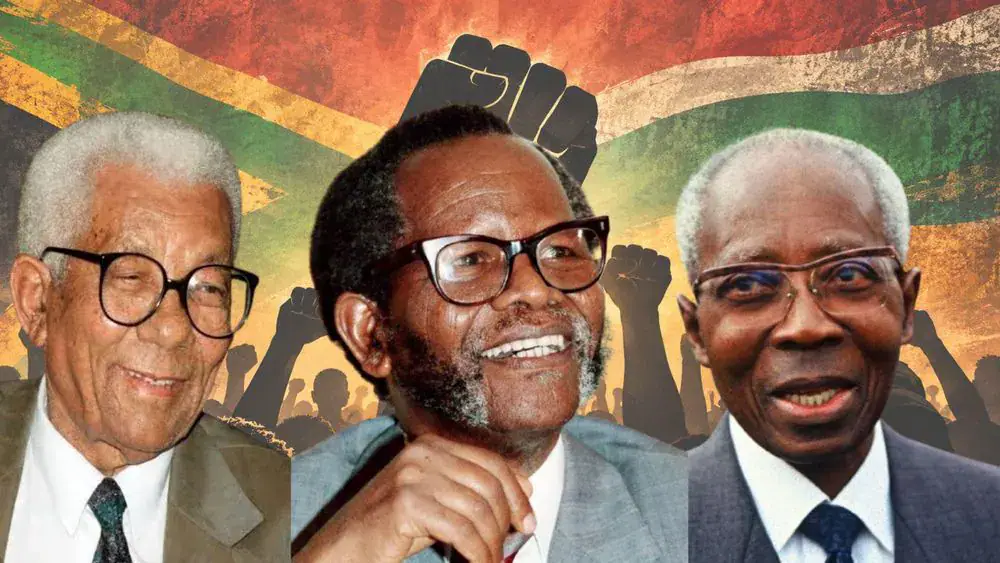
The legacies of Oliver Tambo, Walter Sisulu and Léopold Senghor, three influential African leaders, continue to resonate in modern-day Africa. Each of these men played a pivotal role in shaping the liberation movements of their respective countries. Tambo spent 30 years in exile, while Sisulu spent over 25 years in prison. Senghor, on the other hand, wrote culture into the very fabric of the State and relinquished power on December 31, 1980. Their methods, characterized by withdrawal and selflessness, set them apart from others.
A closer look at the lives and contributions of these leaders reveals a common thread - their commitment to the cause of African liberation. In 1944, Sisulu and Tambo co-founded the ANC Youth League, which demanded African pride and equality. Senghor, in 1966, opened the World Festival of Black Arts in Dakar, aiming to promote the reconquest of Black people's dignity. The value of African pride and self-governance existed, but it was not yet a codified rule. The Freedom Charter, launched in 1955, attempted to bridge this gap by advocating for equal rights, shared wealth, and participation.
Despite their achievements, these leaders faced significant constraints that limited their ability to create lasting structures and rules. Tambo, in exile, relied on the support of socialist countries to arm the ANC, while Senghor campaigned for a yes vote on the French Community in 1958. These alliances came at a price, as each leader had to answer to external organizations and powers. The ANC's alliance with the Communist Party, for instance, sealed its rejection of the Lusaka manifesto in 1969, which preferred negotiation to force.
The limitations and constraints faced by these leaders had far-reaching consequences. The ANC's decision to reject the Lusaka manifesto and reaffirm armed struggle led to a crisis within the movement. Senghor, meanwhile, maintained his ties with Paris, even as he advocated for an oil blockade of South Africa in the late 1970s. These choices were not driven by personal differences but by structural constraints that forced each leader to prioritize their organization's survival.
A critical examination of the legacies of Tambo, Sisulu, and Senghor reveals both accomplishments and shortcomings. Their withdrawal from the spotlight and commitment to the cause were notable, but their inability to establish lasting rules and structures has had lasting impacts. The absence of a unified, continent-wide framework has allowed organizations to prioritize their own interests over the collective good.
The next generation of African leaders faces a critical challenge in building on the foundations laid by Tambo, Sisulu, and Senghor. To create a more cohesive and sustainable Africa, young leaders must prioritize the development of lasting rules and structures. This requires a renewed commitment to Pan-Africanism and a willingness to transcend national and organizational interests.
As Africa's youth inherit the unfinished legacy of these liberation leaders, they must confront the same questions and challenges. The rebirth of a new, more cohesive Africa will depend on the ability of young leaders to impose discipline and create a shared sense of purpose. By making youth the 7th Region, as Amb Abdou Samb suggests, Africa can harness the energy and creativity of its young people to drive positive change.
Key points
- The unfinished legacy of African liberation leaders like Tambo, Sisulu, and Senghor serves as a reminder of the need for a new generation of leaders to prioritize the creation of lasting rules and structures.