Robert Mugabe, Zimbabwe's former president, experienced profound personal grief that shaped his life and political struggle. His son, Nhamodzenyika, died in Ghana in December 1966 at the age of three due to cerebral malaria. Mugabe, who was imprisoned at the time, was deeply affected by the news and broke down in sobs when informed of his son's death. He had only seen Nhamodzenyika twice, briefly after his birth in Tanzania and again for a few days in 1964 in Ghana.
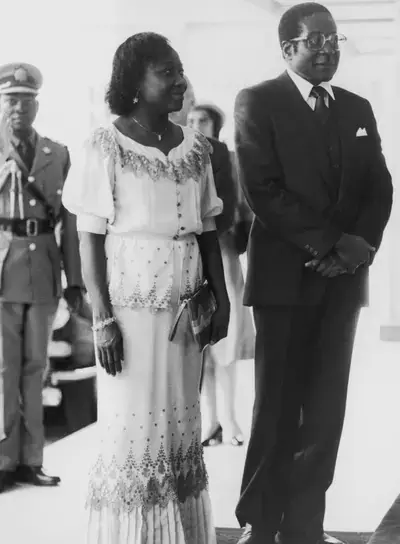
Nhamodzenyika's death was a significant loss for Mugabe, who described him as a "sign of hope in the centre of a storm." His wife, Sally Mugabe, had carried the pregnancy with high blood pressure and had to be admitted to hospital, where she stayed until the boy was delivered by C-section. Sally had mentioned Nhamodzenyika in her correspondence, describing him as a bubbly and irrepressible child who kept her busy. She had also expressed her desire for him to return to Zimbabwe to fight against the settlers.
Mugabe's request to travel to Ghana to bury his son was refused by the prison authorities, despite his efforts to obtain permission. He later stated that he wanted to bury his child and be with his wife, but it was not possible. Ian Smith, the Rhodesian prime minister, reportedly intervened and vetoed his release. Mugabe's brother, Donato, ultimately represented him at Nhamodzenyika's burial in Sekondi.
In addition to the loss of his son, Mugabe also experienced the death of his close friend and fellow nationalist, Leopold Takawira, in June 1970. Takawira fell into a diabetic coma in his cell and died at Harari Hospital due to neglect by the prison authorities. An inquest into his death revealed that Takawira had been ill for months, complaining of weak joints, a dry mouth, and throat, but was denied medical attention.
Takawira's case had been taken up by other detainees, including Mugabe, who wrote supporting affidavits. Despite visible symptoms of diabetes, the prison doctor suspected that Takawira was faking illness to gain admission to the hospital where his wife, Sunny Ntombiyelanga, worked. The inquest into Takawira's death revealed a shocking level of neglect, with Dr John Forbes, the head of the diabetic clinic at Harari Hospital, stating that had the correct diagnosis been made 24 hours earlier, Takawira might have survived.
Sally Mugabe also faced difficulties during this time, including issues with her residency status in the UK. She had been moving between Sweden and London, where she founded an adult education school for women, but her work permit was not renewed by the Labour government. Mugabe sent telegrams to Harold Wilson's government asking them to grant her the right to residence in Britain, and she was eventually supported by friends until the Conservative government came to power and granted her a work permit.
The personal sacrifices and tragedies that Mugabe experienced during his years in the liberation struggle had a profound impact on his life and politics. His experiences, including the loss of his son and close friend, shaped his convictions and relationships, contributing to his complex and often contentious legacy as one of Africa's most prominent leaders.
Key points
- Mugabe's son Nhamodzenyika died of cerebral malaria in Ghana in 1966.
- Leopold Takawira, a close friend and fellow nationalist, died in prison due to neglect by authorities.
- Sally Mugabe faced difficulties with her residency status in the UK during this time.