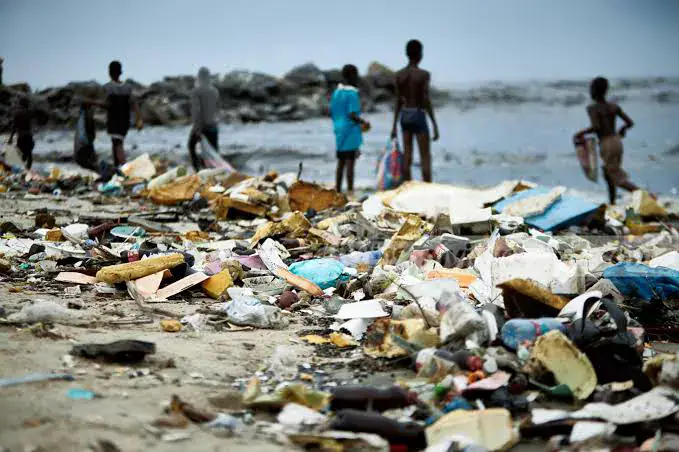
Every morning in Jamestown, local fishers set out to sea hoping for a good catch, but instead, they bring back tangled masses of single-use plastics, coconut shells, and urban debris. This bleak reflection of life on land is a daily reality for those who depend on the ocean for their livelihood. The situation is dire, with environmental experts and coastal advocates sounding the alarm on the crisis facing Ghana's coastlines. The problem is not just an environmental issue but also a threat to food security and the nation's artisanal fisheries.
According to experts featured on GBC News' Wash Hour, the sea is not equipped to handle waste, and what goes in must come back out. With approximately 14,000 registered canoes operating along Ghana's 550-kilometer coastline, the crisis poses an existential threat to the nation's artisanal fisheries. The problem is particularly acute in communities like Jamestown and Korle Gonno, located downstream from Accra's major commercial centers, where waste washes down through urban estuaries like the Odaw River straight into the sea.
A common misconception that plastic debris serves as food or shelter for fish has been debunked by environmental stakeholders. The reality is that fish and other marine organisms ingest non-biodegradable plastics, blocking their digestive tracts and killing them outright. For the fish that survive, toxic ingestion alters their taste and physiological development, causing cascading harm throughout the entire marine food chain—and ultimately returning to human dinner plates.
The impact of marine pollution extends beyond marine life, with public health concerns escalating in coastal communities. Open dumping and blocked drainage channels create prime breeding grounds for waterborne diseases like cholera, while heavy plastic saturation has gutted local beach tourism and cultural recreation. The situation demands a comprehensive approach to address the root causes of the problem.
Well-meaning organizations and youth volunteers frequently organize beach clean-up exercises, clearing metric tons of plastic waste in single weekend drives. However, within 24 to 48 hours, those same shorelines revert to a state of heavy pollution. Panelists pointed out that clean-ups address only the symptom, not the cause, and that a more sustainable solution is needed to tackle the problem.
According to experts, over 80 percent of marine pollution originates inland, driven by infrastructure deficits, socioeconomic realities, and behavioral and structural dynamics. A lack of waste-trapping mechanisms or physical interceptors along major storm drains and rivers, combined with high poverty rates in congested urban informal settlements, contributes to the problem. Changing household waste disposal habits and promoting civic ownership of public environments are crucial to addressing the issue.
Addressing the crisis will require a multifaceted approach that takes into account the socioeconomic realities of coastal communities. As one guest noted during the program, when poverty reaches into people's homes, waste disposal becomes a secondary concern. If sustainable solutions are to be found, they must be tailored to the specific needs of these communities and address the root causes of the problem.
Key points
- 92-95% of what artisanal canoes pull from the sea in critical fishing hubs isn’t fish—it’s garbage.
- Over 80 percent of marine pollution originates inland.
- A lack of waste-trapping mechanisms or physical interceptors along major storm drains and rivers contributes to the problem.