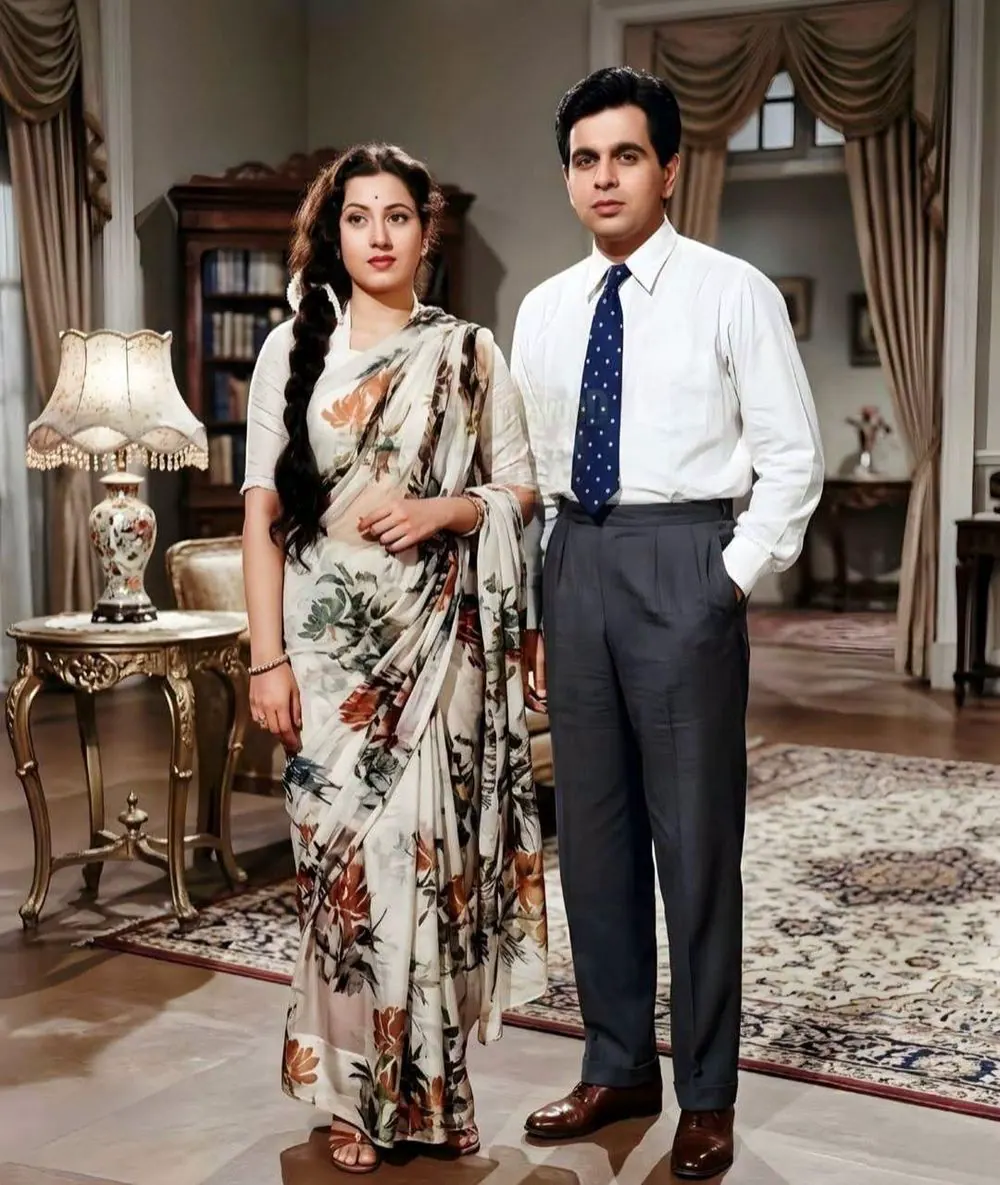
The practice of changing names for the screen in Bollywood began in the 1930s and 1940s, as Indian cinema transitioned from silent shorts to talkies. At that time, acting was not considered a respectable profession, and studio executives encouraged actors to change their names to appeal to a broader audience. For Muslim artists, in particular, using their given names on screen was seen as a potential liability, and many were encouraged to adopt more neutral or Hindu-sounding names.
One of the most famous examples of this is Mohammed Yusuf Khan, who was rechristened Dilip Kumar. Devika Rani, a influential actress and studio head of Bombay Talkies, suggested three names to Kumar, from which he chose Dilip Kumar. This name change allowed him to navigate both his private life and his blossoming stardom, while establishing a screen persona that felt universal to an emerging independent nation. Other actors, such as Mumtaz Jehan Dehlavi, who adopted the screen name Madhubala, also changed their names to erase religious markers and appeal to a broader audience.
The practice of changing names was not limited to Muslim actors. Many actors with long or regional names adopted sleeker aliases to make their names more marketable. For example, bus conductor-turned-superstar Rajinikanth's real name was Shivaji Rao Gaikwad, while Diana Mariam Kurian became Nayanthara, which translates to "starry eyes". In some cases, name changes were driven by superstition or astrology, with actors altering the spellings of their names to attract good luck at the box office.
In modern Hindi cinema, name changes are still driven by a range of factors, including superstition, numerology, and astrology. Actors such as Ajay Devgn, who was born Vishal Veeru Devgan, have changed their names to avoid confusion with other actors or to attract good luck. Devgn changed his name from Vishal to Ajay for his debut lead role in the film Phool Aur Kaante, and later dropped the "a" from his surname to spell it Devgn at the request of his mother and guidance from numerologists.
The history of name changes in Indian cinema reflects the broader journey of Indian society itself. What began as a defensive necessity against societal stigma and commercial caution evolved into a creative choice. Today, while aliases are still created for style or flair, the era of hiding one's lineage to step into the spotlight remains a poignant chapter in India's cinematic history.
Many actors have retained their original names, and some have even achieved great success without changing their names. Amjad Khan, who shot to fame with his iconic role as the dacoit Gabbar Singh in the movie Sholay, was among the first in the next generation to retain his original name. His compatriot Feroz Khan also chose this route, as did his brothers Sanjay Khan and Akbar Khan.
The trend of changing names for the screen may be less prevalent today, but it remains an important part of Bollywood's history. From Yusuf Khan to Dilip Kumar, and from Madhubala to Nayanthara, the stories behind Bollywood's screen names offer a fascinating glimpse into the complex and often fraught relationship between identity, culture, and cinema in India.
Key points
- Many Indian movie stars have changed their names for the screen, driven by religious bias, superstition, and a desire for wider appeal.
- The practice of changing names for the screen began in the 1930s and 1940s, as Indian cinema transitioned from silent shorts to talkies.
- The trend of changing names for the screen may be less prevalent today, but it remains an important part of Bollywood's history.