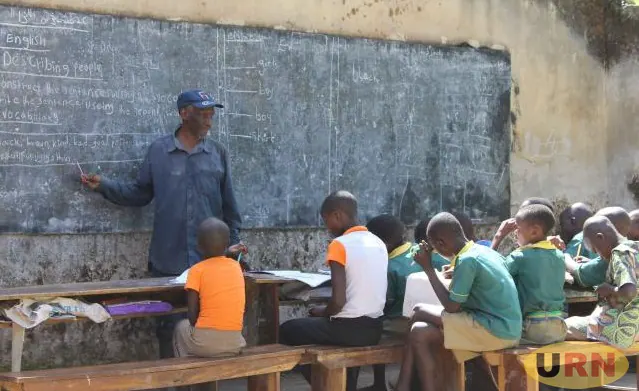
Godlive Baguma, a private primary school teacher in Nansana, Uganda, exemplifies the struggles of many teachers in the country. With a monthly salary of approximately 400,000 Shillings, he faces financial difficulties, allocating his income to rent, food, transport, school fees, and sending money to his mother. His situation is not unique, as many teachers spend their best years waiting for a place on the government payroll, hoping it will improve their lives. Even those on the payroll have complaints about their motivation, welfare, pay, workload, and professional status.
According to Suzan Alum, national chairperson of the Private Teachers' Union, the status of teachers in Uganda is a mixed bag. While there has been progress in recognizing the importance of teachers and improving some aspects of the profession, many teachers still struggle with low pay, heavy workloads, and poor working conditions. Muzeeyi Ssebowa, a parent, notes that teaching was once a respected profession that attracted the best and brightest students, but this has faded. He sees hope in recent salary improvements and efforts to raise entry standards.
The Ministry of Education and Sports' 2025 Education Statistical Abstract provides insight into Uganda's teaching workforce. The country has 226,771 primary teachers, with 149,182 in government schools and 77,589 in private ones. The pupil-teacher ratio in government primary schools is 61:1, compared to 35:1 in private schools. At the secondary level, there are 64,975 teachers, with 40,629 working in public schools and 24,346 in private ones.
For teachers handling large classes, the job goes beyond delivering a lesson. It involves preparing work, marking books, assessing learners, managing discipline, responding to individual needs, completing records, and adapting to new curriculum and assessment requirements. Damon Wamara, an education and child rights advocate, argues that welfare must be treated as part of education quality rather than a separate employment issue.
The pressure is sharpest in the private sector, which employs a substantial share of the workforce. Alum notes that some private-school teachers are paid strictly by the lessons or periods they teach, especially in smaller or financially strained schools. This leaves many private teachers in a precarious position, with trained professionals whose income fluctuates with the timetable.
The 2014 UNESCO-supported Teacher Issues in Uganda: A Shared Vision for an Effective Teachers Policy report found that a general feeling of dissatisfaction is present among Ugandan primary teachers. About 47 percent indicated that they were dissatisfied with their job, and 78 percent believe that their colleagues are dissatisfied with theirs. Most teachers would like to leave the profession within two years, with half mentioning salary as the main cause of job dissatisfaction.
Uganda has responded to these challenges with various reforms, including a National Teacher Policy, a Teacher Management Information System, a competence-based curriculum, and the Uganda National Institute for Teacher Education. The Teacher Incentive Framework, developed in 2018, aims to address concerns about motivation, absenteeism, and performance. However, Filbert Baguma, UNATU General Secretary, argues that teachers should be supported as professionals rather than treated mainly as a problem to be controlled.
Key points
- Teachers in Uganda face challenges in motivation, welfare, and professional status despite government reforms.
- The private sector, which employs a substantial share of teachers, poses significant challenges, including low pay and lack of formal contracts.
- Reforms, including a National Teacher Policy and Teacher Incentive Framework, aim to address these challenges, but implementation and effectiveness remain to be seen.