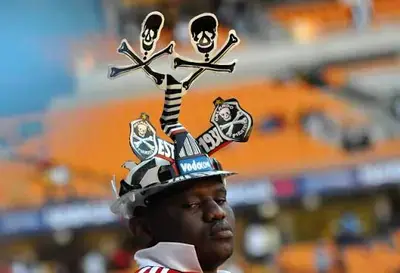
The Soweto Derby, a fixture between Kaizer Chiefs and Orlando Pirates, is more than just a Premier Soccer League match. It is a representation of South African football's heritage, showcasing its resilience through difficult times and its ability to command attention globally. The rivalry between the two teams began on January 24, 1970, just 17 days after Kaizer Motaung formed Kaizer Chiefs after leaving Orlando Pirates. The first match ended 6-4 in favor of Pirates, sparking a fierce competition that has lasted for over five decades.
The Soweto Derby has evolved into a social event that draws supporters from across South Africa and neighboring countries, including Lesotho, Eswatini, Botswana, Namibia, and Zambia. The stands are filled with color, song, and choreography, making it one of the most compelling spectacles in African football. Despite the intense rivalry, fans sit in mixed sections, demonstrating that fierce competition can coexist with a sense of community. The fixture has transformed from a volatile and violent encounter in earlier decades to a safer and more celebratory event.
The competitive balance between Kaizer Chiefs and Orlando Pirates is reflected in their head-to-head record, with Chiefs holding a narrow lead of 75 victories to Pirates' 49, with 54 draws. Pule "Ace" Ntsoelengoe is the all-time leading scorer with 19 derby goals for Chiefs, while Happy Jele holds the appearance record for Pirates. The biggest winning margins in the derby are four goals, with Chiefs winning 7-3 in 1972 and 5-1 in 1975, and Pirates winning 5-1 in 1990.
Recent seasons have seen a shift in favor of Orlando Pirates in league meetings, highlighting that history does not guarantee a permanent advantage. Both teams entered their recent build-up with Carling Knockout Cup victories, but with contrasting messages from their coaches. Kaizer Chiefs coach Fernando da Cruz described his team's 3-0 win over TS Galaxy as important for confidence but not perfect. In contrast, Orlando Pirates coach Abdeslam Ouaddou was less satisfied with his team's 3-0 win over Milford FC, citing poor decision-making and a lack of control.
The Soweto Derby has a significant international broadcast footprint, with SuperSport's coverage making the match available across sub-Saharan Africa via DStv and GOtv platforms. The derby is also broadcast in the United States, the United Kingdom and Ireland, Australia, New Zealand, the Caribbean, Latin America, the Middle East, North Africa, and Southeast Asia. This international visibility is crucial for South African football, which has often struggled for sustained global recognition compared to North African or West African leagues.
The Soweto Derby acts as a regular reminder of the quality, drama, and cultural depth of South African football. It showcases the technical skill of players who often progress to Europe, the tactical evolution of coaches, and the unmatched atmosphere generated by supporters who treat the match as a festival. As another Soweto Derby approaches on October 31 at FNB Stadium, the familiar ritual repeats, with tickets sold out and studio analysis intensifying.
The Soweto Derby has become an ambassador for African football, demonstrating its ability to produce talented players, passionate support, and high-quality matches. As African football gains greater commercial and media attention, the derby remains one of the continent's most reliable ambassadors. On the pitch, 22 players will contest three points, while millions will watch a spectacle that represents something larger than the scoreline, showcasing the passion that first took root in the townships over half a century ago.
Key points
- The Soweto Derby is a symbol of South African football's heritage and resilience.
- The fixture has evolved into a social event that draws supporters from across South Africa and neighboring countries.
- The derby has a significant international broadcast footprint, making it a global product.