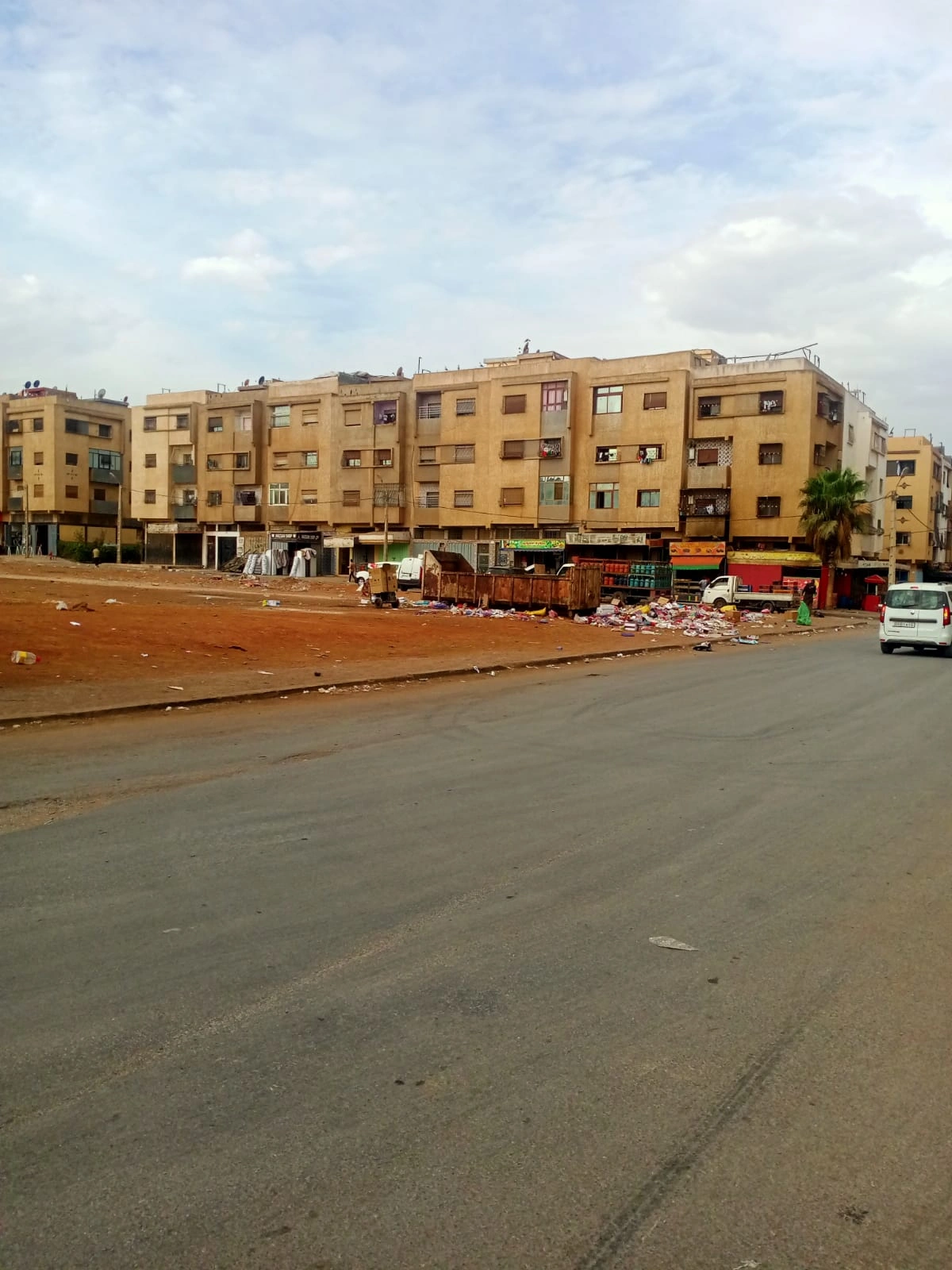
In the scorching heat of the autumn sun, on the outskirts of Casablanca, Aïcha, a 55-year-old woman, sits in front of her three-story house, gazing out at a landscape of dirt, asphalt, and scattered trash. Her home, part of a larger urban development project, has basic amenities like water and electricity, but she feels isolated from the rest of the city. Aïcha is one of thousands of families relocated from Casablanca's historical slums as part of the "Cities Without Slums" program launched by King Mohammed VI in 2004.
The program aims to provide decent housing for low-income families, but its success is hindered by economic challenges in the alternative neighborhoods. The Casablanca-Settat region faces the biggest challenge in eliminating slum housing, with a five-year plan targeting 120,000 families, including 62,000 in the Greater Casablanca area. However, the relocated families face difficulties accessing employment, transportation, and basic services. Many struggle to make ends meet, with some forced to spend up to half their daily income on transportation to and from work.
Mohammed, a 29-year-old casual worker, wakes up at 4 am to catch the bus to work, often arriving exhausted. He is not alone; many relocated families face similar transportation challenges. The lack of public transportation options in the new neighborhoods forces residents to rely on expensive private services or walk long distances. This has led to growing frustration and discontent among the relocated families, who feel that their quality of life has not improved despite their new housing.
The relocated families also face significant challenges in accessing employment and economic opportunities. Many previously relied on informal economies and small businesses in the historical slums, but these opportunities are scarce in the new neighborhoods. The absence of industrial or commercial areas near the relocated communities has exacerbated poverty and unemployment. As a result, some families have turned to begging or other forms of survival.
The environmental conditions in the new neighborhoods are also a concern. Residents complain about the lack of green spaces, inadequate waste management, and poor sanitation. The new housing developments are often characterized by high population density and a lack of community facilities, leading to social and health problems. Activists and community leaders argue that the relocation program has focused primarily on providing housing, without adequately addressing the social, economic, and environmental needs of the relocated families.
The situation is further complicated by the lack of community facilities and social services. Residents often have limited access to education, healthcare, and recreational activities, leading to concerns about the well-being of children and young people. The absence of community spaces and social programs has also contributed to the spread of social problems, such as substance abuse and crime.
As the city prepares for major international events, the Casablanca-Settat region is struggling to balance urban development with social cohesion. While the "Cities Without Slums" program has provided decent housing for over 382,000 families nationwide, its success is measured not only by the number of houses built but also by the ability to provide a better quality of life for the relocated families. The challenge remains to address the social, economic, and environmental needs of these communities and ensure their integration into the city's fabric.
Key points
- Thousands of families relocated from Casablanca's historical slums face new challenges
- The "Cities Without Slums" program aims to provide decent housing for low-income families
- Relocated families struggle with access to employment, transportation, and basic services