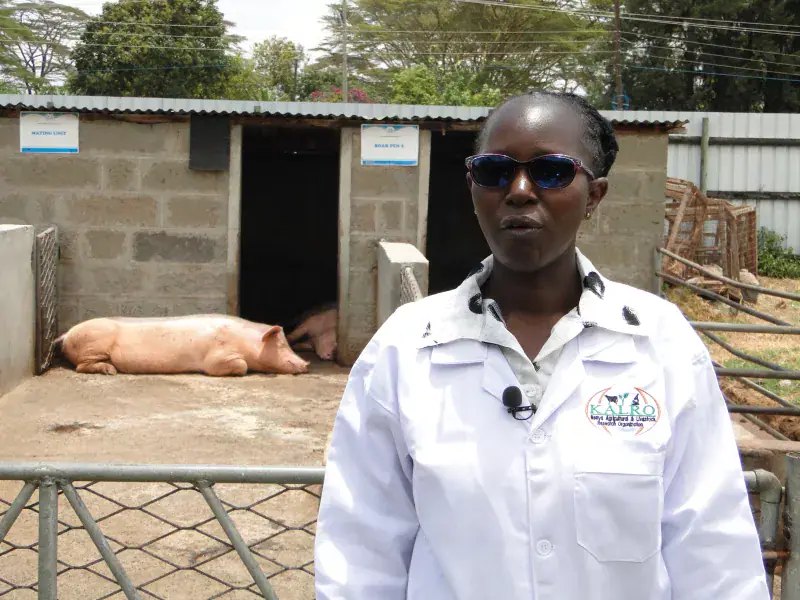
Pig farming in Kenya is a growing industry, with the country's pig population estimated at close to 981,000 animals. However, smallholder farmers who raise about 80 per cent of Kenya's pigs face numerous challenges, including feed, disease, access to expertise, and finding reliable markets. Mwanya Migadde, a pig farmer in Kinamba, Naivasha, started with two sows and within a year had grown his herd to about 80 pigs. He now makes some of his own feeds, sourcing ingredients such as maize germ, pollard, omena, and soya beans.
Feed is a critical component of pig farming, and experts advise that it can determine whether a farmer makes a profit or loss. Damaris Njoroge, a pig farmer in Buffalo View, Naivasha, knows the struggle firsthand. She once kept nearly 400 pigs, but her herd has since fallen to about 82 due to challenges in feeding, marketing, and diseases. The cost of feed is a significant burden, with Kalro estimating that feed accounts for more than 70 per cent of production costs.
Genetics, feeding, animal health, and management are crucial for a successful pig enterprise. Researchers at the Kalro Non-Ruminant Research Centre in Naivasha emphasize the importance of breed choice. Research scientist Benedict Olale says success starts with choosing animals suited to the farmer's objective. The centre keeps Large White, Landrace, Duroc, and Hampshire pigs, as well as their crosses.
The formulation of feeds for pigs requires a deep understanding of nutritional needs. Victor Opiyo, who oversees feed formulation at the Kalro Dairy Research Institute, says the process starts with proximate analysis of raw materials to establish their nutritional composition. The finished feed is then tested to ensure it meets the required specifications. A balanced ration must account for energy, protein, minerals, and amino acids.
The cost of feed is a significant constraint for smallholder farmers, with Kalro estimating a deficit of 56 per cent in available feed resources. Opiyo says protein can come from sunflower meal and soya De-Oiled Cake, while energy sources include maize, maize germ, wheat bran, and wheat pollard. Researchers are exploring alternative protein sources, including black soldier fly and other locally available ingredients.
Disease prevention is also crucial for a successful pig enterprise. Dr Irene Ogali, a veterinary officer at Kalro, advises farmers to prioritize biosecurity and keep germs out of the pig farm. She emphasizes the importance of clean water and proper storage and handling of feed. Contamination and diseases can have devastating effects on pig herds.
Despite the challenges, the pig sector is projected to grow rapidly, with pork demand expected to increase by 125 per cent by 2030. Experts advise that increasing the number of pigs alone will not make the industry more productive; instead, a focus on genetics, feeding, animal health, and management is necessary. Smallholder farmers can benefit from expert advice and best practices to improve their chances of success in the industry.
Key points
- Feed accounts for more than 70 per cent of production costs in pig farming.
- Smallholder farmers raise about 80 per cent of Kenya's pigs.
- Pork demand is expected to increase by 125 per cent by 2030.