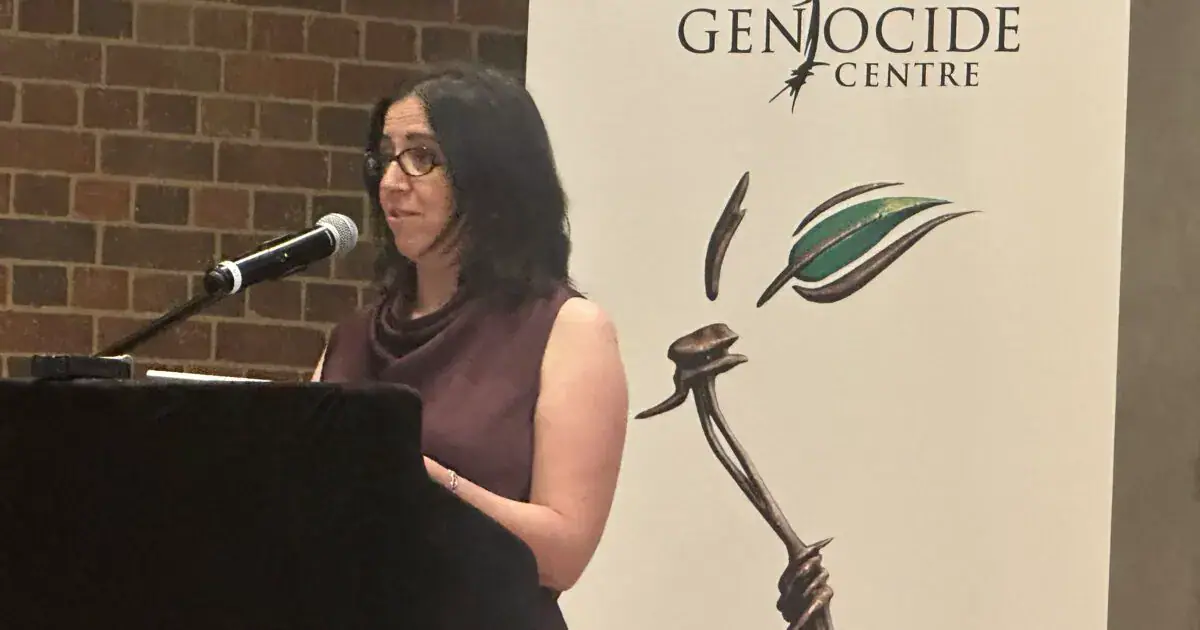
The story of the SS Stuttgart, the last ship to sail from Germany with Jewish refugees before the start of World War II, is a remarkable one. The ship arrived in Cape Town in October 1936 with around 500 Jewish refugees on board. Professor Shirli Gilbert, a historian, has been studying the lives of these refugees and their impact on South African society. She recently spoke at the Johannesburg Holocaust & Genocide Centre about her research.
Gilbert's research focuses on the experiences of thousands of Jewish refugees who fled Nazi persecution in Germany and rebuilt their lives in South Africa. She chose to focus on three refugees in particular: Ernst Hochfeld, Willy Rosenstein, and Ruth Middelman. These individuals, like many others, had to start anew in a foreign country, often with limited resources. Despite the challenges they faced, they went on to build successful lives and contribute to South African society in meaningful ways.
Ernst Hochfeld, born in Germany in 1911, was one of the refugees who arrived in South Africa in the 1930s. He trained as a chiropodist but had to flee Nazi Germany after being dismissed from his job. Hochfeld arrived in Cape Town in May 1936 with little to his name. He worked a series of jobs, including as a barman, farmhand, and salesman, before starting his own business recycling discarded hessian bags. His business employed other German Jewish refugees and became a success.
Willy Rosenstein, a German Jewish fighter pilot and racing driver, arrived in Durban in 1936 at the age of 44. He had served in a squadron led by Hermann Göring during World War I but left after confronting him over an antisemitic remark. Rosenstein established Union Aviation in Johannesburg, which trained over 50 pilots by 1940. However, with the outbreak of war, he was classified as an "enemy alien" and interned by the South African authorities.
Ruth Middelman, who arrived in Cape Town in August 1930 at the age of 26, had a very different experience. She came to South Africa with just £10 and a few practical possessions, including a typewriter, sewing machine, and camera. Middelman initially struggled to make a living, working as a seamstress and governess, but eventually found employment in photographic processing. Her life took an unexpected turn in 1942 when she became fascinated with growing proteas from seed.
Middelman's business supplying proteas across Cape Town eventually grew into a thriving enterprise. She became an internationally recognised authority on protea propagation, running a nursery and seed and book export business. She also mentored some of South Africa's leading botanists. Gilbert noted that the skills, ideas, and values that these refugees brought with them made their way into South African society in ways that are not easy to quantify.
According to Gilbert, the legacy of the SS Stuttgart and the refugees who arrived on it is an important one. These individuals were not simply "flotsam and jetsam" who disappeared into society; they were agents of history who made a distinct impact. Their contributions to South African society, whether through business, education, or culture, continue to be felt today. As Gilbert noted, it is an opportune moment to remind ourselves of how this generation helped shape the world, community, and society we inhabit today.
Key points
- The SS Stuttgart arrived in Cape Town in October 1936 with around 500 Jewish refugees who fled Nazi persecution in Germany.
- Professor Shirli Gilbert has been studying the lives of Jewish refugees who arrived in South Africa and their impact on South African society.
- The refugees who arrived in South Africa, including Ernst Hochfeld, Willy Rosenstein, and Ruth Middelman, made significant contributions to South African society through their work and entrepreneurship.