The late 19th century marked a significant turning point for women's participation in journalism in France. The freedom of the press, recognized by the major law of July 1881, was a crucial democratic right that women quickly took advantage of. This newfound liberty enabled them to intervene more broadly in societal debates, not only as women of letters but also as activists. Journalism emerged as a means for women, who were denied the right to vote, to engage in politics.
The rise of feminist journalism was closely tied to the Third Republic, which brought about a renewed political and social context. The recognition of public liberties, particularly the 1881 press law, along with advancements in education, urbanization, and economic development, contributed to a "golden age" of the press. This period saw the proliferation of a diverse, mass press. Although women had been present in editorial rooms since the 1830s and 1840s, they were now more numerous and determined to assert their legitimacy in public debates, which had long excluded them due to misogynistic prejudices and the constraints of the Civil Code and universal male suffrage laws.
The intersection of women's history and press history offers valuable insights into how journalism became a lever for the women's cause during this period. Women used journalism to intervene visibly in political debates and to participate in the professionalization of the sector. Many women journalists were activists who wrote for republican, progressive, or socialist publications, often anonymously or under pseudonyms. They also founded feminist newspapers, frequently in association with women's rights organizations. These publications showcased the diversity of the feminist movement, with most initially advocating for civil and social rights for women, while suffragist demands developed more gradually.
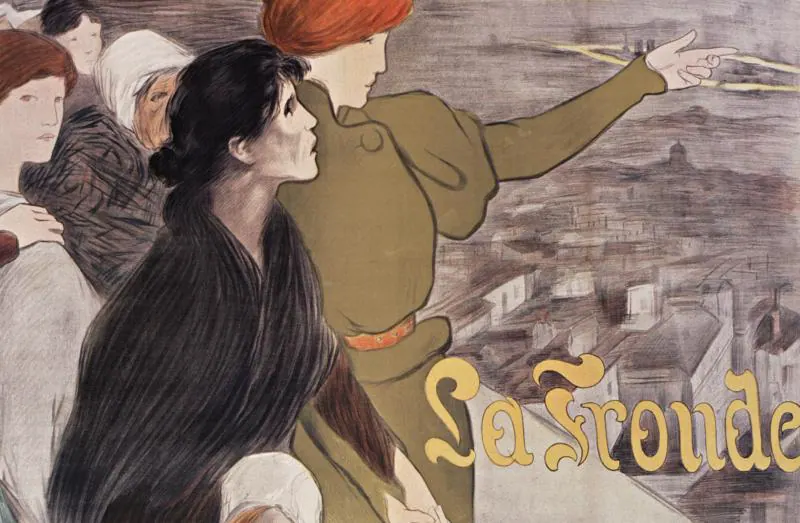
A key figure in the early feminist press was Hubertine Auclert, who founded the weekly La Citoyenne in February 1881. This publication was instrumental in promoting equal rights for women. Another significant milestone was the launch of La Fronde in 1897, the first generalist, women's, and feminist daily newspaper, often referred to as "Le Temps en jupons" (The Times in skirts). Such publications allowed women to express their views publicly and push for change, despite the societal hostility to women's public speech.
The feminist press articulated a wide range of demands, from equal political, social, intellectual, moral, and economic rights to greater participation in public life. For instance, the Journal des Femmes, launched in 1891, called for women's free access to all professions and equal moral standards for both sexes. The publication also advocated for women's consultation in the administration of public funds and equal pay for equal work. These demands reflected the broader struggle for women's rights and equality.
The emergence of women journalists and feminist publications not only expanded the scope of public debate but also contributed to the professionalization of journalism. Women brought new perspectives and approaches to news reporting, emphasizing issues relevant to women's lives and experiences. As they gained more opportunities in the field, women journalists helped shape a more inclusive and diverse journalistic landscape.
The legacy of late 19th and early 20th-century feminist journalism in France continues to inspire women's participation in media and public life. The courage and determination of pioneering women journalists and publishers paved the way for future generations, highlighting the enduring importance of a free and inclusive press in promoting social change and equality.
Key points
- Women in France used the right to freedom of the press, established in 1881, to make their voices heard through journalism and advocate for their rights.
- The rise of feminist journalism was closely tied to the Third Republic and the "golden age" of the press, marked by greater public liberties and a more diverse press.
- Publications like La Citoyenne and La Fronde were instrumental in promoting women's rights and equality, and contributed to the professionalization of journalism.