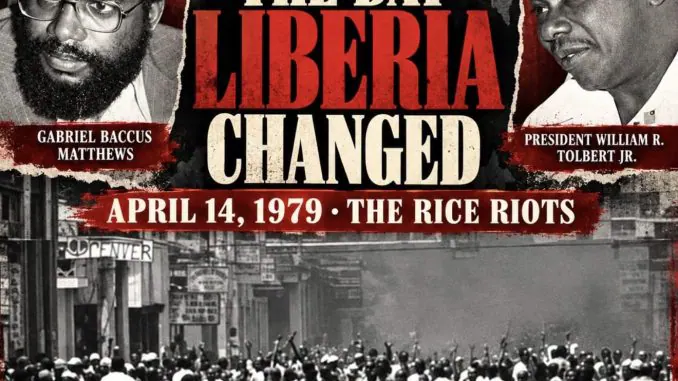
On April 14, 1979, Liberia witnessed a significant event in its history - the Rice Riots. A proposed increase in rice prices sparked widespread outrage, revealing long-standing frustrations with the country's political and social landscape. For years, a small group of Americo-Liberian families had dominated the government and economy, leaving the majority of the population with little influence. President William R. Tolbert Jr. had attempted to broaden the political landscape, but his efforts were met with criticism for being insufficient.
The government’s proposal to raise the price of rice, a staple food for many struggling families, further fueled public discontent. In response, Gabriel Baccus Matthews and the Progressive Alliance of Liberia (PAL) organized a demonstration for April 14. Despite a government ban on the event, thousands gathered near PAL's headquarters in Monrovia. Security forces surrounded the area, demanding that the crowd disperse. As tensions escalated, police deployed tear gas, leading to chaos and violence in the city.
The protests, which began peacefully, quickly turned tragic as many were killed or injured. The violence marked a turning point in Liberia's history, highlighting the rising pressure within society and signaling a shift in political power. In an effort to maintain order, Tolbert sought assistance from Guinea, bringing in hundreds of troops. However, this action alienated some members of the Liberian army who sympathized with the protesters.
Claims emerged that Matthews and PAL could import a 100-pound bag of American rice for $9, a promise that remained unfulfilled under the new regime led by the People’s Redemption Council. Matthews later served as foreign minister, but the unmet promise of affordable rice continued to resonate with the Liberian people. The Rice Riots had a lasting impact on the country, paving the way for future change.
On April 12, 1980, just a year after the Rice Riots, soldiers led by Samuel K. Doe assassinated Tolbert, paving the way for military rule instead of the hoped-for democratic governance. The event marked a significant shift in Liberia's history, leading to a period of military rule that would last for decades.
Today, Liberians from indigenous backgrounds can assume the nation's top positions, showing significant progress since 1979. However, true change requires leadership that unites and fairly governs all citizens, ensuring equal opportunities. The events of April 14 remain significant, reminding us that changing who holds power does not guarantee changes in how that power is exercised.
As Liberians reflect on the Rice Riots, they recall a pivotal moment in their country's history that highlighted the need for equitable governance and representation. The story of the Rice Riots serves as a reminder of the importance of leadership that represents and serves the entire population, not just a select few. The legacy of the Rice Riots continues to shape Liberia's journey toward a more inclusive and equitable society.
Key points
- The Rice Riots marked a turning point in Liberia's history, highlighting deep-seated frustrations with political power and social inequality.
- The event paved the way for future change, including the eventual assumption of top positions by Liberians from indigenous backgrounds.
- The legacy of the Rice Riots continues to shape Liberia's journey toward a more inclusive and equitable society.