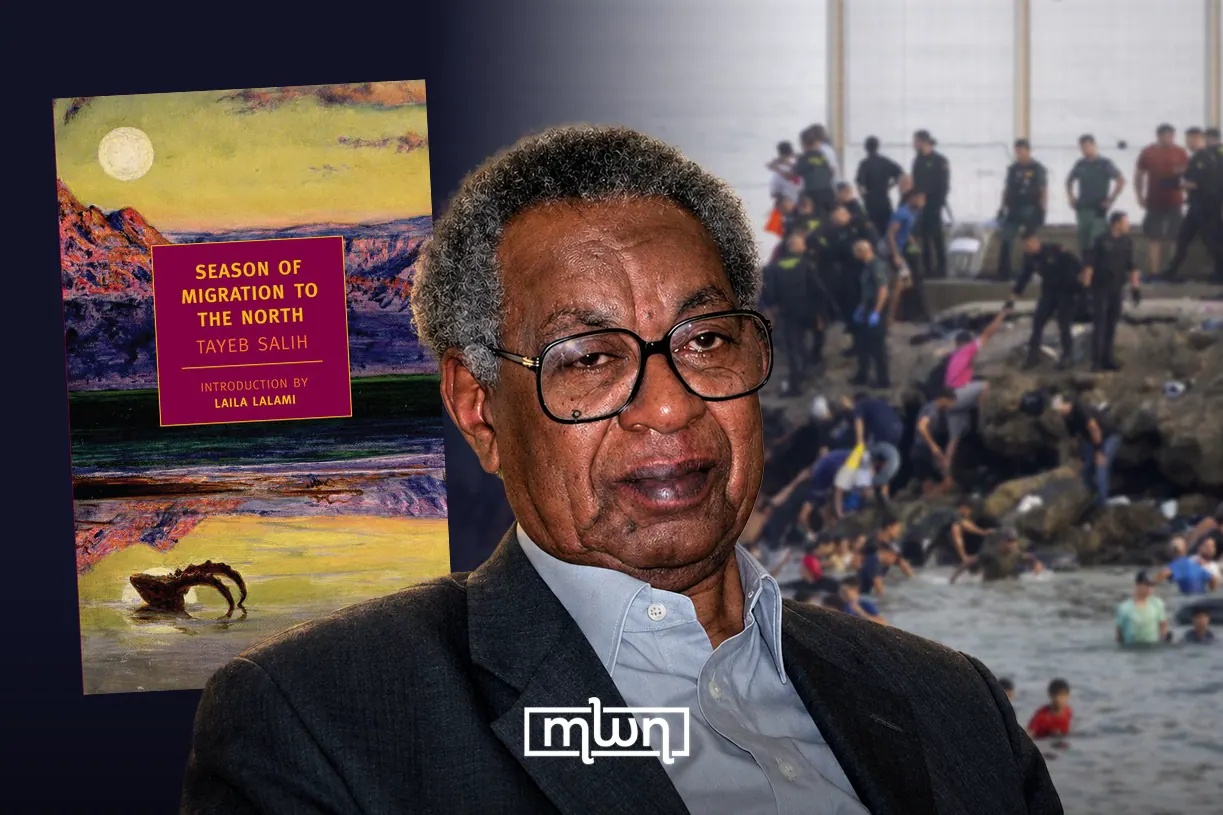
The recent Sebta crisis between Morocco and Spain has brought to the forefront complex issues of sovereignty, colonial memory, migration, and identity. This crisis has exposed unresolved historical tensions beneath one of Europe's most strategic bilateral partnerships. The situation is reminiscent of Tayeb Salih's novel, "Season of Migration to the North," which explores the themes of migration, colonial rule, and national identity. The novel serves as a lens for examining the deeper historical and psychological tensions behind the Morocco-Spain crisis.
The novel "Season of Migration to the North" tells the story of Mustafa, a young Sudanese man who migrates to Great Britain in search of education and employment. However, his relationship with British society becomes progressively destructive as he tries to assert his masculinity over English women. The story takes a tragic turn when Mustafa murders the woman with whom he had a complicated relationship, leading to his imprisonment and eventual return to his native village in Sudan. The novel explores the complexities of cultural identity and the challenges of reconciling one's native and acquired cultures.
The Sebta crisis has created a diplomatic rift between Morocco and Spain, with both countries having different reactions to the issue. In Spain, politicians and government officials have used the crisis to engage in an early electoral battle, blaming their leadership and reviving their claim of sovereignty over the Moroccan enclaves. On the other hand, Morocco has chosen to silently observe and analyze the situation, avoiding commenting beyond the constants of its foreign policy. This approach is not new for Morocco, as it has maintained a principled political tradition of not interfering in the domestic politics of other countries.
Morocco's position on the Sebta crisis is rooted in its history and tradition. In the 1980s, King Hassan II advised naturalized Moroccans living in Europe to remain neutral in the domestic politics of their host countries. This advice was given after France and the Netherlands extended voting rights to foreign residents. The Moroccan monarch's statement, "one cannot serve under two flags," reflects the country's commitment to maintaining its sovereignty and avoiding interference in the internal affairs of other nations.
The Sebta crisis has also raised questions about identity and post-colonial naturalization. Recently, Spain's Congress approved a bill granting a special path to Spanish citizenship for Sahrawis born during the Spanish administration of the territory. This move has been seen as a reparatory gesture towards the Sahrawi population, but it has also created a complicated legal antecedent. The bill has been criticized for not addressing the historical injustices faced by other populations, such as the Moroccan populations of the Rif who fought against Spanish occupation.
The timing of the Spanish bill has added to the complexity of the issue, especially after Spain's endorsement of Morocco's autonomy proposal in 2022. The bill has been labeled as a "correction of a historical anomaly created by colonization." However, critics argue that it does not go far enough in addressing the historical injustices faced by other populations. The issue remains a sensitive topic, with both countries having different perspectives on the matter.
The Sebta crisis has highlighted the need for Morocco and Spain to re-examine their relationship and address the historical tensions that have been simmering beneath the surface. The crisis has also exposed the complexities of migration, identity, and sovereignty, and the need for both countries to find a mutually beneficial solution. As the situation continues to unfold, it remains to be seen how Morocco and Spain will navigate their differences and work towards a more stable and cooperative relationship.
Key points
- The Sebta crisis has exposed deeper questions of sovereignty, colonial memory, migration, and identity beneath one of Europe's most strategic bilateral partnerships.
- Morocco has maintained a principled political tradition of not interfering in the domestic politics of other countries.
- The Spanish bill granting special path to citizenship for Sahrawis has created a complicated legal antecedent and raised questions about identity and post-colonial naturalization.