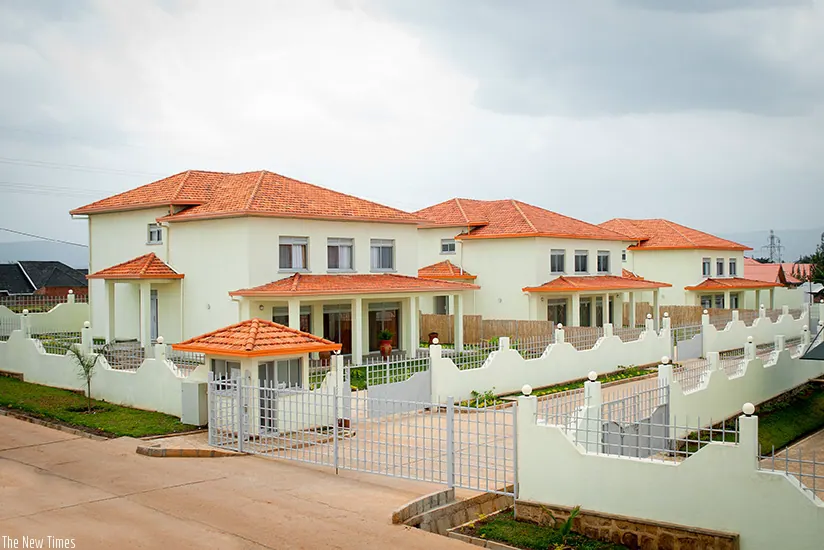
For families building their first home in Rwanda, the process often starts with a straightforward question: how much will it cost? However, the final price of a house is influenced by various factors, including land, drawings, permits, cement, steel, transport, labor, finance, and finishes. Additionally, delayed decisions, poor workmanship, and late payments can further increase costs.
A recent check of Rwanda's online construction marketplaces revealed significant price variations for building materials. For instance, a 50-kilogram bag of cement was listed at Rwf 8,500 on one platform and Rwf 14,500 on another. A six-inch concrete block was priced at Rwf 350, and a 12-meter Y16 reinforcement bar was listed at Rwf 14,200. These prices are individual online offers and may not reflect national averages.
Rwanda's construction activity experienced a 24% growth in the second quarter of 2026 compared to the same period in 2025. Production of non-metallic mineral products, including cement, increased by 22%, while production of metal products, machinery, and equipment rose by 51%. This growth indicates strong demand but also puts pressure on supplies, transport, and skilled workers.
The National Institute of Statistics of Rwanda reported that the general Producer Price Index increased by 20.8% in July 2026 compared to the previous year. Prices for products sold on the local market rose by 22.4%. Although this index covers producers across the economy, it highlights the broader cost pressures facing manufacturers and suppliers.
Contractors in Rwanda face challenges in managing these changes, particularly when signing long-term agreements at a fixed price. According to Sadate Munyakazi, president of the Association of Construction Companies in Rwanda, construction inputs can rise by between 15 and 30% during the life of a project. A fixed-price contract provides clients with certainty but can become risky when input prices change sharply.
Late payments also create hidden costs for contractors, who must continue paying workers, suppliers, and banks even when clients have not paid them. Under Rwanda's public procurement rules, invoices should be paid within 45 days after submission with all required documents. Jimmy Christian Byukusenge, Director General of the Rwanda Public Procurement Authority, acknowledged that payments are sometimes delayed due to slow internal approvals and incomplete paperwork.
To mitigate these risks, experts recommend careful planning, agreeing on specifications, comparing complete quotations, and paying for completed work on time. This includes having a clear contract that states materials, quantities, quality, timetable, and payment dates. Additionally, using local materials and finishes that meet standards for strength, moisture, fire, and durability can help reduce costs and prevent financial crises.
Key points
- Construction costs in Rwanda are influenced by various factors, including fluctuating material prices and delayed decisions.
- The country's construction activity grew by 24% in the second quarter of 2026 compared to the same period in 2025.
- Better planning, fairer contracts, and timely payments can help prevent financial crises in building projects.