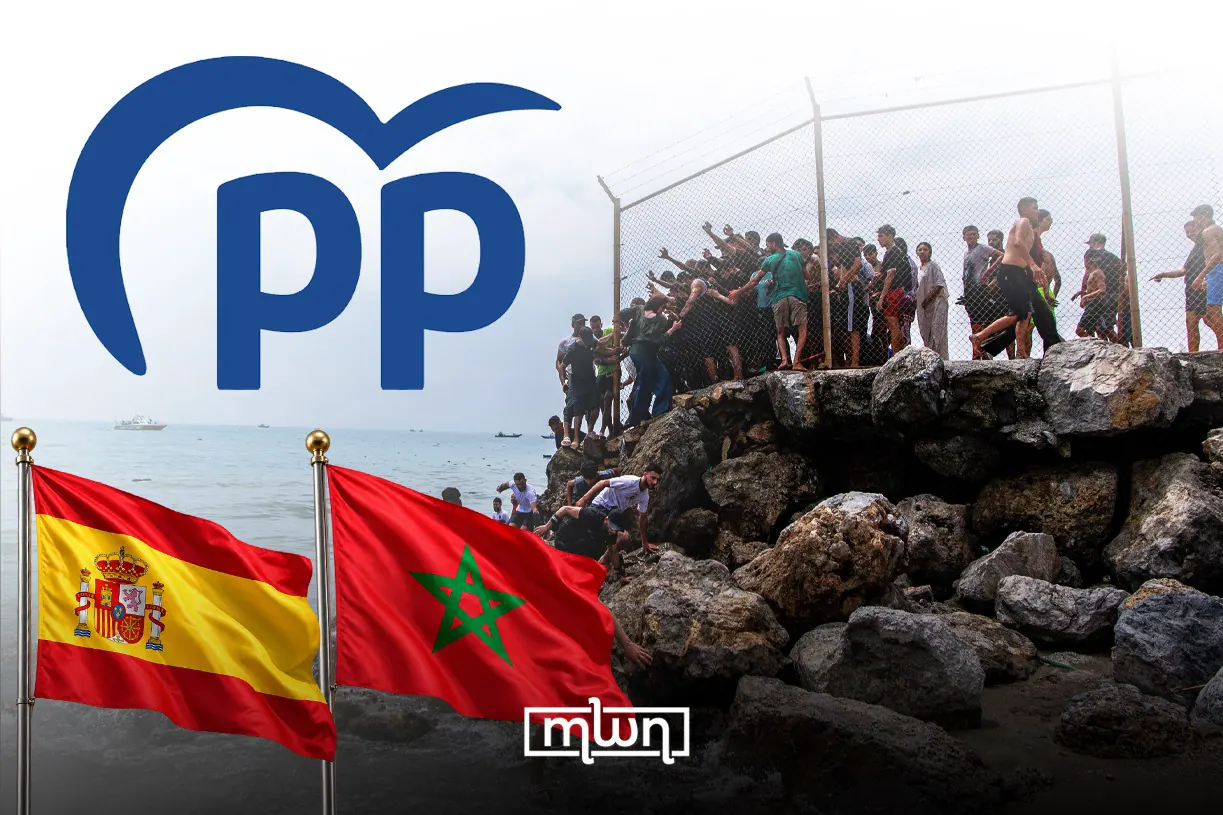
The recent Ceuta migration crisis, which occurred on July 30-31, has sparked a heated debate in Spain, with the Popular Party (PP) at the forefront of the criticism against Morocco. Tens of thousands of migrants crossed into the enclave, leading to a surge in tensions between Morocco and Spain. The PP, led by Feijóo, has accused Morocco of being involved in a "hybrid war" against Spain, despite a report by the Spanish National Intelligence Center (CNI) finding no evidence to support this claim.
This is not the first time the PP has used Morocco as a political tool. In 2005, Mariano Rajoy, then in opposition, accused the government of being soft on Morocco during a mass migration attempt into Melilla. Rajoy claimed that Morocco had allowed the migrants to cross into Melilla with its "acquiescence," and demanded that the government take action to stop the migration flows. These claims were baseless and have been widely criticized.
The PP's rhetoric on Morocco has been consistent over the years, with Feijóo and other party officials using the same tired and racist clichés to accuse Morocco of blackmailing Spain. This discourse has been widely criticized, with many analysts and commentators pointing out the lack of evidence to support these claims. The PP's actions have been seen as an attempt to win electoral sympathy and portray themselves as the custodians of genuine Spanish patriotism.
The historical context of the relationship between Morocco and Spain is complex, with both countries having a long and often contentious relationship. However, the PP's actions have been seen as an attempt to exploit this relationship for political gain. The party's accusations against Morocco have been widely criticized, with many calling for a more nuanced and fact-based approach to the issue.
The CNI report, which found no evidence of Morocco's involvement in the Ceuta crisis, has been widely cited as proof that the PP's accusations are baseless. However, Feijóo and other PP officials have continued to invoke this accusation, despite the lack of evidence. This has been seen as an attempt to deflect attention from the real issues and to avoid taking responsibility for the crisis.
The PP's actions have significant implications for the relationship between Morocco and Spain, which has been strained in recent years. The two countries have a long history of cooperation on issues such as migration and security, but the PP's rhetoric has threatened to undermine this cooperation. It remains to be seen how the relationship between the two countries will develop in the future.
Key points
- The Popular Party in Spain has been accused of using Morocco as a political tool, with leaders like Feijóo and Rajoy making baseless claims about Morocco's involvement in the Ceuta migration crisis.