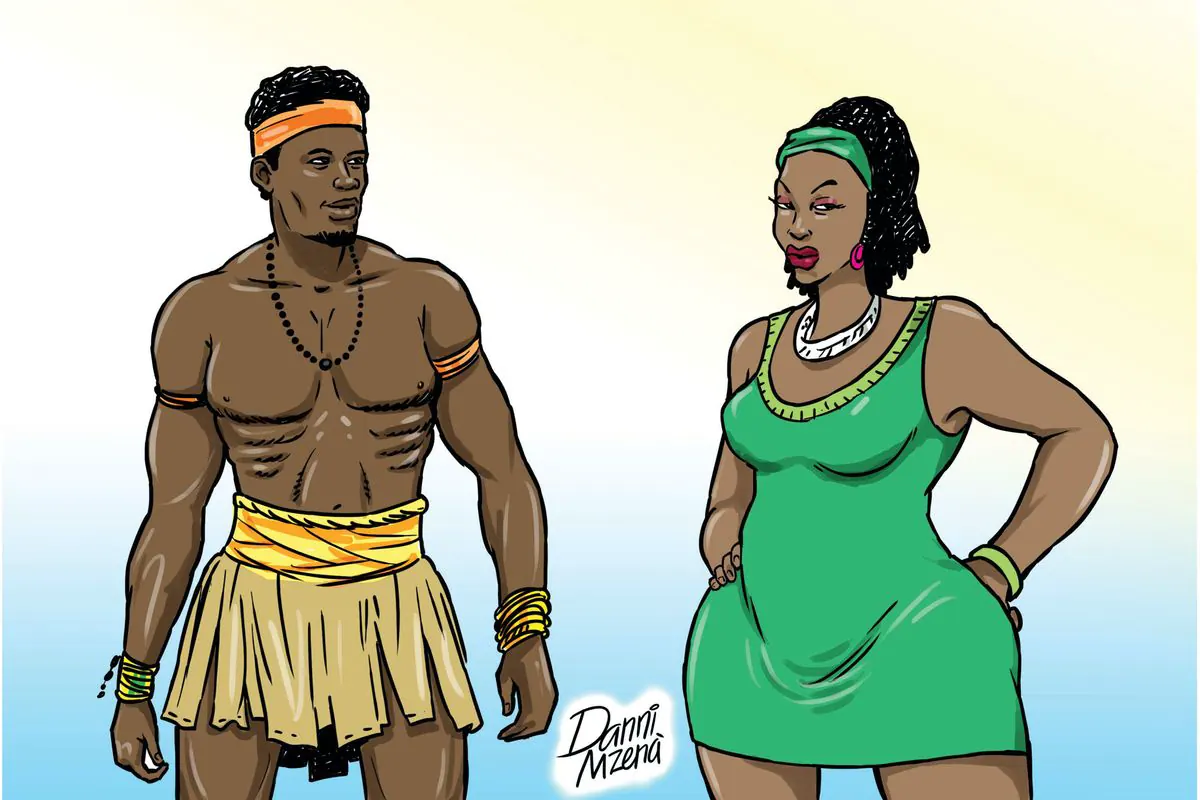
A Tanzanian journalist has sparked a conversation about women's clothing and societal expectations in her country. Beatrice Materu, a writer for The Citizen, recently shared her personal experiences with being approached by people, mostly women, who asked her to remove her kikuku, a type of traditional clothing, after becoming a mother. Materu expressed her confusion and frustration with the unsolicited advice, questioning who gave people the right to dictate what she wears.
Materu's article highlights the broader issue of women's clothing being scrutinized and policed in Tanzania. She argues that people often use phrases such as "Hiyo siyo heshima ya mwanamke" ("That's not respectful for a woman") or "Sio mila zetu" ("It's not our culture") to judge women's choices of attire. However, Materu points out that Tanzania has over 120 ethnic groups, each with their own cultural practices and traditions, making it unclear which culture or community people are referring to.
The journalist also questions the notion that women's clothing is a reflection of their character. She argues that there is a difference between criticizing an outfit for being unsuitable for a particular occasion and judging a woman's character based on her clothing choices. Materu believes that women's clothes should not be expected to provide a full character reference, and that people should focus on their actions and behavior rather than their attire.
Materu's article has resonated with many women in Tanzania, who have shared their own experiences of being judged or criticized for their clothing choices. The conversation has also sparked a debate about the role of culture and tradition in shaping societal expectations around women's dress. Some people have argued that certain types of clothing are not in line with Tanzanian culture or values, while others have defended the right of women to choose what they wear.
The issue of women's clothing and societal expectations is not unique to Tanzania, but it is a pressing concern in the country. Materu's article has highlighted the need for a more nuanced and inclusive conversation about culture, tradition, and women's rights. By sharing her personal experiences and perspectives, Materu has encouraged others to think critically about the ways in which women's clothing is policed and judged.
Materu's article has also touched on the issue of responsibility and accountability. She references a passage from the Bible, Matthew 5, where Jesus talks about lust and puts the responsibility on the person doing the looking, rather than the woman being looked at. Materu argues that if people are concerned about the way men look at women, then they should focus on educating men about respect and responsibility, rather than telling women what to wear.
Ultimately, Materu's article is a call to action for Tanzanians to rethink their assumptions and biases around women's clothing. She asks important questions about who has the authority to dictate what women wear and whose culture or community is being referenced. By sparking this conversation, Materu hopes to promote a more inclusive and accepting society, where women are free to make their own choices about what they wear.
Key points
- Tanzanian journalist Beatrice Materu has sparked a conversation about women's clothing and societal expectations in her country.
- Materu argues that women's clothes should not be expected to provide a full character reference.
- The conversation has sparked a debate about the role of culture and tradition in shaping societal expectations around women's dress.