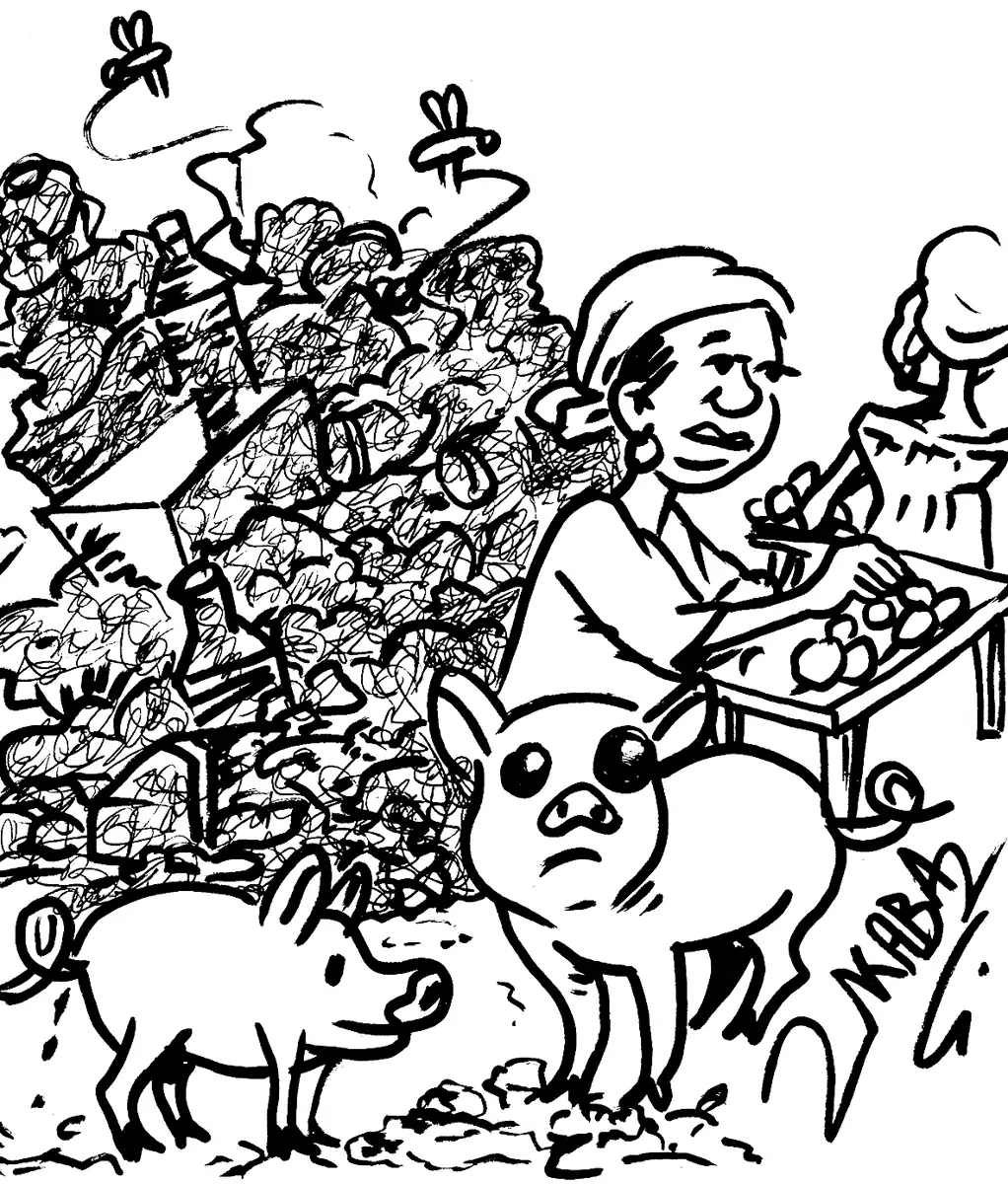
The issue of insalubrity in Conakry, Guinea's capital, has been a persistent problem for years. Residents are frustrated with the state of their city, where trash-filled streets and poor waste management have become a norm. Despite various attempts to address the issue, the situation remains dire. The city's inhabitants are plagued by the consequences of inadequate waste disposal, which affects their health, environment, and overall quality of life.
A decade ago, a local woman expressed her frustration on a radio show, likening the city's residents to "pigs" due to their lack of attention to cleanliness. Her words still resonate today, as the city's streets, markets, schools, hospitals, and public administrations are often littered with trash. The situation worsens during the rainy season, when heavy downpours create muddy puddles that further congest the city's already saturated roads.
The issue of insalubrity in Conakry is not a new phenomenon. In the past, the city was known as the "Pearl of West Africa" due to its cleanliness and beauty. As described by Camara Laye in his autobiography, "L'enfant noir," the city was once a well-planned and picturesque place. However, over time, the city's infrastructure and waste management systems have deteriorated, leading to the current state of disarray.
Various solutions have been attempted to address the issue of insalubrity in Conakry, including public waste collection services and contracts with private companies. However, these efforts have been largely unsuccessful due to a lack of follow-up and inadequate investment. As a result, the city's residents continue to suffer from the consequences of poor waste management.
The international community has taken notice of Conakry's struggles, with the press often citing Kigali, Rwanda's capital, as a model for cleanliness in Africa. Guinea can learn from Rwanda's example and explore ways to improve its waste management systems. By doing so, the country can work towards creating a healthier and more livable environment for its citizens.
The current state of insalubrity in Conakry has significant implications for the city's residents, who are often blamed by outsiders for their perceived lack of cleanliness. This narrative can be damaging and overlooks the complexities of the issue. To break this cycle, the city's residents, leaders, and government must work together to find a sustainable solution to the problem of insalubrity.
Ultimately, addressing the issue of insalubrity in Conakry will require a multifaceted approach that involves leadership, community engagement, and investment in waste management infrastructure. By taking a comprehensive and collaborative approach, Guinea can work towards creating a cleaner, healthier, and more sustainable future for its capital city and its residents.
Key points
- Conakry's struggles with insalubrity have significant implications for the health and well-being of its residents.
- The city's lack of cleanliness is often attributed to inadequate waste management systems and a lack of leadership.
- Guinea can learn from other countries, such as Rwanda, which has made significant strides in improving its cleanliness and waste management.