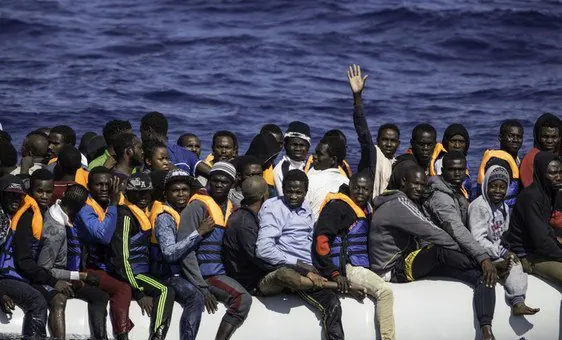
The journey of African immigrants to Europe is a perilous and often tragic one, with thousands risking their lives to cross the Mediterranean Sea. European media frequently report on the catastrophic experiences of these immigrants, with headlines such as "Hundreds drowned" and "Thousands stranded at sea." The immigrants, mostly from countries suffering from civil wars, corruption, and repressive regimes, are driven by the hope of finding a safe haven and better living conditions in Europe.
Before reaching the Mediterranean, many immigrants have already perished in the hazardous crossing of the Sahara Desert, succumbing to exhaustion, hunger, dehydration, heatstroke, and malaria-related ailments. The Red Cross counts the dead and rescues survivors, but many remain missing. The immigrants' journey begins in countries such as Libya and Tunisia, where they board overcrowded rafts and rickety boats, often with inadequate supplies and no guarantee of safe passage.
The phenomenon of mass migration from Africa to Europe is a complex issue, driven by both push and pull factors. While the immigrants are voluntary travelers, they are often victims of compelling circumstances, including wars, corruption, and poverty. Europe's liberal migrant policies, particularly in countries such as Italy, Spain, and France, have also contributed to the influx of immigrants.
However, the reality of life in Europe often proves harsh for these immigrants. Many struggle to find decent housing and employment, leading to a life of poverty and marginalization. Some resort to menial jobs, hawking, and begging, while others turn to crime and prostitution. This can lead to confrontation with law enforcement agencies and detention.
Immigrants from Africa, in particular, face significant challenges in Europe, including a lack of understanding of their host countries and inadequate support from their embassies. A notable example is the case of 36 Nigerians who were detained in an Italian jail for over two years on suspicion of Mafia membership, a charge that was later found to be unfounded.
The issue of mass migration from Africa to Europe requires a global response, with African leaders taking a firm stance against corruption and working to address the root causes of migration. This includes harnessing the continent's natural and human resources to drive technological advancement, economic growth, and development.
Ultimately, the journey of African immigrants to Europe highlights the need for a comprehensive and collaborative approach to addressing the complex issues driving migration. By working together, governments, international organizations, and civil society can help to create a safer, more prosperous future for all.
Key points
- Thousands of African immigrants risk their lives crossing the Mediterranean Sea to reach Europe.
- The journey of African immigrants to Europe is driven by a combination of push and pull factors, including conflict, poverty, and the hope of better living conditions.
- African leaders must take a firm stance against corruption and work to address the root causes of migration to create a safer, more prosperous future for all.