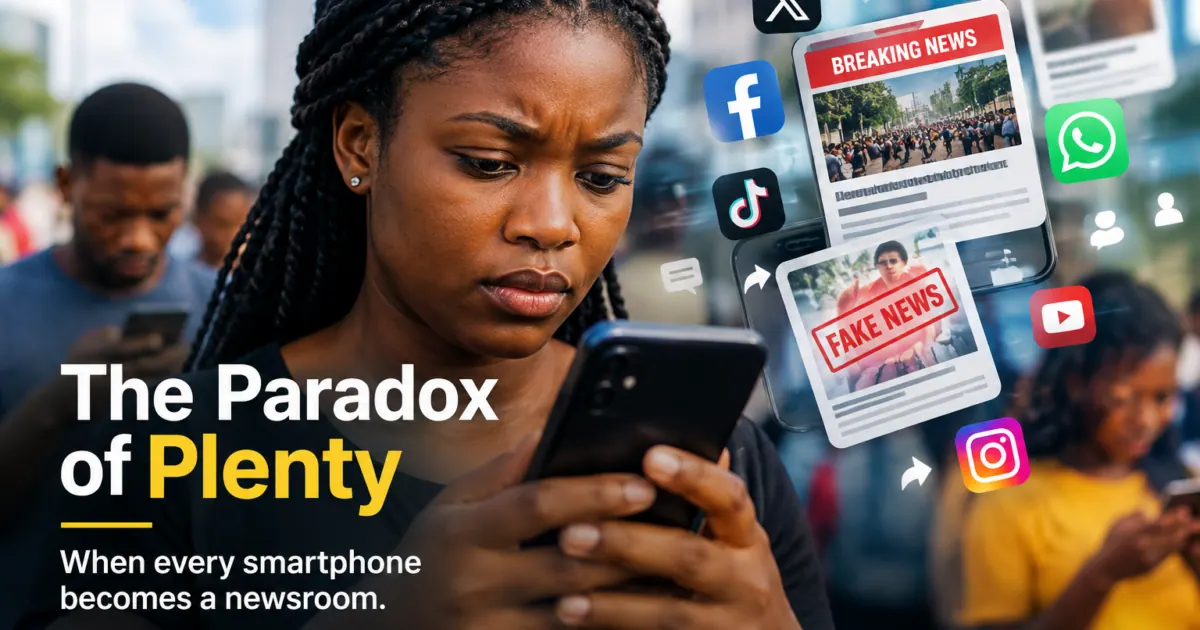
The traditional notion of a newsroom has undergone a significant transformation in Ghana. With the widespread use of smartphones, ordinary citizens can now report on stories and bring issues to public attention. This shift has led to the emergence of citizen journalists, bloggers, and content creators who are playing an increasingly important role in Ghana's information ecosystem. They are often the first to arrive at scenes, and their stories are sometimes picked up by mainstream media.
Ghana's media landscape has long been diverse, with a mix of private radio and television stations, online news platforms, and state-owned media. The country's 1992 Constitution guarantees freedom of the press, and Reporters Without Borders describes Ghana as having a dynamic and diverse media environment. However, the digital revolution has added a new layer, with smartphones becoming a newsroom in the hands of ordinary citizens. This development has significant implications for the way information is gathered and disseminated.
The rise of citizen journalists has provided a platform for people who previously had little access to powerful platforms to tell their stories. They are documenting alleged injustices, highlighting community problems, and bringing issues to public attention. Some content creators are helping citizens who feel that nobody is listening, and their efforts are sometimes forcing officials to respond. For instance, in April 2026, President John Dramani Mahama directly addressed social-media claims about tricycles distributed under the Free Primary Healthcare Programme.
However, with great communicative power comes great responsibility. Not everyone holding a smartphone is a journalist, and not every viral video is journalism. The same freedom that allows a content creator to expose an injustice must also require that creator to exercise care with facts, allegations, and people's reputations. This is where the debate becomes complicated, as public officials can legitimately object to insults, personal attacks, and abusive language directed at them and their families.
The challenge is to draw a line between criticism and personal abuse without destroying the fundamental principle of free expression. Criticism is not the enemy of democracy, and responsible journalism is essential for holding those in power accountable. The danger comes when criticism is answered with intimidation or when freedom of expression becomes an excuse for abuse. The answer should be responsibility, evidence, accountability, and the rule of law.
Ghana's democracy depends on the public's ability to receive information and scrutinize those who exercise power. Reporters Without Borders' 2026 assessment places Ghana 39th out of 180 countries in its World Press Freedom Index, describing Ghana as being in the “satisfactory” category. However, there are continuing concerns about attacks, obstruction, and safety affecting journalists. To protect the space for journalism, Ghana must ensure that the digital revolution does not become a licence for character assassination.
The real question for Ghana is whether it can build a digital public sphere where citizens can speak boldly, journalists can investigate freely, governments can be held accountable, and everyone, including the President, can be criticized without fear of retribution. This requires a balance between free expression and responsibility, as well as a commitment to evidence-based reporting and accountability. By achieving this balance, Ghana can harness the power of citizen journalism to promote transparency, accountability, and good governance.
Key points
- The rise of citizen journalists in Ghana has transformed the traditional notion of a newsroom and provided a platform for ordinary citizens to bring issues to public attention.
- The digital revolution has added a new layer to Ghana's diverse media landscape, with smartphones becoming a newsroom in the hands of ordinary citizens.
- To harness the power of citizen journalism, Ghana must build a digital public sphere where citizens can speak boldly, journalists can investigate freely, and governments can be held accountable.