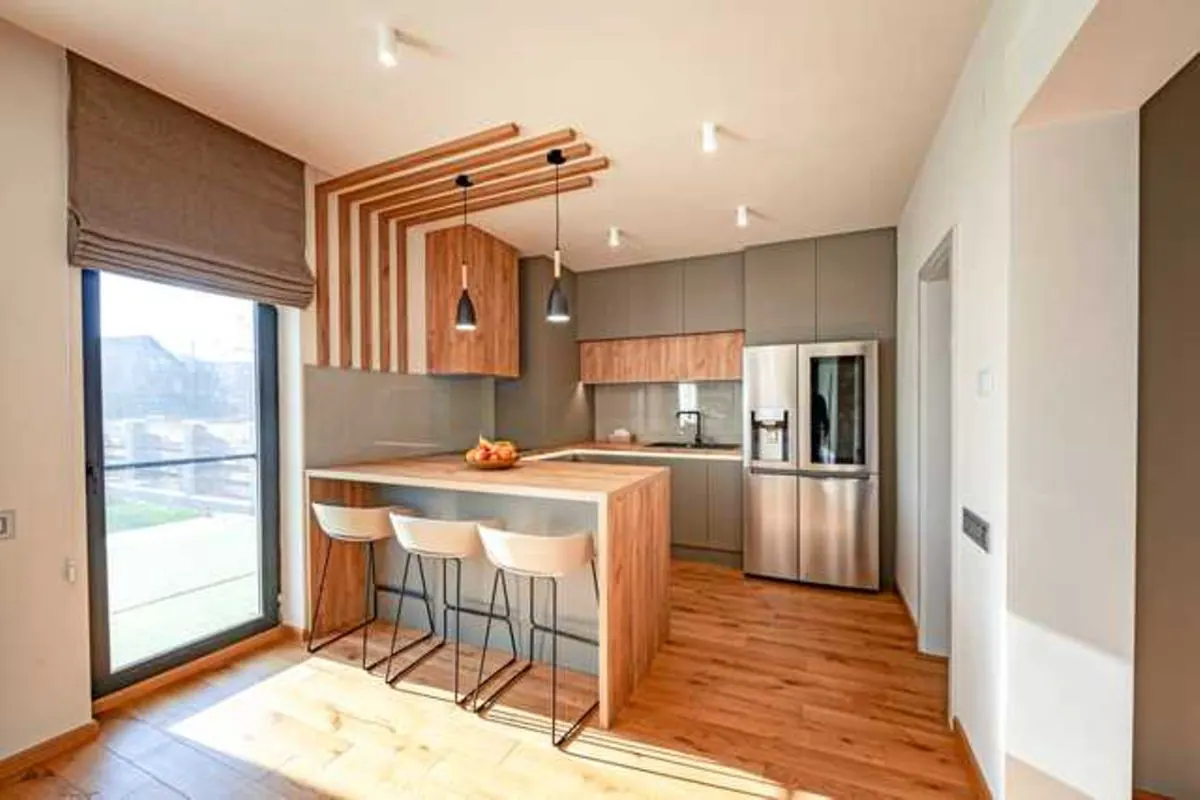
In Nairobi's new apartments, a growing trend is emerging where kitchens are being designed with raised counters and tall stools, known as breakfast nooks or breakfast bars. This feature has become a selling point, with developers and homeowners citing its modern appeal and space-saving design. According to Joel Chacha, owner of a furniture shop in Nairobi, demand for tall seats has grown as homeowners set up these breakfast nooks.
The breakfast nook typically consists of a counter extending from the kitchen, paired with tall stools. Kingmaxx Mbarire, CEO of Kingsville Real Estate, says his firm now includes breakfast nooks in its apartment designs because buyers find them attractive. He notes that the feature is particularly appealing in small spaces, where it can serve as a casual dining area and conversation space.
Mbarire explains that the breakfast nook is not meant to replace the traditional dining room but rather complement it. In small apartments, it can serve as a place for casual meals, homework, remote work, and conversation with guests. Throughout the day, it doubles as a spot for breakfast and socializing. According to Mbarire, most clients find it attractive, especially in tiny spaces where a dining area is not feasible.
Interior designer Faith Kosgei emphasizes that a well-designed breakfast nook should integrate with the architecture of the house. She recommends warm wooden tones, curved or sculpted pieces, soft furnishings, and benches or leather banquettes that are easy to maintain. Kosgei also suggests that the breakfast nook doesn't have to match the rest of the furniture, allowing homeowners to express their personal style.
Developers, particularly at the higher end, are tailoring apartments to buyers by including breakfast nooks. Mbarire says Kingsville uses finishes, lighting, and cabinetry to set the space apart. The firm also customizes the nook with nice hanging minimal chandeliers and marble or graphite countertops. Additionally, cabinets add storage to what would otherwise be a seating area.
The addition of a breakfast nook does not automatically justify a higher price. At Kingsville, the gap between units with and without a nook reflects the extra space they take up. For example, a five-bedroom apartment with a breakfast nook is priced at Sh55 million, while one without is priced at Sh53 million. Mbarire notes that the price change is due to the price per square meter, not the breakfast nook itself.
The concept of breakfast nooks is not new, having been common in the US, UK, and Australia for years. Kenyan developers are following suit, building the feature into the design and marketing of new projects. Kosgei suggests that homeowners on a tight budget can still create a breakfast nook without structural work by using natural light and recycled materials.
Key points
- Developers in Kenya are incorporating breakfast nooks into apartment designs due to buyer demand for the modern feature.
- The breakfast nook serves as a space-saving design that combines kitchen and living space.
- A well-designed breakfast nook can integrate with the architecture of the house and express the homeowner's personal style.