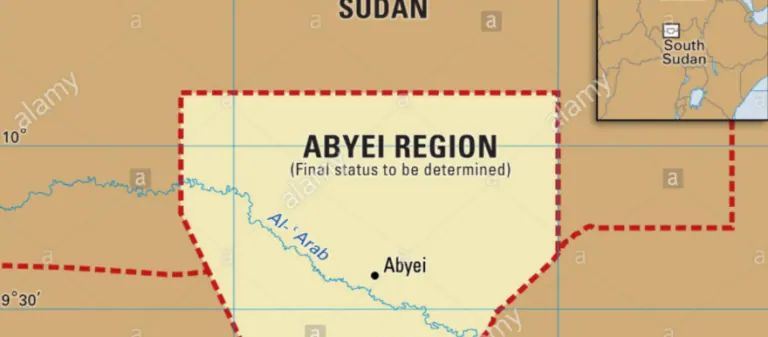
The Comprehensive Peace Agreement (CPA) of 2005 aimed to end Sudan's civil war, addressing regional conflicts through separate mechanisms. For Southern Sudan, the CPA granted self-determination, leading to South Sudan's independence in 2011. However, the Abyei conflict remains unresolved. The CPA's Abyei Protocol defined Abyei as the area of nine Ngok Dinka chiefdoms transferred to Kordofan in 1905, with the Misseriya and other nomadic people retaining traditional grazing rights.
The Abyei Protocol established the Abyei Boundary Commission (ABC) to determine the boundary of the Ngok Dinka lands transferred to Kordofan in 1905. The ABC's work was influenced by Ngok Dinka members, who included areas not originally part of the transferred lands. This has contributed to ongoing inter-communal violence, with the Misseriya rejecting the ABC report, claiming it exceeded its mandate. The Government of Sudan also rejected the report, citing the ABC's failure to define only the area of the nine Ngok chiefdoms.
Tensions between the Ngok Dinka and Misseriya communities stem from the northern boundary, where the Ngok Dinka are accused of including areas far north of the Kiir River that were never part of the transferred lands. On the eastern boundary, disputes arise from the inclusion of areas not originally part of the Ngok Dinka lands. These disputes have led to ongoing violence and have hindered the implementation of the Abyei Protocol.
The conflict has also been fueled by the silence of the Government of South Sudan on other disputed areas, such as Kafia Kingi, Mile 14, and Magenis. The Fertit, traditional inhabitants of these lands, are now part of South Darfur in Sudan. The Government of South Sudan's inaction on these areas has been criticized, particularly by the natives of those areas.
The Abyei Referendum Commission was not established, and the Ngok Dinka community and other Abyei residents were unable to hold their referendum as outlined in the CPA. The referendum was supposed to determine whether Abyei would retain its special administrative status or become part of Bahr el Ghazal. The failure to hold the referendum has contributed to ongoing tensions in the region.
The international community, through their representatives in the ABC, has been indirectly involved in the annexation of lands and must acknowledge their moral and legal responsibility in correcting the mistakes committed. The parties involved must work towards a resolution that addresses the concerns of all communities involved, including the Ngok Dinka and Misseriya.
The Abyei conflict remains a complex and unresolved issue, with deep-seated tensions between communities. A lasting solution requires a comprehensive approach that addresses the historical and cultural context of the conflict, as well as the concerns of all parties involved. The implementation of the Abyei Protocol and the holding of the Abyei referendum are crucial steps towards resolving the conflict.
Key points
- The Abyei conflict remains unresolved, with tensions between the Ngok Dinka and Misseriya communities.
- The Government of South Sudan's inaction on disputed areas has contributed to ongoing tensions.
- The international community has a moral and legal responsibility to correct the mistakes committed during the ABC's demarcation and delimitation of the internal boundaries of Abyei.