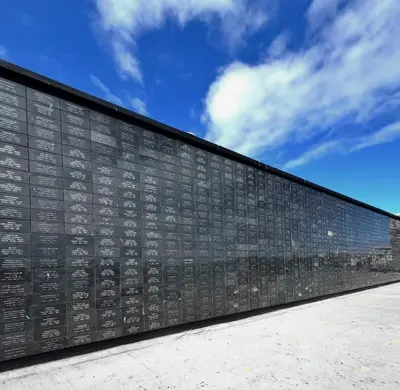
The Robben Island Museum in South Africa has unveiled a Wall of Remembrance to honour the thousands of political prisoners who were held on the island for their opposition to apartheid. The wall is part of an effort to preserve the histories of people who were imprisoned on Robben Island, including activist Lusiba Esdras Ntloko Zingisa Mase. Ntloko was just 22 when he was arrested for his involvement in the student uprising in the greater Queenstown region in 1976.
Ntloko was born on 18 July 1954 and became involved in student activism during a turbulent period in South Africa's history. He was detained under Section 6 of the Terrorism Act of 1967 and stood trial alongside 12 others, including his brother, Phambili Nehemiah Ntloko. They were sentenced to five years' imprisonment on Robben Island. After his release, Ntloko continued his political work, joining the Azanian People's Organisation.
The Wall of Remembrance draws on the Robben Island Museum's Memories Project, which began in 1997 to collect and document memories of significance from former political prisoners. One of its sub-projects, the Ex-Political Prisoners Database, was established to collect information about people imprisoned on Robben Island for political reasons between 1961 and 1991. This database has helped to create a fuller record of the people whose names and stories form part of South Africa's liberation history.
Professor Saths Cooper, the chairperson of the Robben Island Museum and a close friend of Ntloko, says the project is about ensuring that these histories are not lost. He believes the Wall is intended to “resuscitate the spirit of consciousness” among young people and remind them that the power to shape the future is in their hands. The wall also serves as a reminder of the role played by young people such as Ntloko, who were arrested during the period surrounding the 16 June 1976 uprising.
Cooper says the project is also important in preventing the erasure of people's contributions from the historical record. Between 1961 and 1991, at least 7 000 political prisoners were held on Robben Island, but some names were lost from historical records. The museum's work to recover the names is therefore about more than creating a memorial. It is an attempt to restore a fuller record of the people who participated in the struggle against apartheid.
Ntloko's activism extended beyond political organising. He worked with the Family Institute alongside Prof Saths Cooper, supporting families of late comrades affected by gender-based violence. In 1988, when Azapo was prevented from operating as a political party by the government, Ntloko joined four other former Azapo members in forming Azaco to pursue the same political aspirations. He was also instrumental in facilitating a Democratic Future conference that welcomed South Africans returning from exile.
Today, Ntloko's name is preserved on the Wall of Remembrance at Robben Island, alongside thousands of other former political prisoners. More former political prisoners are expected to receive medals for their contributions at an event on 31 October 2026, as the museum continues its work to preserve and honour these histories. For people such as Ntloko, whose political life was cut short at 43, the Wall offers something that history can sometimes fail to provide: a name that remains visible, remembered and connected to the struggle that helped shape the South Africa we know today.
Key points
- The Robben Island Museum's Wall of Remembrance aims to restore the names and stories of thousands of political prisoners who fought against apartheid.