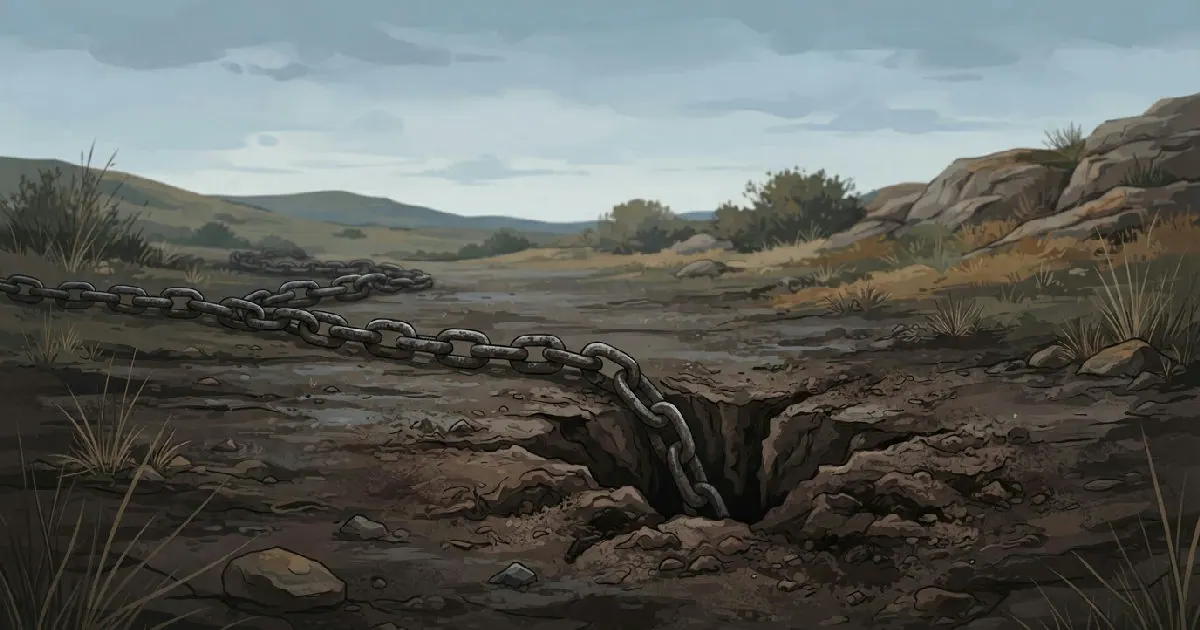
In the 17th century, a legendary tale emerged in Ilaro, Nigeria, about Oronna, a formidable warrior and prince from Oyo. According to the story, Oronna vanished into the earth, leaving behind a mysterious chain tied to his waist. This event has become a cornerstone of Ilaro's cultural identity, asserting that Oronna's service to his community transcended physical existence. The legend posits that Oronna achieved a deity-like status, securing numerous victories for Ilaro, particularly against the formidable Dahomean Army.
The legend of Oronna is widely believed within the Ilaro community and is one of Nigeria's most intriguing historical accounts. Oronna's superhuman exploits distinguished him from ordinary warriors, leading to his unique departure from the mortal realm. Instead of succumbing to age or battle, he chose a different path. According to the story, Oronna entered the ground, taking his loyal leopard, known as an ẹkùn, with him. This act was not merely a vanishing; it was a profound pledge to emerge and defend his people during times of invasion.
The location of Oronna's disappearance transformed into the revered Oronna Shrine, a vital spiritual and cultural landmark in Ilaro. The shrine serves as a profound physical reminder of the warrior's lasting impact, and all Ilaro kings are crowned there. This sacred place actively preserves the history and traditions of the Ilaro Kingdom, representing Oronna's eternal commitment to his people. The cultural heritage of Ilaro is also celebrated annually through the Oronna Ilaro Festival, typically held in November.
The Oronna Ilaro Festival is a week-long event that serves as a homecoming for the Ilaro people. The festival includes street carnivals, cultural pageants, masquerade displays, and even a 50-kilometer race. It aims to uphold the community's traditions and serves as a platform for self-help initiatives. According to Chief Kayode Odunaro, Chairman of the Oronna Festival planning Committee, the festival is an essential part of Ilaro's cultural heritage.
Ilaro's early history was marked by constant threats, where the need for fertile land was inseparable from the need for defense. The town was founded around the mid-17th century by Aro, a hunter and farmer from Oyo Ile. Aro established a settlement known as "Ilu Aro," meaning "Aro's town," which eventually became Ilaro. The town's strategic location made it a critical position in the region, later known as Egbadoland.
Oronna's association with an ẹkùn, or leopard, added to his legendary stature. The leopard in Yoruba culture historically embodies strength, authority, and fearlessness. Its presence in Oronna's story reinforced the image of a warrior whose capabilities far exceeded human limits. This association transformed him from a skilled fighter into an almost mythical figure, whose military might intertwined with mystical qualities.
Oronna's story demonstrates how historical figures can transcend their lifetimes to become central to a community's identity. The chain he left behind symbolizes an unbroken link between the past and the present, ensuring his perpetual connection to Ilaro. The continued reverence for Oronna, through his shrine and the annual festival, reveals a deep-seated respect for ancestral protectors and highlights the way historical narratives shape a people's understanding of courage and resilience.
Key points
- Oronna's legendary status as a warrior and prince from Oyo has become an integral part of Ilaro's cultural identity.
- The Oronna Shrine and Festival serve as a reminder of Oronna's eternal commitment to his people and preserve the history and traditions of the Ilaro Kingdom.
- Oronna's story illustrates the profound ways in which Nigerian communities forge their unique identities through powerful symbols of enduring protection.