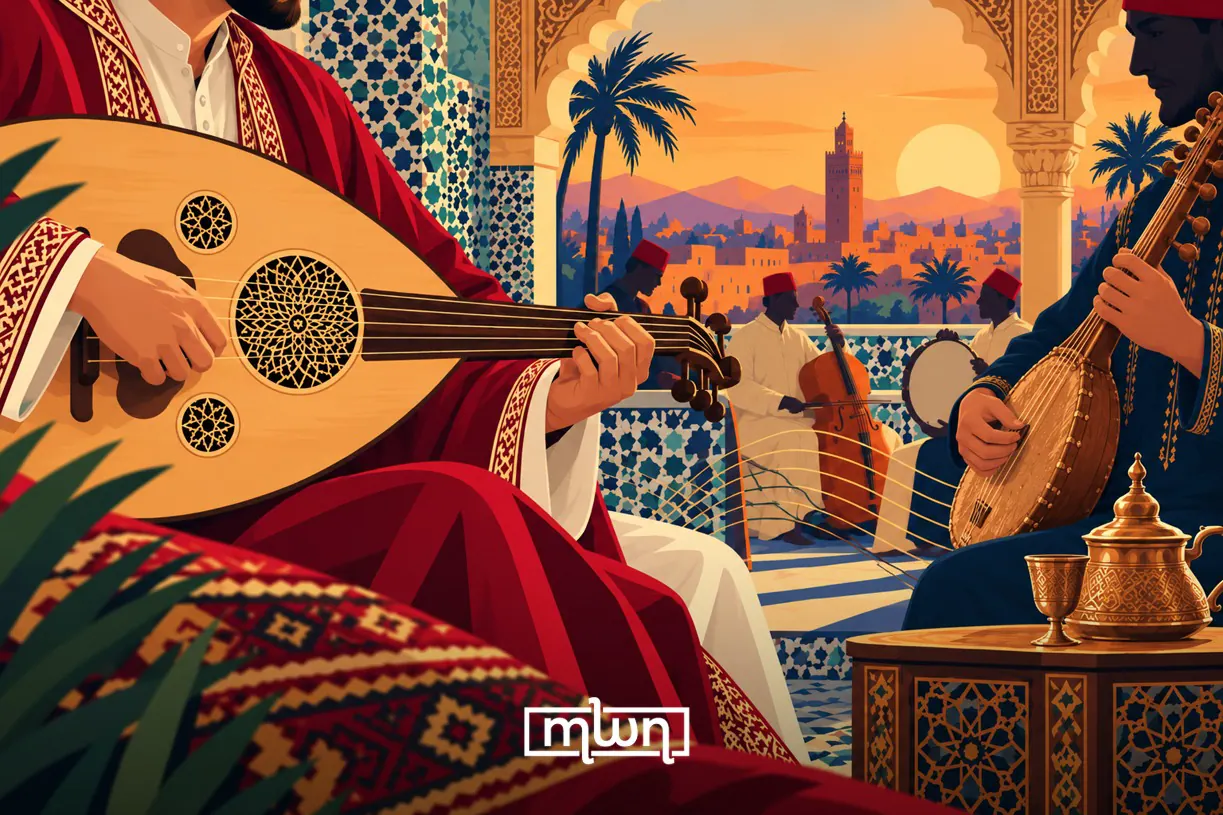
The life of Moroccan musician Abderrahmane El Gadi is a mystery, despite his music being widely available. El Gadi, a master of the lutar, a long-necked lute associated with the Middle Atlas, passed away almost two months before his death was reported. His music had traveled far and wide, with recordings available online, but basic information about his life, such as his date of birth, was difficult to find.
El Gadi hailed from El Ksiba, a small town in the Middle Atlas, where traditional music instruments like the lutar have been an integral part of the local culture for centuries. The region is also home to Hadda Ouakki, a renowned singer from Ait Ishaq, known for his powerful voice that seems to capture the essence of the mountainous landscape.
The search for information about El Gadi's life led to a maze of inconsistent digital records. Online notices of his death provided varying details, with some mentioning his birthplace as El Ksiba but failing to provide a date of birth or age at death. Even his name was spelled differently across various sources, making it challenging to piece together his biography.
Despite the difficulties in finding information about El Gadi, his music remains widely available online. Recordings of him playing the lutar can be found, often alongside female singers, showcasing the intimacy and social nature of traditional Moroccan music. These recordings demonstrate the instrument's ability to converse with and complement the voice, rather than simply accompanying it.
The author's personal experience with music and migration began long before they became a migrant themselves. Growing up in the Ziz Valley of southeastern Morocco in the mid-1970s, the author's family acquired a cassette player, which became a status symbol and a means of connecting with the outside world. The machine allowed them to hear broadcasts from around the world, including Tamazight language programs from Rabat.
The cassette player, a Grundig with a single cassette deck and radio, quickly became an integral part of the family's social life. It was used to play music and listen to recorded messages from migrants living in Europe, who would send cassette letters home filled with news and greetings. This technology bridged the distance between the village and the world beyond, introducing concepts like globalization and transnationalism to the family.
The Grundig's impact on the family and community was significant, but its limitations, particularly its battery consumption, were quickly realized. To overcome this, the family used creative solutions, such as using a Bic pen to rewind cassettes, to make the most of their limited resources. The machine had become an essential part of their lives, much like a family member.
Key points
- Abderrahmane El Gadi's music has traveled far and wide, but his life remains shrouded in mystery.
- The author's experience with music and migration highlights the significance of technology in bridging cultural and geographical divides.
- Traditional Moroccan music instruments like the lutar continue to play an essential role in the country's cultural heritage.