The Tunisian media sector, which had made significant gains in freedom and pluralism since the 2011 revolution, has come under threat since President Kais Saied's power grab on July 25, 2021. Public and private media outlets have largely aligned themselves with the regime, while independent voices face repression. Despite this grim landscape, pockets of resistance have emerged to defend the integrity of journalism in Tunisia. The situation has led to concerns about the erosion of press freedom and the role of the media in a democratic society.
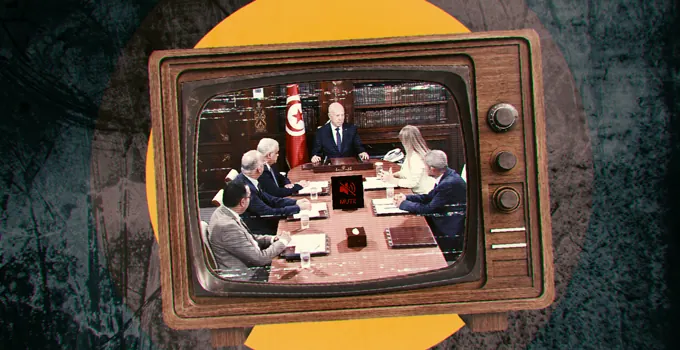
On August 3, 2026, President Saied met with the heads of several public information service agencies, including Télévision tunisienne, Radio tunisienne, and Agence Tunis Afrique Presse (TAP). During the meeting, he urged the national media to be a "free voice" and produce responsible coverage that serves the country's best interest. However, critics argue that such rhetoric is insufficient to guarantee press freedom, and that the relationship between the head of the executive authority and the media sector is a key factor in determining the extent of that freedom.
The incident involving an interview with former President Moncef Marzouki on France 24 highlights the paradox of the Tunisian government's stance on press freedom. While the government protests the diffusion of the interview, citing insult to state sovereignty and threat to national security, it also praises a "free" national press. This ambivalence raises questions about the government's commitment to press freedom and its willingness to engage with divergent opinions.
The Tunisian media landscape has undergone significant changes since 2011, with the emergence of pluralism and a diverse range of voices. However, since July 25, 2021, this dynamic has been gradually diminished, with a reshuffling of leadership across the public media sector, decreased presence of dissident voices, and restrictions on access to information. Journalists have also faced legal harassment, and the economic vulnerability of privately-operated media platforms has been exploited.
The mode of operation adopted by the government of Kais Saied has been characterized as modern authoritarianism, where work conditions are reconfigured to make independence costly, criticism risky, and journalism an exercise in practicing caution. This has resulted in an abundance of media outlets whose capacity to spark real debate has continued to erode. The notion of difference has come to mean the continuous rehashing of the same discourse, effectively creating a "media desert".
A key question raised in the wake of the revolution was to whom the public media belong - to the government, which appoints its leadership, or to society, which funds it? The public media are a fundamentally social service that guarantees citizens their right to information, reflects the diversity of society, and monitors decision-makers. However, under the current regime, public media have been turned into a mouthpiece for the government.
Despite the challenges, pockets of resistance have emerged to defend the integrity of journalism in Tunisia. The situation has highlighted the need for a free and independent press that can hold those in power accountable. The international community has also taken note of the situation, with concerns expressed about the erosion of press freedom in Tunisia.
Key points
- President Kais Saied's government has been accused of using modern authoritarianism to control the media sector.
- The public media sector has been turned into a mouthpiece for the government, undermining its role as a social service.
- Pockets of resistance have emerged to defend the integrity of journalism in Tunisia.