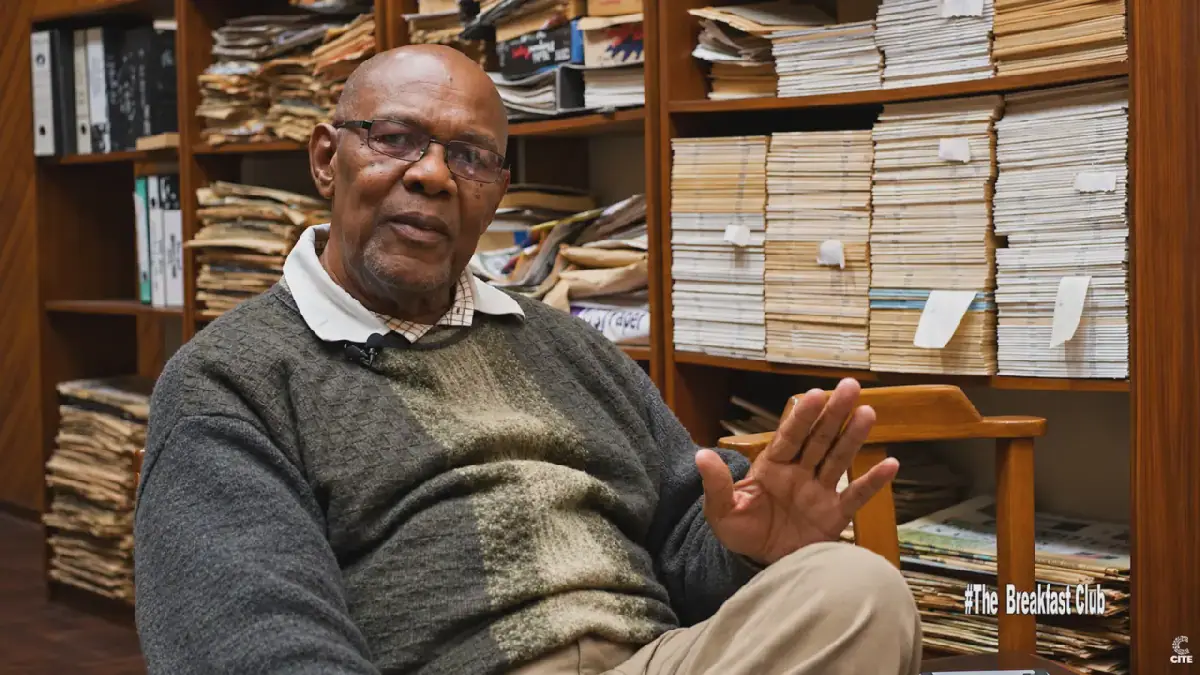
Dumiso Dabengwa, born on December 6, 1939, in Ntabazinduna, Matabeleland North, grew up in a self-reliant home with traditional values. His early years were shaped by mission schools, including Kutama in Zvimba and Thekwane near Plumtree, which were hotbeds of early African nationalism. After teaching at Cyrene Mission and working at the Bulawayo City Council, Dabengwa landed a job at Barclays Bank, a rare achievement for an African youth in the late 1950s. However, his quiet life behind the bank counter was short-lived, as he soon became involved in the African National Congress and later joined Joshua Nkomo's Zimbabwe African People's Union (ZAPU).
In 1961, after the National Democratic Party (NDP) was banned and ZAPU took its place, Dabengwa joined a secret underground cell in Bulawayo. He was involved in manufacturing homemade petrol bombs, targeting electrical grids, government buildings, and industrial plants. His activities caught the attention of the British South Africa Police, who arrested him under the harsh Law and Order (Maintenance) Act, sending him to prison for a short stretch. This experience only strengthened his resolve against Ian Smith's regime, and ZAPU leaders soon saw his potential, ordering him to undergo formal military training across the border.
In 1964, Dabengwa led a select group of young ZAPU recruits out of Rhodesia, through Zambia, and onward to the Soviet Union, marking the beginning of a deep connection with Moscow that would last a lifetime. The Soviets trained him in state security, counter-espionage, radio interception, and underground logistics at the Komsomol Higher Party School and specialised military facilities outside Moscow. Dabengwa trained alongside future ZAPU stalwarts, including Robson Manyika, Ethan Dube, and Swazini Matshelela, learning the mechanics of asymmetric statecraft directly from Soviet officers.
Dabengwa's training in the Soviet Union equipped him with the skills to build a robust intelligence network. By 1971, ZAPU reorganised its military force into the Zimbabwe People's Revolutionary Army (ZIPRA), and Dabengwa took charge of the National Security Organisation (NSO), ZAPU's intelligence wing. Under his leadership, the NSO grew into one of the most effective non-state intelligence services on the continent. Dabengwa's approach to security was pragmatic and methodical, emphasising the importance of verifying information and maintaining operational discipline.
As ZIPRA's intelligence chief, Dabengwa played a crucial role in the liberation struggle, helping to break white minority rule in Rhodesia. However, his contributions were not recognised by the government he helped put in power. In 1982, Dabengwa was arrested and charged with treason, despite being cleared by the High Court. He was kept in detention under emergency laws for several years, a period marked by isolation and hardship.
Despite his imprisonment, Dabengwa's spirit remained unbroken. In the late 1980s, he agreed to join Robert Mugabe's Cabinet, serving for nearly a decade. However, he eventually walked out, determined to rebuild the ZAPU party his colleagues had tried to destroy. Dabengwa's decision to work with Mugabe, despite their complicated past, reflected his commitment to Zimbabwe's freedom and his vision for the country's future.
Dabengwa's life was marked by a series of contradictions, from his early days as a bank clerk to his later years as a spymaster and politician. He navigated a turbulent life without losing his soul, guided by a cold, methodical view of power and an unwavering loyalty to his vision of Zimbabwean freedom. Dabengwa's legacy serves as a testament to the complexities of Zimbabwe's liberation struggle and the enduring power of conviction and determination.
Key points
- Dabengwa's leadership of ZIPRA's intelligence wing played a crucial role in the liberation struggle, helping to break white minority rule in Rhodesia.