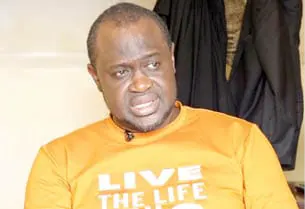
For nearly two decades, Samuel Ihensekhien has built his legal career around a core principle: that the law must protect the weak as much as it restrains the powerful. As a human rights activist and principal partner of PathLegal & Co, Ihensekhien has repeatedly taken up causes involving people with limited access to power and resources. His work is driven by a personal conviction that silence in the face of injustice can amount to complicity.
Ihensekhien's commitment to advocacy predates his call to the Nigerian Bar. Before becoming a lawyer, he had already resolved to use the profession to promote social change and give a voice to people who ordinarily could not speak for themselves. He credits the late human rights lawyer, Chief Gani Fawehinmi, as one of the major influences on his approach to legal practice.
One of the cases that brought his work into national attention was that of Gloria Okolie, a young woman who was detained by the police in 2021 over alleged links to IPOB. Ihensekhien took up her case with the One Love Foundation, challenging what he described as her prolonged detention and alleged mistreatment. The case subsequently became a wider public campaign, with the hashtag #FreeGloriaOkolie attracting attention online.
Ihensekhien's intervention in the case of Inspector Adebisi Adenusi also reflects the type of cases that have defined his practice. Adenusi had expressed concerns about police welfare in a private WhatsApp group and was subsequently dismissed and detained, facing criminal allegations that included sedition. Ihensekhien intervened, securing Adenusi's bail and eventually, the prosecution failed to sustain the criminal case and it was dismissed.
Ihensekhien has increasingly turned to the ECOWAS Community Court of Justice, particularly in cases involving alleged violations of fundamental rights. One of the cases he highlighted involved Ogechi Njaka, a Nigerian blogger who was declared wanted by the police following a dispute that began on social media. Ihensekhien challenged the notice before the ECOWAS Court, arguing that it could undermine the presumption of innocence and human dignity.
The growth of social media has also expanded Ihensekhien's advocacy into what he describes as new and emerging areas of law. He was involved in litigation connected with Nigeria's suspension of Twitter, arguing that access to digital platforms intersects with constitutionally protected rights to freedom of expression and the press.
Taking on powerful institutions, however, has come at a personal cost for Ihensekhien, who says his work is driven less by recognition than by a personal conviction. Despite this, he remains committed to using the law to promote social change and give a voice to people who ordinarily could not speak for themselves.
Key points
- Ihensekhien has used litigation to demand accountability from state institutions in cases such as Gloria Okolie's detention and Clement Sagwak's assault.
- He has also taken cases to the ECOWAS Community Court of Justice, including a case involving a Nigerian blogger declared wanted by the police.
- Ihensekhien's advocacy extends to digital rights, including litigation connected with Nigeria's suspension of Twitter and the use of cybercrime laws in disputes arising from online expression.