Nigeria's 50th Independence Day celebration in Abuja was disrupted by deadly explosions on October 1, 2010. The country was marking a significant milestone, and Eagle Square was packed with dignitaries, military personnel, children, and guests from Nigeria and abroad. President Goodluck Jonathan attended the grand Golden Jubilee celebration, while soldiers marched, bands played, and an elaborate programme marked what was supposed to be one of Nigeria's biggest national celebrations.
A warning claiming explosives had been planted was sent to journalists shortly before the blasts. About an hour before the explosions, journalists received an email from a person identifying himself as Jomo Gbomo, the spokesman for the Movement for the Emancipation of the Niger Delta (MEND). The message warned that explosives had been planted around the Independence Day venue and urged people to leave the area. Security officials were therefore dealing with a potential attack even as the celebrations continued.
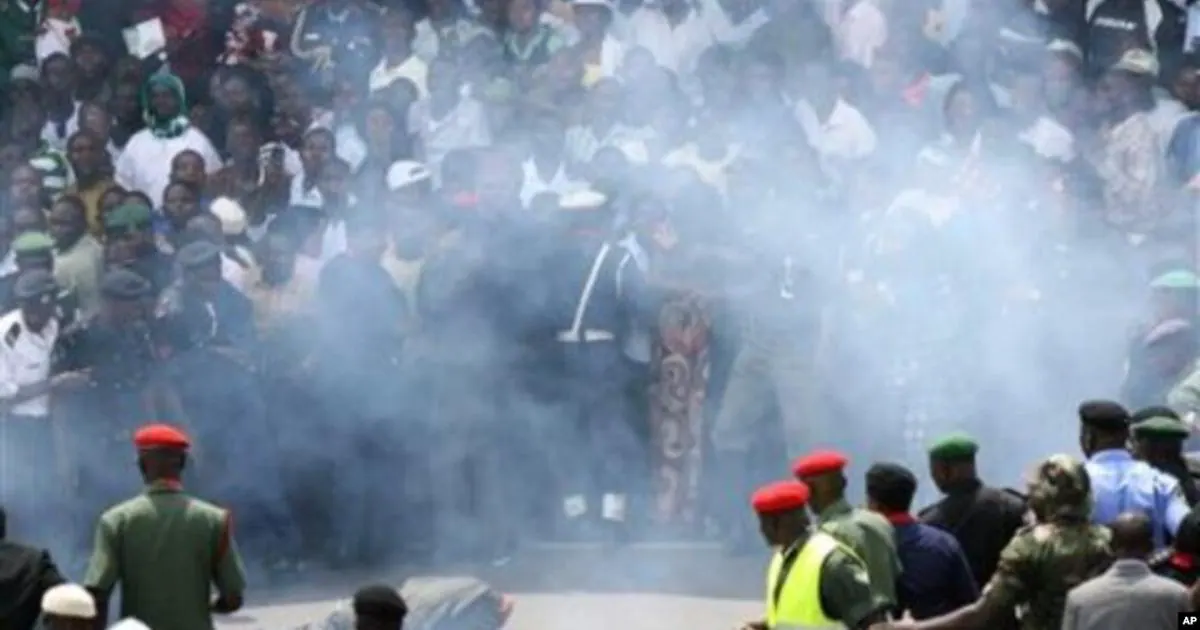
The blasts turned a day of celebration into a scene of confusion, smoke, and panic, leaving people dead and dozens injured. The first major explosion occurred outside the main celebration area, while a second car bomb followed minutes later, apparently striking as emergency workers, police officers, and other people rushed towards the first blast. Contemporary accounts differed as authorities continued to establish the casualty figures, with Al Jazeera reporting that at least 12 people were killed and 17 injured.
President Jonathan was at Eagle Square when the explosions occurred, inspecting a guard of honour. Despite the chaos unfolding just outside the security perimeter, the President was not evacuated. He remained at Eagle Square, completing the review of the military parades and staying until the event concluded, while his traditional Independence Day broadcast had already aired to the nation earlier that morning.
The celebration itself did not stop, with army bands continuing to perform, children continuing with parts of the programme, and military displays going ahead. The extraordinary images of a national celebration continuing while an attack had just taken place nearby captured the strange reality of that Independence Day. For many Nigerians, October 1 was usually associated with speeches, parades, flags, and celebrations.
The attack came at the end of a decade in which the Niger Delta had been consumed by militant activity, with groups including MEND fighting the Federal Government over oil revenues, environmental degradation, and the treatment of communities in the oil-producing region. The Independence Day bombing therefore represented a dramatic return of the conflict to the national stage, with MEND claiming the attack and arguing that 50 years after independence, the grievances of the Niger Delta had not been resolved.
Henry Okah, a senior figure associated with MEND, was arrested in South Africa shortly after the Independence Day bombing and charged in connection with the attacks. He was convicted in 2013 on terrorism-related charges. The investigation eventually led to Okah, while other alleged conspirators were prosecuted in Nigeria.
Key points
- 12 people were killed in the bomb explosions.
- A warning email was sent to journalists before the blast.
- Henry Okah was convicted in connection with the attacks.