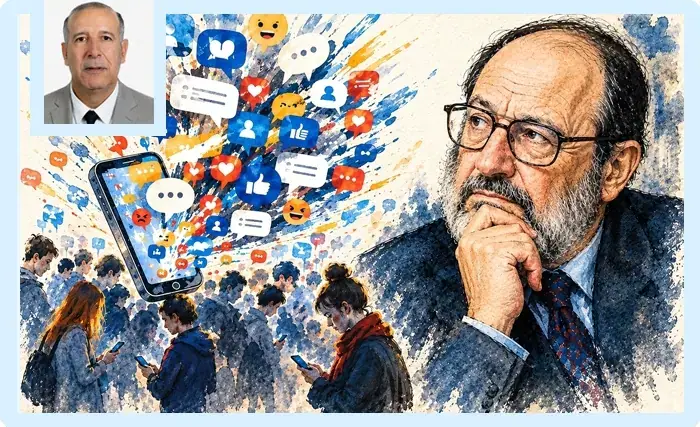
The rise of social media has led to a concerning trend where visibility and likes often take precedence over the value and substance of one's words. This shift has resulted in an influx of hurtful comments, insults, and public humiliation on various aspects of life, including relationships, education, politics, and culture. The anonymity provided by social media has emboldened individuals to express themselves without regard for moral accountability. As a result, online discussions often devolve into aggressive exchanges rather than constructive debates.
The most visible online publications frequently capitalize on the divide between men and women, promoting stigmatization, insults, and public shaming. This phenomenon risks transforming online spaces from platforms for exchanging ideas into arenas for personal attacks. When online discussions are dominated by mediocrity, vulgarity, and aggression, the consequences can be severe. This raises essential questions about the need for ethical regulation of social media to ensure that these platforms do not become breeding grounds for hate speech and harassment.
The tendency to celebrate divorce as a symbol of emancipation and personal growth is another concerning trend. While divorce may be a necessary solution in some cases, its normalization can be problematic. The decision to divorce should not be taken lightly or as an impulsive response to frustration. Rather, it requires careful consideration and a deep understanding of its implications. The trivialization of divorce reflects a broader impoverishment of our capacity to think critically about human relationships.
The Italian author Umberto Eco had previously warned about the dangers of unregulated online discourse, famously referring to the "legions of imbeciles" who can now broadcast their opinions to a wide audience. This highlights a pressing issue: social media gives visibility to all opinions, regardless of their merit or value. The loudest voices online are not necessarily the most informed or insightful. As a result, the proliferation of online opinions can lead to a cacophony of noise rather than a meaningful exchange of ideas.
The problem lies not in the freedom of expression itself but in the lack of critical thinking and discernment. When individuals are unable to distinguish between informed opinions and emotional outbursts, online discourse can quickly degenerate into chaos. The absence of intellectual tools to evaluate information and assess its value can lead to a situation where freedom of speech is reduced to a license to harm or offend others. This underscores the need for digital literacy and critical thinking skills to navigate online spaces effectively.
To mitigate these issues, it is essential to promote education and critical thinking in the digital age. This involves teaching individuals, particularly young people, to use digital tools responsibly and critically. They must learn to evaluate the impact of their words, respect others, and distinguish between freedom of expression and the right to insult. By fostering a culture of digital responsibility, we can create online spaces that promote constructive debate and meaningful exchange.
Ultimately, the goal is to create a digital landscape where freedom of expression is balanced with responsibility and respect for others. This requires a multifaceted approach that involves education, critical thinking, and a commitment to promoting a culture of civility and empathy online. By working together to address these challenges, we can ensure that social media platforms become tools for positive engagement and meaningful connection rather than breeding grounds for hate speech and harassment.
Key points
- The need for digital literacy and critical thinking skills to navigate online spaces effectively.
Reporting sources
- L’indigence culturelle à l’ère des réseaux: la parole-spectacle · leaders.com.tn