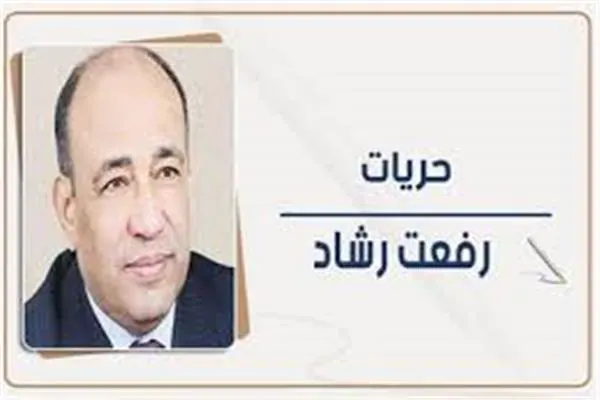
In a recent article, Egyptian writer Rifat Rashad highlighted the need for Arabs to reassess their priorities in light of global changes. He referenced the Byzantine controversy over the gender of angels, which took place as the Ottoman Empire was on the brink of conquering Constantinople. Rashad argued that Arabs must avoid similar fruitless debates and instead focus on the challenges facing their nation. He emphasized that the Arab world is at a critical juncture, with external and internal forces threatening its unity and resources.
Rashad's comments come as the Arab world faces significant pressures, including wars, economic crises, and political divisions. However, he believes that the most critical challenge lies in the region's failure to adapt to a new era in which knowledge, information, and artificial intelligence have become key determinants of power. To remain relevant, Arabs must prioritize their shared identity and invest in knowledge production. This requires a shift towards a more inclusive and dynamic understanding of Arabism, one that is capable of engaging with the world on equal terms.
Russian theorist Alexander Dugin has also weighed in on the future of the Arab world, arguing that its nations are struggling to comprehend the changing nature of power and warfare. Dugin emphasized the importance of information and technology in modern conflicts, noting that traditional means of defense are no longer sufficient. He believes that the battlefields of the 21st century will be shaped by screens, algorithms, and communication networks, as well as satellite systems and other advanced technologies.
For Rashad, the preservation of Arab identity is inextricably linked to the region's ability to produce knowledge. He argues that a language that fails to generate science, a culture that does not produce technology, and an education system that does not drive economic growth will inevitably be marginalized. In this sense, Arabism must be reimagined as a dynamic and outward-looking force, capable of engaging with global challenges and opportunities.
The imperative of Arabism, Rashad believes, is not about promoting a narrow or exclusionary agenda. Rather, it is about recognizing that fragmentation and division will only serve to weaken the region and render it vulnerable to external manipulation. By contrast, a unified and knowledge-driven approach to Arabism could enable the region to harness its vast resources, including its large population, geographic span, and rich cultural heritage.
Rashad's vision for Arabism is one that prioritizes cooperation, knowledge production, and technological innovation. He believes that this approach will allow the region to transcend its current limitations and play a more significant role on the global stage. By working together and investing in their shared future, Arabs can build a brighter and more prosperous future for themselves and for generations to come.
Ultimately, Rashad's call for a renewed focus on Arabism is a call to action, one that requires Arabs to put aside their differences and work towards a common goal. By doing so, he believes that they can build a more resilient, dynamic, and influential presence in the world, one that is capable of navigating the challenges of the 21st century and shaping its own destiny.
Key points
- Arab nations must prioritize knowledge production and technological innovation to remain relevant in a rapidly changing world.
- A unified and dynamic approach to Arabism is necessary to address the region's current challenges and opportunities.
- The preservation of Arab identity is linked to the region's ability to produce knowledge and engage with global challenges.