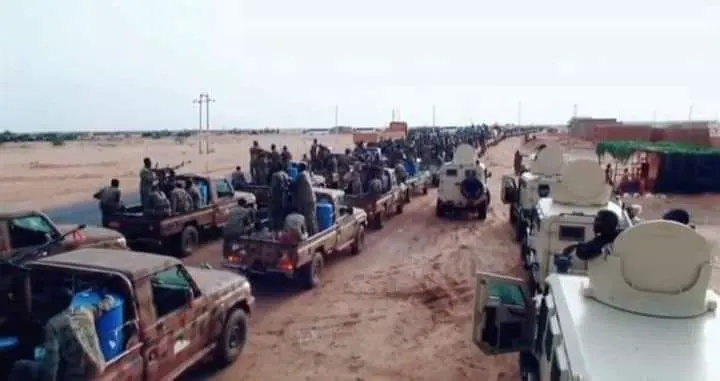
The Horn of Africa is experiencing a period of permanent conflict, with wars in Sudan, Ethiopia, and Somalia. The region's conflict system has shifted from state-centric to transnational, driven by geostrategic tensions between Saudi Arabia, the UAE, Israel, Türkiye, and Iran. This has led to a cascading series of conflicts, with fresh proxy wars erupting along new and old battle lines. The conflicts are fueled by arms and money from foreign patrons, including the UAE, Saudi Arabia, Egypt, and Türkiye.
The Comprehensive Peace Agreement signed in Sudan in 2005 seemed to offer a model for ending wars in the Horn of Africa. However, the conditions that made it possible, including a coherent external coalition and domestic elites willing to negotiate, no longer exist. The Horn of Africa has changed significantly since the agreement was signed, with war returning to Sudan, Ethiopia plunging into large-scale conflict, and Somalia remaining mired in civil war.
The conflict system in the Horn of Africa has become increasingly complex, with state capture no longer necessary. Transnational conflicts have substantial precedent in the region, but the scale and intensity now represent a distinct intensification. The spiraling Sudan conflict is at the center of this, with the Emirates constructing supply lines for the RSF from Libya to Ethiopia and several foreign patrons arrayed behind the Sudanese army.
The Gulf-Horn of Africa relationship has been analyzed in terms of patrimonial dynamics between clients and patrons. However, it is also possible that the conflicts in the Horn reflect an older logic of predation, backed by contemporary technology and Gulf architects. The 'state' in the Horn remains, but its economic and military architecture has been progressively co-opted by foreign patrons.
The proliferation of sub-national armed actors able to project devastating force from the peripheries has altered the logic of conflict. The Horn now faces a transformed conflict system in which the boundaries of war and peace, state and non-state, and domestic and external are breaking down. New conflicts are perilously absorbed into existing transnational war economies.
The conflict system in the Horn of Africa has reached a threshold at which any new war is rapidly absorbed and amplified by the existing architecture of foreign patronage and transnational war economies. Fears surrounding a potential conflict between Tigray, Eritrea, and Ethiopia are instructive, with observers concerned about the impossibility of containing any such conflict.
The blurring of peace and war extends across the Horn, with South Sudan and Ethiopia sites of contested peace accords where diffused violence persists. Years-long insurgencies in Ethiopia's most populous regions of Oromia and Amhara show no sign of abating, hollowing out state control and straining any monopoly of force exercised by Addis.
Key points
- The Horn of Africa's conflict system has shifted from state-centric to transnational, driven by geostrategic tensions and foreign patronage.
- The region's conflicts are fueled by arms and money from foreign patrons, including the UAE, Saudi Arabia, Egypt, and Türkiye.
- The conflict system in the Horn has reached a threshold at which any new war is rapidly absorbed and amplified by the existing architecture of foreign patronage and transnational war economies.