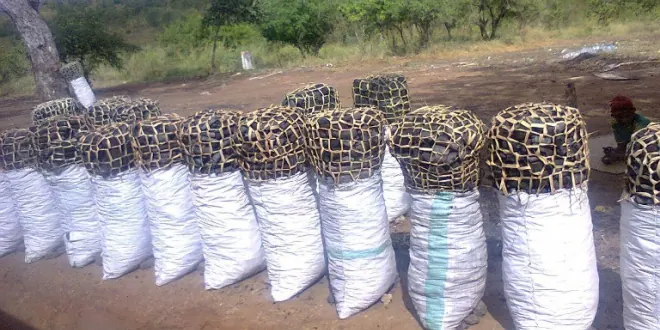
For generations, traditional fuels have been a staple in everyday life in Tanzania, providing energy for cooking and basic household activities. Firewood and charcoal are widely used, particularly in rural and low-income communities, due to their accessibility and affordability. However, the environmental costs of these fuels are significant and often overlooked. The widespread dependence on firewood and charcoal contributes to forest degradation, land degradation, air pollution, and greenhouse-gas emissions.
One of the most visible environmental consequences of traditional fuel use is the pressure placed on forests. Trees are harvested for firewood and charcoal, leading to forest cover decline. In many communities, trees are cut not because people want to damage the environment, but because households need affordable energy and charcoal production provides an important source of income. This makes the issue particularly complex, as environmental degradation is often closely connected to poverty, energy insecurity, and limited livelihood opportunities.
The problem becomes more serious when charcoal production is carried out inefficiently. Traditional charcoalmaking methods can require substantial quantities of wood to produce relatively small amounts of charcoal. This means that the environmental footprint of a bag of charcoal begins long before it reaches a household kitchen. The chain of charcoal production, transportation, and combustion has a significant environmental impact, which is often not reflected in the price paid by households.
As nearby sources of wood become depleted, communities may have to travel farther to collect firewood or produce charcoal. Producers may move into new areas in search of suitable trees, expanding the geographical footprint of forest degradation and placing increasing pressure on remaining natural vegetation. This can lead to a cycle of declining forest resources, making energy collection more difficult while continued dependence on those resources accelerates their depletion.
The loss of trees has consequences far beyond the disappearance of forest cover. Forests provide a wide range of ecosystem services that support human well-being and economic activity. They protect soils from erosion, regulate water flows, store carbon, moderate local climates, and provide habitats for wildlife and other forms of biodiversity. When vegetation is removed, soils become more vulnerable to erosion, particularly during periods of heavy rainfall.
Biodiversity is another hidden casualty of unsustainable fuelwood and charcoal production. Forests and woodlands provide habitats for plants, insects, birds, mammals, and countless other organisms. As natural vegetation is cleared and fragmented, these habitats become increasingly disturbed. The loss of biodiversity may not be immediately visible to households searching for cooking fuel, but it can weaken ecosystems and reduce the natural services on which communities depend.
To address the environmental costs of traditional fuel use, Tanzania needs to prioritize clean cooking options. Expanding electricity access, supporting solar cooking technologies, promoting biogas and LPG as cleaner cooking options, and improving the affordability and availability of efficient electric cooking appliances can help households gradually reduce their dependence on traditional fuels. Policies should focus on making cleaner technologies economically and practically accessible, particularly for low-income households.
Key points
- The widespread dependence on firewood and charcoal in Tanzania contributes to forest degradation, land degradation, air pollution, and greenhouse-gas emissions.
- The environmental costs of traditional fuel use are often overlooked, but they have significant impacts on forests, soils, water resources, biodiversity, and future generations.
- To address these costs, Tanzania needs to prioritize clean cooking options and make them accessible, affordable, and reliable for households.