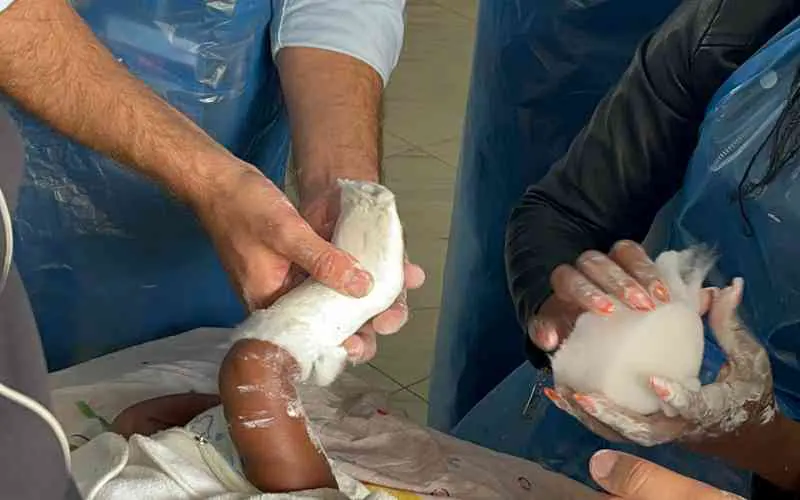
Clubfoot is a treatable childhood condition that affects nearly 2,000 children born in Kenya every year. For many families, the condition poses significant challenges, including repeated hospital visits, treatment costs, and the risk of the deformity returning. The condition can be treated, but it requires prompt and consistent medical attention. In Kenya, many families struggle to access adequate care, exacerbating the condition.
One such family is that of four-month-old baby girl, whose mother, Beatrice Mweni Chalo, began treatment when she was just two weeks old. The treatment has involved months of plaster casts at Mama Lucy Kibaki Hospital. The journey has been long and arduous for the family, highlighting the need for more support and resources to address the condition. The hospital has been providing critical care to the baby, but many families face significant barriers in accessing similar treatment.
The Standard Group Plc, a leading multi-media house in Kenya, has highlighted the issue of clubfoot births in the country. The organization has a key influence in matters of national and international interest and has been at the forefront of promoting healthcare and wellness initiatives. Through its various media platforms, The Standard Group has been raising awareness about the condition and the need for more support for affected families.
According to healthcare experts, clubfoot is a congenital condition that can be treated with prompt and consistent medical attention. However, in Kenya, many families face significant challenges in accessing adequate care. The condition can have long-term consequences for children if left untreated or poorly managed. The healthcare system in Kenya is working to address the issue, but more needs to be done to support affected families.
The healthcare system in Kenya is working to address the issue of clubfoot births. Hospitals such as Mama Lucy Kibaki Hospital are providing critical care to children with the condition. However, more needs to be done to support affected families, including providing access to affordable treatment and care. The government and other stakeholders must work together to address the issue and provide support to families affected by clubfoot.
The issue of clubfoot births in Kenya highlights the need for more investment in healthcare infrastructure and services. The government and other stakeholders must work together to address the issue and provide support to families affected by clubfoot. This includes providing access to affordable treatment and care, as well as raising awareness about the condition.
In conclusion, the hidden burden of clubfoot births in Kenya is a significant challenge that requires urgent attention. With nearly 2,000 children born with the condition every year, it is essential that the government and other stakeholders work together to provide support to affected families. By investing in healthcare infrastructure and services, raising awareness about the condition, and providing access to affordable treatment and care, Kenya can mitigate the long-term consequences of clubfoot births.
Key points
- Nearly 2,000 children are born with clubfoot in Kenya every year, posing significant challenges for families.
- The condition can be treated with prompt and consistent medical attention, but many families face barriers in accessing adequate care.
- The government and other stakeholders must work together to address the issue and provide support to families affected by clubfoot.