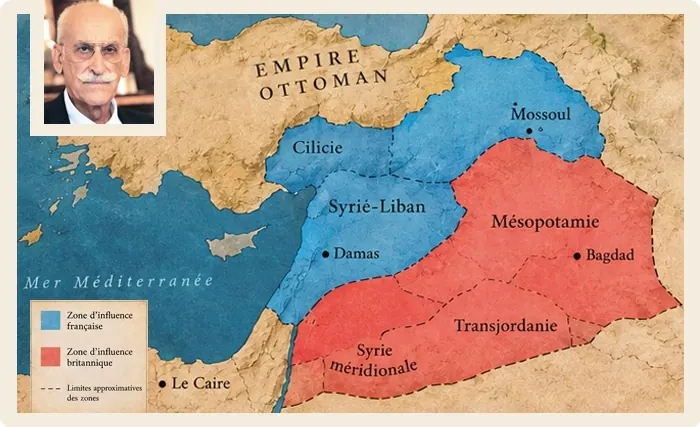
The dismantling of the Ottoman Empire after World War I led to the redrawing of the Middle East map, with European powers Britain and France gaining control over the region. The Sykes-Picot Agreement, signed in 1916, divided the empire into spheres of influence, with France controlling Syria, Lebanon, and parts of Turkey, while Britain took control of Mesopotamia and southern Syria. This agreement was kept secret from Arab leaders, who had been promised an independent Arab state in exchange for their support against the Ottomans.
The Arab Revolt, led by Sharif Hussein of Mecca, was a key factor in the Allied victory, but the subsequent division of the region led to widespread discontent. Gertrude Bell, a British intelligence officer, played a crucial role in shaping the region's future, using her knowledge of local politics and culture to advise British officials. Her work helped establish the Hashemite dynasty in Iraq, with Faisal bin Hussein al-Hashimi as its first king.
In 1920, the Syrian National Congress voted to establish an Arab kingdom, with Faisal as its monarch, but his reign was short-lived. The French, who had been granted a mandate over Syria, defeated Faisal's forces at the Battle of Khan Mayssaloun, and he was forced into exile. The British, who had been mandated to govern Mesopotamia, saw an opportunity to establish a stable monarchy in the region and invited Faisal to become the king of Iraq.
Gertrude Bell's role in Faisal's accession to the Iraqi throne was instrumental. She organized a "referendum" that showed a significant majority in favor of Faisal, and her knowledge of local politics helped him navigate the complexities of Iraqi society. Faisal's reign in Iraq was marked by efforts to modernize the country and establish a stable government, but he faced significant challenges, including tensions with neighboring countries and internal power struggles.
The establishment of the Hashemite Kingdom of Iraq was a direct result of colonial politics, with European powers imposing their will on the region. The legacy of this period continues to shape the Middle East today, with many countries still grappling with the consequences of artificial borders and imposed systems of government. The Hashemite dynasty, which was established in Iraq with British support, has had a lasting impact on the region.
Faisal bin Hussein al-Hashimi, the first king of Iraq, was a key figure in the modern history of the Middle East. He played a significant role in the Arab Revolt against the Ottomans and later became a symbol of Arab nationalism. His reign in Iraq was marked by efforts to balance the demands of his British backers with the aspirations of his Iraqi subjects.
The Hashemite Kingdom of Iraq was formally established on August 1, 1921, with Faisal bin Hussein al-Hashimi as its first king. The country's future was shaped by its colonial past, with the British mandate system imposing a system of government that was not of the people's choosing. The legacy of this period continues to influence Iraqi politics today, with many Iraqis still grappling with the consequences of colonialism.
Key points
- The Hashemite Kingdom of Iraq was established under British mandate in 1921, with Faisal bin Hussein al-Hashimi as its first king.