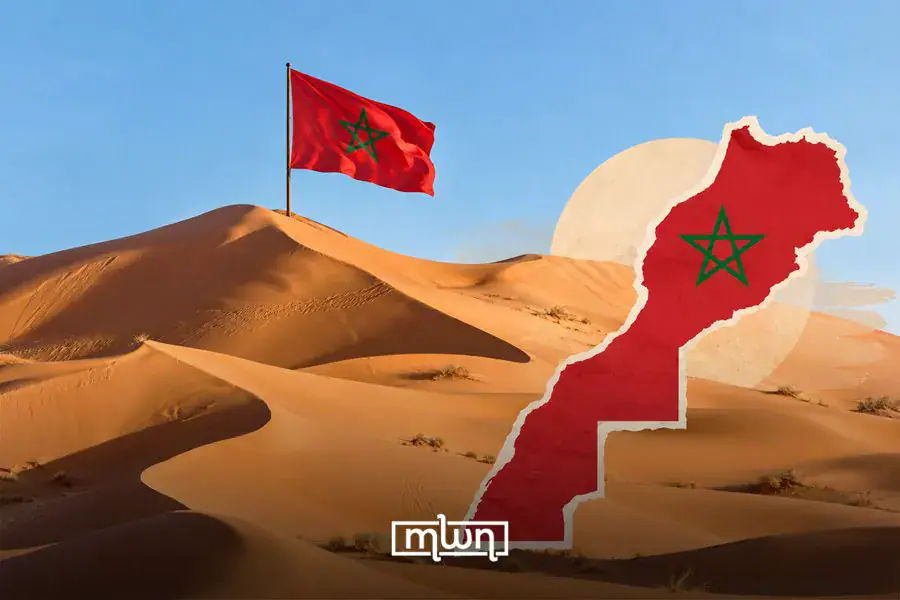
The assertion that "Morocco stretches from Tangier to Lagouira" is a powerful expression of Moroccan national consciousness. Lagouira, known in Spanish as La Güera or La Agüera, holds a distinctive place in Morocco's territorial imagination. It sits at the tip of the Ras Nouadhibou Peninsula on the Atlantic coast, beside the Mauritanian city of Nouadhibou and close to the border zone linking Morocco with West Africa. The locality's significance far exceeds its present size, standing at the intersection of colonial history, national claims, and the strategic balance between Rabat and Nouakchott.
Recent media reports have circulated claims that Mauritania might seek to obtain Lagouira in exchange for shifting its position on the Polisario Front. These claims show how sensitive the issue remains. However, three levels of analysis must be kept apart: established diplomatic facts, commentators' interpretations, and hypotheses about territorial bargaining. In the absence of any verifiable official proposal, presenting such an exchange as fact would be methodologically wrong.
The Moroccan Sahara, including Lagouira, has a complex history. Before modern borders were drawn, Western Sahara and the regions that now form Mauritania were a space of commercial, religious, tribal, and political ties that did not fit neatly into the territorial categories of the modern state. Caravan routes, networks of Muslim scholars, Sufi affiliations, bonds of allegiance, and exchanges between northern and southern populations reflected a human geography far more fluid than the one European colonialism later imposed.
Precolonial Morocco was a Sharifian state whose authority rested on shifting combinations of dynastic power, tribal allegiance, religious authority, and commercial relations. The trajectories of Mauritania and Western Sahara must be read through successive episodes of European penetration, diplomatic conventions, and boundary-drawing that progressively reshaped Saharan political space. Spanish colonization of Western Sahara and French expansion into what became Mauritania separated populations whose relations predated these borders.
In its 1975 advisory opinion on Western Sahara, the International Court of Justice found that the territory was not terra nullius at the time of colonization and that legal ties of allegiance existed between the Sultan of Morocco and certain of its tribes. It also recognized legal ties between Western Sahara and the Mauritanian entity. However, it concluded that the evidence did not establish ties of territorial sovereignty with either Morocco or the Mauritanian entity that would displace the principle of self-determination.
For Morocco, Lagouira symbolizes the geographical and historical continuity of a national space whose boundaries were profoundly disrupted by colonialism. The locality was under Spanish colonial rule as part of Spanish Sahara, and the upheavals of 1975-1979 transformed its surroundings. The Madrid Accords of 14 November 1975 organized Spain's withdrawal and set up a temporary administration.
The Lagouira question exposes a central dilemma of the contemporary Maghreb: how to reconcile territorial memory, asserted sovereignty, regional cooperation, and the peaceful settlement of disputes. A durable national position requires separating political conviction from legal demonstration, examining historical titles, international instruments, and diplomatic realities. Morocco's attachment to Lagouira belongs to a historical conception of national unity shaped by the memory of Moroccan presence in the Sahara and the experience of colonial fragmentation.
Key points
- Morocco's claim to Lagouira is rooted in historical and national unity.
- The locality's status is sensitive due to its strategic location and colonial history.
- The International Court of Justice's 1975 advisory opinion on Western Sahara remains an indispensable legal reference.