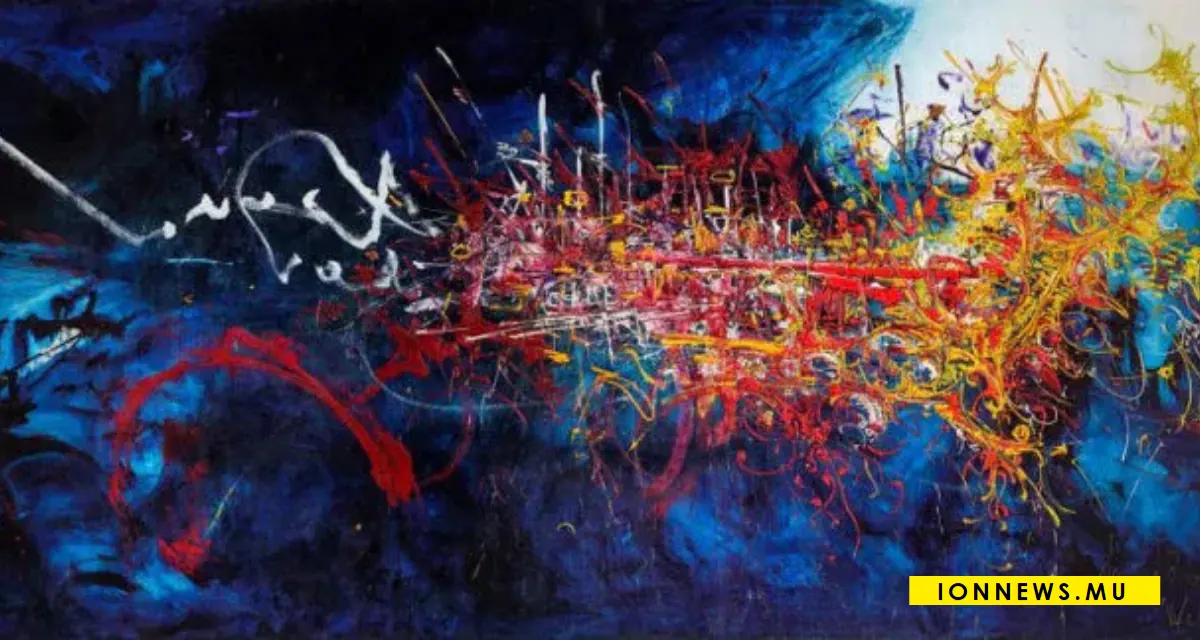
The international art market has witnessed a surge in the financial value of abstract art, with pieces selling for tens of millions of dollars. Simple compositions, including lines, points, and monochromatic squares, have fetched prices of $20, $50, or $80 million at prestigious auction houses in New York, London, and Hong Kong. This trend has led to concerns that the art form has become more of a financial asset than a creative expression.
The growing commercialization of abstract art has resulted in a disconnect between the global art market and the general public. Many art enthusiasts and visitors struggle to comprehend the high prices paid for pieces that appear visually simple. This has led to accusations of intellectual deception and a perception that the art market has become detached from its artistic roots.
The strategies employed by major art galleries have contributed to the rapid appreciation in value of certain artists' works. By artificially limiting the supply of artworks by young minimalist artists, galleries have created a sense of urgency and exclusivity, driving up prices within months. This industrial approach has fueled concerns that the art market prioritizes profit over artistic merit.
The emphasis on financial gain has led to a homogenization of abstract art, with many pieces prioritizing simplicity and minimalism over emotional depth and technical skill. This has resulted in a perception that the art form has become more of a luxury product or status symbol for the wealthy, rather than a genuine expression of creativity.
However, a growing number of artists are pushing back against this trend, seeking to reinvigorate abstract art with a focus on substance and meaning. By incorporating recycled materials, traditional techniques, and socio-political and environmental themes, these artists aim to restore the emotional and artistic value of abstract art.
The challenge facing abstract art today is not to break free from traditional representational art, but to resist the influence of finance and prioritize creative expression. As the art market continues to evolve, it remains to be seen whether the emphasis on speculation or creativity will prevail.
Ultimately, the future of abstract art will depend on its ability to balance commercial appeal with artistic integrity. As collectors, galleries, and artists navigate this complex landscape, the art world must consider the implications of a market driven by profit rather than passion.
Key points
- The art market's prioritization of profit over creativity has led to concerns over the commercialization of abstract art.
- Artists are pushing back against this trend, seeking to restore the emotional and artistic value of abstract art.
- The future of abstract art depends on its ability to balance commercial appeal with artistic integrity.